Iran War Day 10: Mojtaba Khamenei Takes Power, Oil Hits $100, and Water Becomes a Weapon
Iran's Assembly of Experts chose the late supreme leader's son as successor — the hardline option. Oil surged 20% in a single day. And both sides started hitting desalination plants.
Mojtaba Khamenei, the 56-year-old son of the man Israel killed on February 28, is now Iran's third supreme leader. The Assembly of Experts confirmed the appointment on Monday, choosing confrontation over compromise. Within hours, the IRGC pledged "complete obedience." Oil blew past $100 a barrel.
Day 10 of the US-Israeli war on Iran brought three developments that will define the weeks ahead. Each one closed a door.
The Heir
There was a narrow window. If the Assembly had picked a pragmatist — someone like former parliament speaker Ali Larijani or reformist-leaning Hassan Khomeini — it would've signaled Iran's clerical establishment wanted an off-ramp. They didn't.
Mojtaba's never held elected office. He spent decades in his father's inner circle, building ties to the IRGC and the Basij militia. Reuters called it a sign that "hardliners remain firmly in charge." State TV broadcast images of missiles bearing the slogan "At Your Command, Sayyid Mojtaba."
Critics inside Iran called it hereditary succession — a "clerical shah" in a republic born from revolution against monarchy. But wartime logic overrode that contradiction. Ali Larijani praised the Assembly for "courageously" convening under airstrikes.
Trump had already warned, before the appointment, that Iran's next leader "is not going to last long" without his approval. He called Mojtaba "unacceptable." Israel had vowed to target any declared successor. Both statements now face a test: act on them and validate Iran's claim that this war aims to destroy the Islamic Republic itself, or let them stand as hollow threats.
The Price
Brent crude opened Monday at $101.81, spiked as high as $111.04, and settled above $100. The biggest single-day surge in six years. Oil has now risen more than 50% since the start of 2026, when it sat near $60.
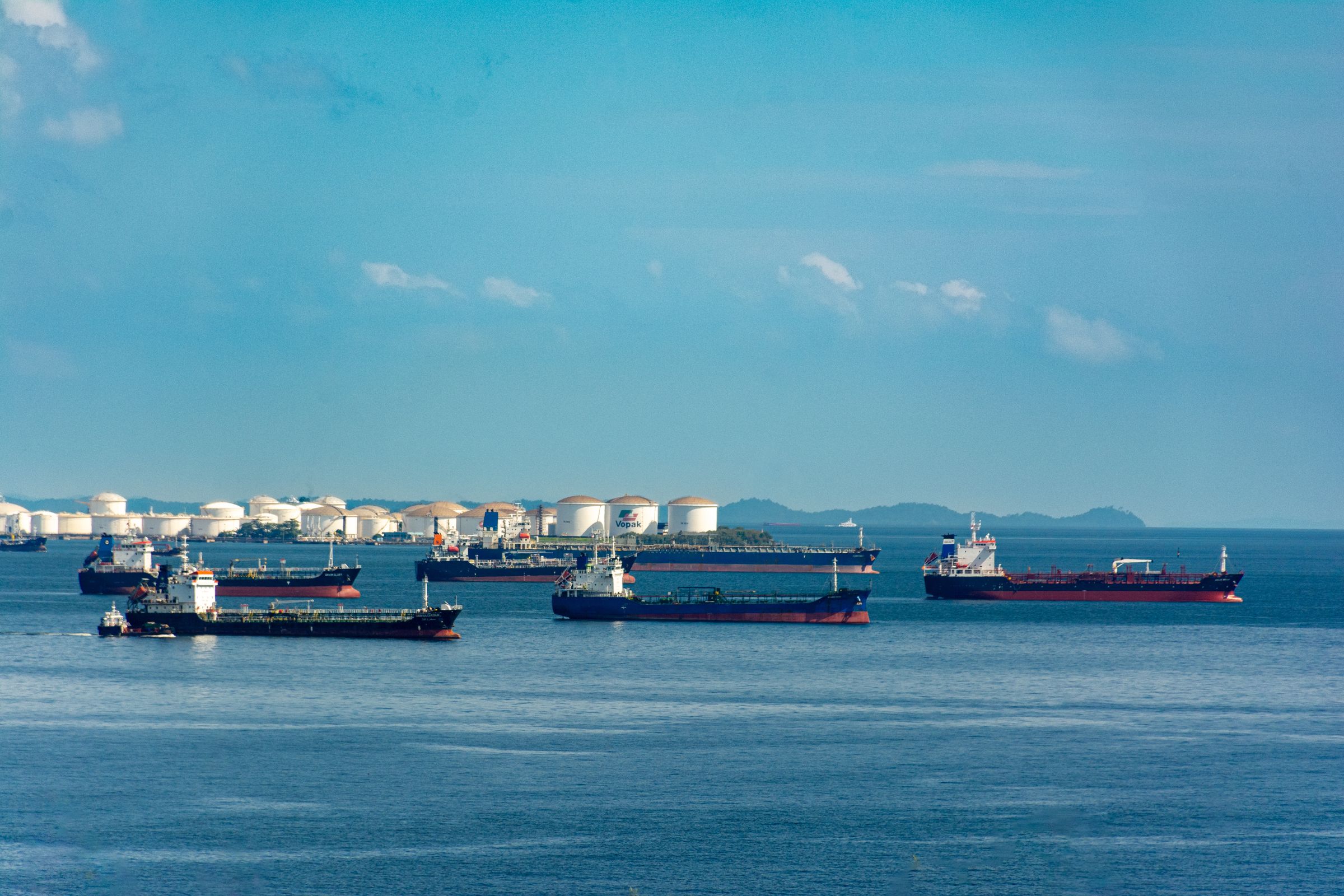
The math is simple. Hormuz carries roughly 20% of the world's oil. It's been functionally closed to Western shipping since early March. UAE and Kuwait have cut output because storage is full with nowhere to send it. Goldman Sachs warned prices could hit $150 if the strait stays shut.
But the strait isn't closed to everyone. Chinese-operated vessels are transiting safely by broadcasting their identity. A bulk carrier called Iron Maiden, operated by Cetus Maritime Shanghai, signaled "CHINA OWNER" and passed through untouched. A Turkish-operated LPG tanker declared itself "Muslim-owned" and did the same.
A two-tier energy system is forming in real time. China gets oil through. The West doesn't. Beijing deployed a naval flotilla — Type 052DL destroyer, frigate, supply ship — to the area. This isn't a temporary workaround. It's a proof of concept for a new energy architecture.
US Energy Secretary Chris Wright said one large tanker cleared the strait, calling it "an early sign" of reopening. One tanker. The strait normally sees 50 ships a day.
The Water Line
Both sides crossed a new line this weekend. Iran's Foreign Minister Abbas Araghchi accused the US of striking a desalination plant on Qeshm Island, cutting water to 30 villages. CENTCOM denied targeting civilians.
Iran then hit a desalination plant in Bahrain with a drone. Bahrain said its water supply remained online but condemned the strike as "indiscriminate civilian targeting."
The New York Times headlined it as mutual escalation. Araghchi framed it as reciprocity: "The US set this precedent, not Iran."
In a region where freshwater is manufactured, not found, hitting desalination plants carries existential weight. Gulf states depend on them for drinking water. Iran's Red Crescent warned of toxic air and acid rain from burning oil depots around Tehran. The war is now touching the things that keep people alive on both sides.
The Squeeze Next Door
One thousand kilometers east of the burning oil depots, Pakistan is fighting its own war. It barely makes the news.
Pakistani forces have been conducting airstrikes across Afghanistan for three weeks — Panjshir, Kabul, Badakhshan, Herat. Pakistan claims 583 Taliban fighters killed and 242 checkposts destroyed. The Taliban say they've killed 55 Pakistani soldiers and captured border posts. Neither side's numbers are verified.
But Pakistan's real crisis isn't military. It's economic, and it's directly connected to what's happening in Iran.
On March 6, Pakistan raised fuel prices by 20% — petrol to 321 rupees per litre, diesel to 335. Finance Minister Aurangzeb warned the monthly oil import bill could hit $600 million. The KSE-100 stock index fell another 6.3% last week. The IMF review that Pakistan's fragile economy depends on is now threatened.
Pakistan's prime minister ordered his administration to develop fuel conservation and austerity measures within 48 hours, according to Arab News. Sindh province held emergency talks on energy rationing.
Reuters identified Pakistan and India as the emerging markets "most vulnerable" to the oil shock because of their import dependence and exposure to Hormuz. Pakistan is being squeezed from every direction: fighting a war on its western border, paying war prices for fuel it can't afford, and watching its stock market collapse. Its defense minister warned that regime change in Iran could align Tehran, India, and Afghanistan against Islamabad — an encirclement scenario that would reshape South Asian security.
Turkey, Malaysia, and Indonesia are now sending defense delegations to mediate between Pakistan and Afghanistan. Traditional Gulf mediators — Saudi Arabia, Qatar, Iran — are consumed by their own crisis. A new diplomatic order is improvising itself into existence.
What Comes Next
Mojtaba's appointment means Iran won't negotiate under fire. The IRGC's pledge of obedience means the civilian-military split weakening Iran's war coordination may be over. Unified hardline leadership is more dangerous but also more coherent.
Oil above $100 means every oil-importing country on earth is now paying for this war. Pakistan already is. India will follow. The cascade runs through fuel prices to food prices to political stability.
Two-tier Hormuz — open to Chinese ships, closed to Western ones — is the kind of wartime arrangement that tends to outlast the war that created it.
Saudi Arabia is the wildcard. It intercepted a drone targeting its Shaybah oil field, one of the world's largest. Its foreign ministry issued its sharpest warning yet, calling Iran the "biggest loser" if attacks continue. The GCC pledged to "take all necessary measures including responding to the aggression." If the next Iranian strike hits a populated area in a Gulf capital, the restraint holding Saudi Arabia, the UAE, and their neighbors out of direct combat could break.
Ten days in, the US-Israeli campaign has degraded Iran's ballistic missile capacity by 90% and its drone capability by 83%, according to CENTCOM. Over 20 Iranian ships have been struck or sunk. At least 1,230 people have been killed in Iran, including the strike on a school in Minab that killed 160, many of them children.
But degrading military capacity and ending a war are different things. Iran just installed a supreme leader who was chosen precisely because he won't stop fighting.
Sources & Verification
Based on 5 sources from 4 regions
- ReutersInternational
- Al JazeeraMiddle East
- AxiosNorth America
- Arab News PakistanSouth Asia
- BloombergInternational
Get the daily briefing free
News from 7 regions and 16 languages, delivered to your inbox every morning.
Free · Daily · Unsubscribe anytime
🔒 We never share your email