On Lebanon’s Southern Roads, a Fragile Ceasefire Starts to Look Real
Lebanese families returning to damaged villages and a new round of direct talks between Lebanon and Israel have turned a narrow military pause into the clearest de-escalation signal on the northern front.
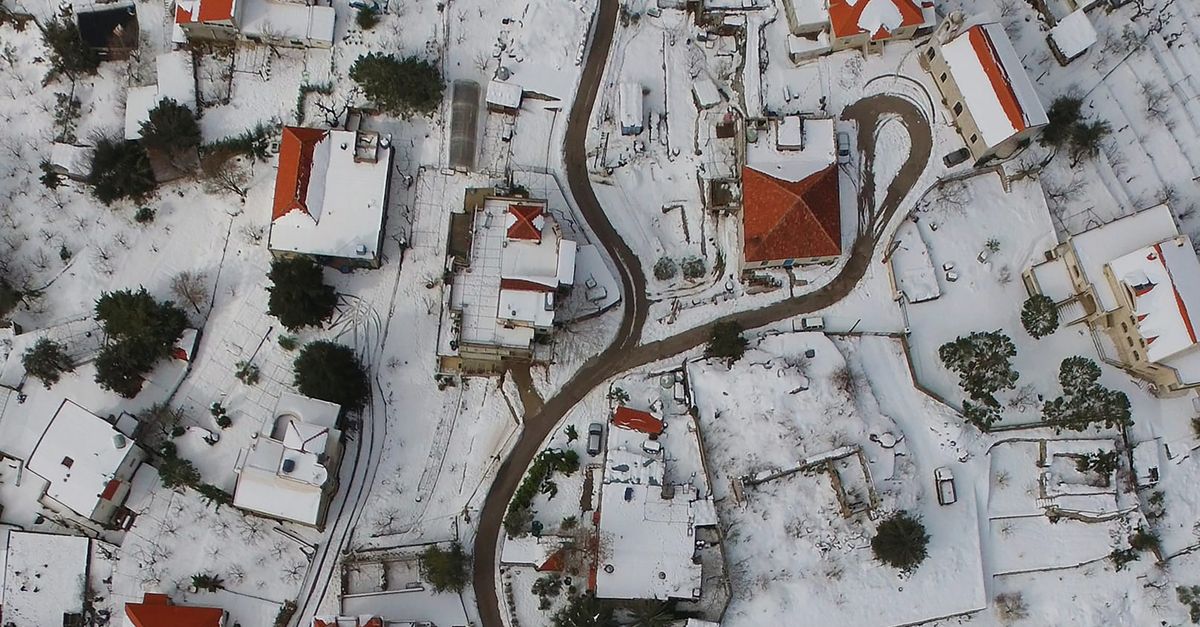
Lebanese families are driving back toward shattered border villages while U.S.-backed diplomats prepare another round of direct talks between Lebanon and Israel, giving the region its clearest sign in weeks that at least one front may be moving away from open escalation.
That shift is easy to underrate because the destruction is still everywhere. Homes remain damaged, funerals are still being held, and military activity has not disappeared from the landscape. But ceasefires are not judged only by what was destroyed before they began. They are judged by whether civilians start behaving as if the shelling may actually stay paused for another day, and whether officials are willing to move from indirect signaling to scheduled talks. On both counts, the Lebanon file has changed.
The visible reporting matters here. Al Jazeera has described the current arrangement as a fragile ceasefire, which is exactly the right phrase: fragile means active but reversible. It also reported funerals and return movements during the pause, small human details that tell you more than broad diplomatic slogans do. AP snippets added another practical signal, pointing to civilians returning and temporary bridge work by Lebanese authorities. States do not patch access points and residents do not test the roads home unless they believe the near-term risk has at least eased.
Then comes the stronger marker: another round of direct talks later this week. That does not mean reconciliation. It does mean the pause has enough structure behind it to warrant official follow-up. Direct talks are qualitatively different from anonymous mediation chatter. They require both sides, and their backers, to believe there is still something to preserve.
This matters well beyond southern Lebanon. Since the Gaza war widened regional tensions, the Israel-Hezbollah front has been one of the most dangerous channels for spillover. Every exchange there carries the risk of pulling additional actors into a conflict that already stretches diplomacy, military resources, and public patience across multiple capitals. A functioning ceasefire on this line therefore does not only protect the villages along the border. It changes the wider regional risk map.
That is why the story should not be buried beneath a generalized description of endless war. Endless war is emotionally understandable and analytically lazy. Real systems still move inside it. Fronts harden, soften, reopen, and freeze. The Lebanon front appears, for now, to be in a softening phase. Not because the grievances are smaller than before, but because the incentives for immediate re-escalation are being countered by something tangible: a pause people can physically use and talks serious enough to schedule.
The civilian return element is especially important. It is one thing for officials to declare a ceasefire from podiums in distant capitals. It is another for ordinary people to place bets with their own bodies by crossing back into damaged towns. Return movements are not proof of safety. They are proof that the perception of total unsafety has weakened. That is how post-conflict normalization begins: not as a grand announcement, but as a line of cars inching back to streets where no one knows what is left standing.
Still, the pause can fail. Israeli operations are not over, Hezbollah remains armed, and the political questions under the fighting have not been solved. Reconstruction does not settle deterrence. A bridge repaired by municipal crews does not answer how either side plans to handle the next accusation, strike, or misread signal. Fragility means exactly that the scaffolding may not hold.
Yet even a narrow ceasefire deserves to be read accurately. The most important fact on this front today is not simply that the war caused immense damage. Everyone already knows that. The important fact is that a military pause is producing civilian movement and diplomatic follow-through at the same time.
That combination is rare enough in this region to matter on its own. If the talks proceed and the roads stay open, Lebanon’s southern border may become the first place in the current regional crisis where de-escalation looks less like rhetoric and more like a process people can actually see.
Add context
Know something useful about this story?
Albis is built for public understanding. If you have a source, lived experience, or a missing angle, you can add context for others.
Share context →Sources & Verification
Based on 3 sources from 3 regions
- Al JazeeraMiddle East
- Associated PressGlobal
- Global ScanInternal
Conversation
What are you seeing?
Add local context, a source, a question, or a perspective we may have missed. You can comment as a guest or create a free account.
Loading conversation…
Get the daily briefing free
News from 7 regions and 16 languages, delivered to your inbox every morning.
Free · Daily · Unsubscribe anytime
🔒 We never share your email