No Kings Protests: 8 Million March, 5 Billion Don't See It
8 million Americans protested at 3,300 rallies on March 28. 87% of the world has no idea. Here's why the largest US protest day matters globally.
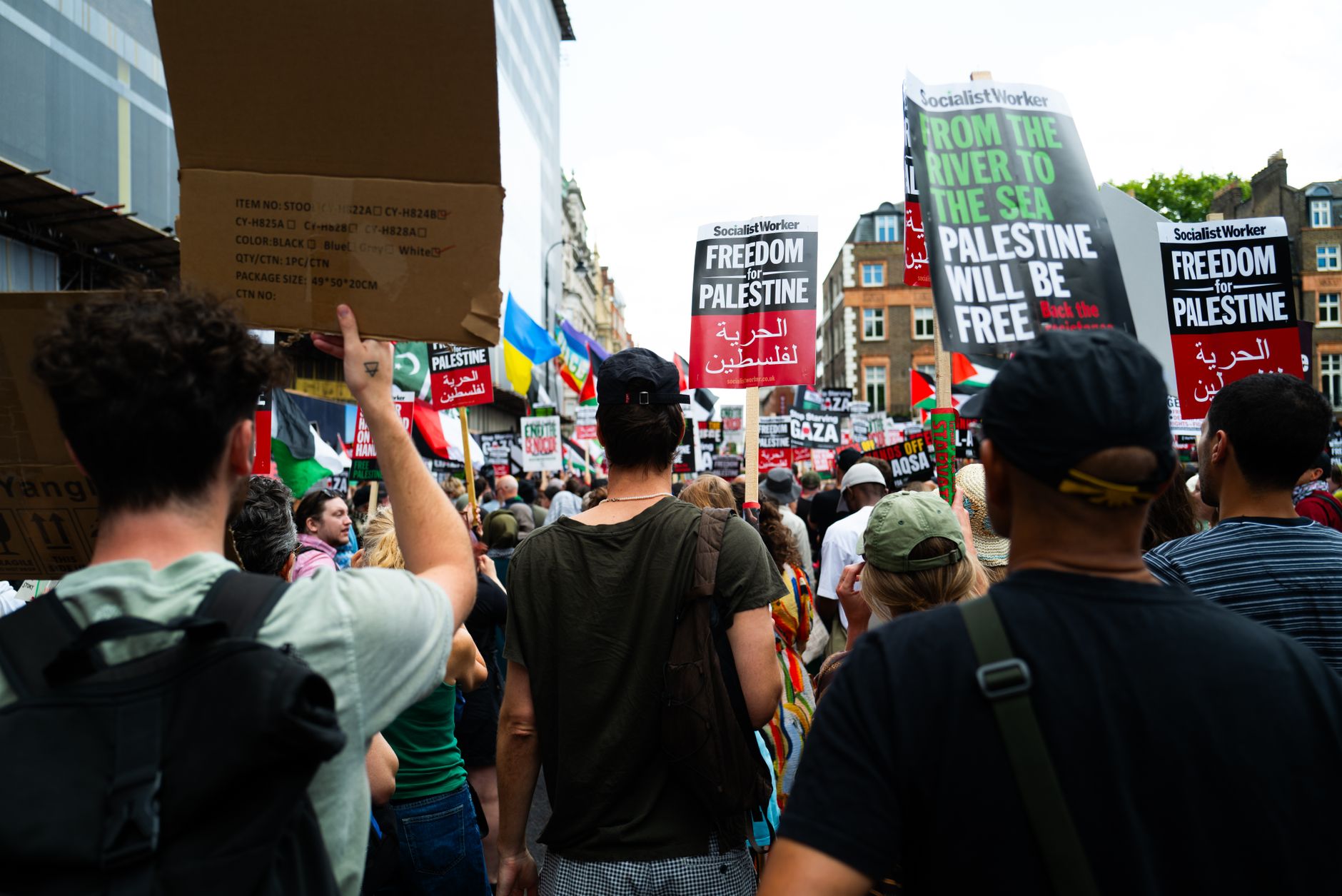
Eight million people filled the streets of 3,300 American cities and towns on March 28, 2026. It was the largest number of protest events in a single day in US history. And 5.4 billion people — 87% of humanity — have no idea it happened.
The third wave of No Kings protests scored a 6.74 on the Albis Global Attention Index, placing it in the "Information Shadow" tier. Only two of seven world regions — the United States and Europe — carried the story. South Asia, Asia-Pacific, the Middle East, Latin America, and Africa saw nothing.
What drove 8 million people into the streets
This wasn't a single-issue march. Demonstrators in Portland held signs about gas prices. In Little Rock, Arkansas, more than 2,000 people crossed the Arkansas River carrying a sign reading "Morons Are Governing America." In New York, the most consistent theme was the Iran war. "This war has to stop," one Queens resident told The Guardian. "American people do not want what this administration is doing."
The protest coalition — MoveOn, Indivisible, 50501, AFL-CIO, and dozens of grassroots groups — called out the Iran war as the accelerant. "Since the last No Kings, we're seeing higher gas prices and groceries, all while there's an illegal, catastrophic war putting us in danger and driving up our costs," said Sarah Parker, executive director of Voices of Florida and a national coordinator for the 50501 movement.
Trump's approval rating has fallen to 36%, its lowest since returning to the White House, according to a Reuters/Ipsos poll conducted the same week.
Rural America showed up this time
The numbers that matter most aren't from New York or Los Angeles. They're from places like Clarkesville, Georgia. Two-thirds of all No Kings events happened outside major cities — a 40% jump in small-community participation compared to the movement's first mobilisation in June 2025. Rallies hit every congressional district in the country, including rural and traditionally Republican areas that, according to organisers, had never seen political mobilisations of this scale.
In Minnesota's Twin Cities, 200,000 people filled streets around the state capitol — surpassing the Women's March turnout in 2017. Bruce Springsteen performed. Bernie Sanders spoke. Governor Tim Walz addressed a crowd still raw from the ICE killings of Minneapolis residents Renée Good and Alex Pretti, whose names appeared on protest signs across the city.
The protests spread to more than 20 countries, including Japan, Kenya, Thailand, Mexico, and Australia, where Americans abroad and local allies marched in solidarity.
Why the world can't see it
Here's the gap that should worry everyone: the protests against Iran war policy are being driven in part by the same oil crisis hammering South Asia, Africa, and Latin America. Indian households face 7% inflation from the energy shock. African farmers can't afford fertiliser. Mexican fuel prices are surging toward 30 pesos per litre. These populations are paying the price of the same war that Americans are protesting — but they can't see the protests happening.
Arabic-language media offers a telling exception. Where the story does leak through — Egyptian outlet Youm7, Jordanian Al-Omah — the framing shifts entirely. Western media calls No Kings a domestic political movement. Arabic media calls it "popular anger against military escalation that threatens citizens' daily lives and security." Same event. Completely different story.
The framing gap reveals something deeper. When 8 million people in the country waging the war say "stop," that's information the rest of the world needs. A population turning against its own government's military campaign matters to the 1.4 billion Indians paying more for cooking oil, the 130 million Mexicans watching fuel prices climb, and the Lebanese families displaced by an expanding conflict. The anti-war signal from inside America is invisible to the people who need it most.
What makes No Kings different
Mass protests in the US aren't new. The Women's March in 2017 drew between 3.3 and 5.6 million. The George Floyd protests in 2020 mobilised an estimated 15-26 million over several weeks. But No Kings has a structural feature neither predecessor had: it keeps growing, and it's moving into territory that historically doesn't protest.
The Crowd Counting Consortium's data shows that more people protested in American streets in 2025 — the first year of Trump's second term — than in 2017. The March 28 mobilisation broke the single-day event count record. And the geographic spread into every congressional district, including deep-red rural areas, makes this harder to dismiss as coastal liberal frustration.
The movement has also converged multiple issues into a single frame: wartime executive power. ICE enforcement, the Iran war, gas prices, voting rights threats, and democratic backsliding all feed into the "No Kings" argument that concentrated executive authority is the root problem. Whether that framing holds through the 2026 midterms — now the explicit target for organisers — will determine whether this becomes a political force or a pressure valve.
What happens next
April 6 is six days away. That's Trump's self-imposed deadline for the Hormuz Strait situation. If the crisis escalates, the economic pain that drove millions into the streets only deepens. Organisers are already planning follow-up actions, with The Guardian reporting that the movement's focus is shifting from protest to electoral mobilisation for the midterms.
The question isn't whether Americans are angry. Eight million answered that. The question is whether the 5.4 billion people affected by the same war will ever hear about it.
This story was identified by the Albis Global Attention Index — measuring which stories the world isn't seeing. Explore today's blind spots →
Add context
Know something useful about this story?
Albis is built for public understanding. If you have a source, lived experience, or a missing angle, you can add context for others.
Share context →Sources & Verification
Based on 5 sources from 3 regions
- The GuardianInternational
- ReutersInternational
- The New York TimesNorth America
- BBC NewsEurope
- USA TodayNorth America
Conversation
What are you seeing?
Add local context, a source, a question, or a perspective we may have missed. You can comment as a guest or create a free account.
Loading conversation…
Get the daily briefing free
News from 7 regions and 16 languages, delivered to your inbox every morning.
Free · Daily · Unsubscribe anytime
🔒 We never share your email


