Pakistan Mediates the Iran War While Its Own Ceasefire Dies
Pakistan is brokering US-Iran peace talks, fighting Afghanistan, and tripling fuel prices — all in the same week. How one country's impossible position reveals the war's true reach.

Pakistan's Army Chief Asim Munir called Donald Trump on Sunday to offer himself as a peace broker for the Iran war. On the same day, Pakistan's foreign minister told reporters his country remains committed to "eradicating terrorism" in Afghanistan, where an Eid ceasefire was hours from expiring. And at petrol stations across Pakistan, drivers faced prices above Rs 321 per litre after the government tripled the high-octane fuel levy overnight.
One country. Three crises. The same week.
Pakistan's emergence as the lead mediator between Washington and Tehran — confirmed by Axios, the Financial Times, and CBS News — is the clearest sign yet that the Iran war and the Pakistan-Afghanistan war aren't two separate conflicts. They're one interconnected system, and Pakistan sits at its centre.
The Mediator Who Can't Afford Neutrality
The diplomatic channel works like this: Turkey, Egypt, and Pakistan are each passing messages between US envoy Steve Witkoff and Iranian Foreign Minister Hossein Amir-Abdollahian. No direct talks. Araghchi's office confirmed to CBS that "points from the US through mediators" are being reviewed — the first Iranian acknowledgment that any communication channel exists.
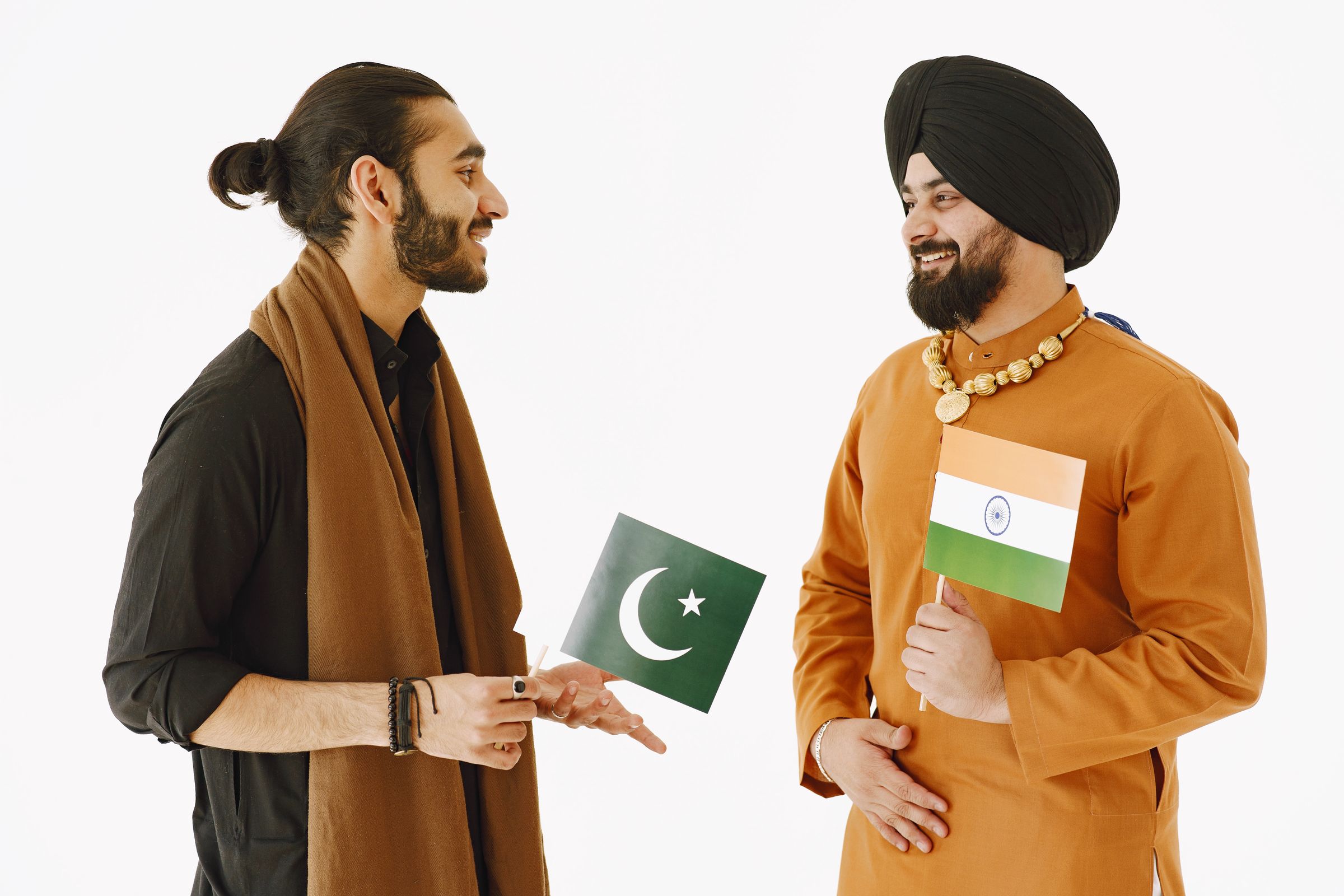
Pakistan has advantages the other mediators don't. It shares a 900-kilometre border with Iran. It has warm relations with the Trump administration, partly built on Munir's role in the India-Pakistan crisis that earned Trump a Nobel Peace Prize nomination. And Iran has been granting Pakistani ships safe passage through the Strait of Hormuz — a lifeline worth billions.
But here's what makes Pakistan's position impossible. That Hormuz safe passage exists because Tehran considers Islamabad neutral. Pakistan is now actively mediating on Washington's behalf. If Iran perceives Pakistan as a US proxy rather than an honest broker, the passage could vanish overnight.
Pakistan has roughly 20 days of oil reserves.
What Fuel Costs Tell You About War
The Hormuz blockade is usually reported as an oil price story. Brent crude settled at $99.94 on Monday, down 10.9% after Trump claimed "productive conversations" with Iran — a claim Tehran immediately denied. By evening, prices had bounced back above $104.
Those numbers feel abstract until you translate them into what people actually pay.
Pakistan tripled its high-octane fuel levy from PKR 100 to PKR 300 per litre. Diesel hit PKR 335.86. Dollar bonds are on track for their biggest monthly drop in three years. Schools have closed in several provinces to reduce transport demand. Bloomberg describes the economy as "in dire straits."
And Pakistan isn't alone. Slovenia became the first EU member state to ration fuel last week, limiting purchases to 50 litres per person and deploying the army to move supplies between petrol stations. Mali released over 100 imprisoned jihadists in exchange for safe passage of fuel convoys to its capital. Argentina's planting season faces disruption from fertiliser prices spiked by the same Hormuz chokepoint.
The war's blast radius isn't measured in kilometres. It's measured in the price of cooking gas in Karachi, petrol in Ljubljana, and fertiliser in Buenos Aires.
A Ceasefire Dies at Midnight
While Munir worked the phones between Washington and Tehran, the Pakistan-Afghanistan Eid al-Fitr ceasefire was crumbling. Pakistan fired mortars into Afghanistan's Kunar province before the ceasefire even expired, killing one civilian and injuring another. The Taliban warned the truce would become "meaningless" if violations continued.
At midnight on March 24, it expired.
Pakistan's Foreign Minister didn't hedge. His country remains committed to eradicating terrorism, he said, signalling that Operation Ghazab Lil Haq — Pakistan's military campaign that has included airstrikes on Kabul — would resume.
The timing creates a credibility problem that no amount of diplomatic skill can fix. A country resuming airstrikes on its neighbour at midnight while brokering peace talks for someone else's war by morning isn't a neutral mediator. It's an actor with too many roles and not enough stage.
Two Wars, One System
Western coverage treats these as separate stories. The Iran war gets the front page. Pakistan-Afghanistan gets a paragraph in the "also" section. But the connections run deep.
Pakistan launched its Afghanistan operation partly to signal alignment with Washington — the Bagram airfield strike was widely interpreted as a "projection to Trump," according to Afghan researcher Sardar Rahimi. That signal-sending worked. When Pakistan needed a seat at the Iran mediation table, it had one.
Iran's selective Hormuz regime — granting passage to "friendly" nations including Pakistan, China, India, and Malaysia while blocking Western-aligned shipping — is itself a weapon. About 100 ships have transited since the war began, according to BBC Verify. Eleven were China-linked. Each passage is a geopolitical transaction.
CBS News confirmed a detail that transforms the Hormuz picture entirely: US intelligence has identified approximately 12 Iranian mines in the strait, including Maham 3 and Maham 7 limpet mines. Iran's Defense Council has threatened to mine "all access routes in the Persian Gulf" if its coastline or islands are attacked. The strait isn't just restricted. It's armed.
For Pakistan, this means its 20 days of oil reserves sit behind a minefield controlled by the country it's trying to mediate for.
The Framing Gap
How this story gets told depends entirely on where you're reading it.
The Financial Times and Guardian frame Pakistan as an emerging diplomatic power — the country that might end the war. Indian media takes a different view entirely. India Today's headline on Pakistan's fuel hike: the country "sleepwalked into the Middle East maze, and 400 Afghans just paid for it." Hindi-language outlets frame the Iran war through India's own LPG tanker transits, celebrating Iranian Navy escorts as proof of Indian diplomatic independence.
Iranian state media doesn't mention Pakistan's mediation at all. It frames Trump's 5-day extension of the energy strike deadline as a "retreat" — Qalibaf's advisor publicly questioned whether Trump is "mentally stable." Arabic-language coverage, by contrast, gives the mediation channel more attention than any English-language outlet, with Israeli Channel 12 identifying Parliament Speaker Qalibaf as the Iranian interlocutor.
Chinese state media reports the facts without editorialising. Russian media uses the word "cancelled" rather than "postponed" for Trump's deadline extension — a single word choice that turns a tactical pause into a strategic retreat.
Same events. Same day. Six different wars being described.
What Comes Next
Three timelines are converging.
Trump's 5-day pause on Iranian energy infrastructure strikes expires around March 28-29. If mediator messages don't produce something concrete by then, the escalation ladder has only one direction. Iran's energy sites have already been hit despite the announced pause — Isfahan gas infrastructure and a Khorramshahr pipeline were struck on Monday, with neither the US nor Israel claiming responsibility.
Pakistan's Afghanistan operations are resuming now. Every airstrike on Afghan soil makes the "neutral mediator" role harder to maintain. Saudi Arabia and Qatar, who brokered the Eid ceasefire, are themselves in diplomatic confrontation with Iran — Saudi expelled five Iranian diplomats last week, killing the China-brokered rapprochement entirely.
And oil prices will react to whatever happens first. A single Truth Social post from Trump crashed Brent 10.9% on Monday. A mine detonation in Hormuz could reverse that in minutes.
Reuters revealed the origin story of this war on Monday: Netanyahu persuaded Trump to approve the joint killing of Khamenei by framing it as a once-in-a-generation opportunity for regime change and personal revenge. The CIA had warned a hardliner would replace Khamenei. That's exactly what happened. Mojtaba Khamenei, the reclusive 56-year-old son, now leads Iran — and has rejected every de-escalation proposal conveyed through intermediaries.
The country trying to end this war is the same country that can't end its own. The country brokering peace is rationing fuel. The country everyone needs as a neutral channel has 20 days of oil left.
Pakistan's position isn't a sideshow to the Iran war. It's the clearest measure of how far the damage has spread — and how little room anyone has left to manoeuvre.
Add context
Know something useful about this story?
Albis is built for public understanding. If you have a source, lived experience, or a missing angle, you can add context for others.
Share context →Sources & Verification
Based on 5 sources from 0 regions
Conversation
What are you seeing?
Add local context, a source, a question, or a perspective we may have missed. You can comment as a guest or create a free account.
Loading conversation…
Get the daily briefing free
News from 7 regions and 16 languages, delivered to your inbox every morning.
Free · Daily · Unsubscribe anytime
🔒 We never share your email