US Marines Shot Protesters in Karachi. Pakistan Says It Was a Massacre. Washington Says It Was Self-Defence
Ten people died when US Marines opened fire at the Karachi consulate on March 1. Two weeks later, the US and Pakistan still can't agree on what happened or who fired first.
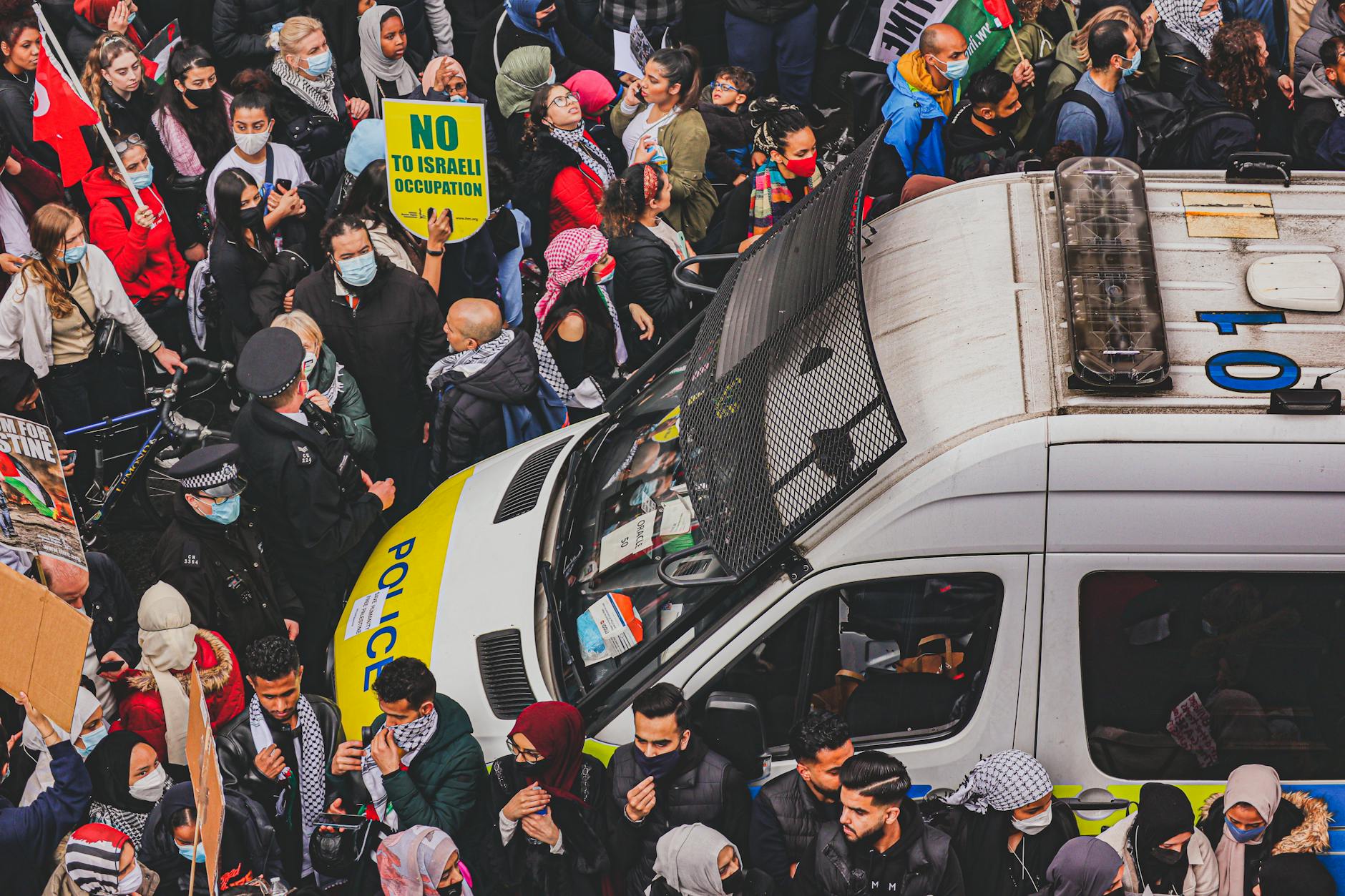
In Karachi, ten people are dead. That much everyone agrees on. What they can't agree on — two weeks later — is almost everything else: who fired first, whether the crowd was armed, and whether the US Marines at the consulate defended themselves or committed a massacre.
The March 1 shooting at the US Consulate in Karachi has become one of the most divisive stories of the Iran war. It scores a 7.73 on the Albis Perception Gap Index, driven by near-total inversion in how different regions portray the same event. The US-South Asia pair hits 9.5 — one of the highest regional divergences Albis has recorded.
Two Versions of the Same Minute
Here's the American version. Around 300 protesters, some armed, broke away from a 3,000-person rally at Numaish and charged the US Consulate on motorbikes. They breached the outer wall, smashed windows, and set fires. At least one protester fired a pistol inside the compound. A Marine Security Guard returned fire.
Two unnamed US officials told Reuters that Marines "opened fire on demonstrators during the storming of the Karachi consulate," but added "it was unclear whether rounds fired by Marines struck or killed anyone."
Here's Pakistan's version. Thousands gathered peacefully to mourn Ayatollah Khamenei's assassination. A group moved toward the consulate. Police fired 30 aerial shots. Then an American marine started shooting live rounds at unarmed civilians. Dawn, Pakistan's most-read English-language paper, reported the JIT was told that "one US marine stationed at the American mission in Karachi resorted to firing in retaliation when protesters stormed the consulate building."
The word "retaliation" is doing enormous work in that sentence. It concedes the storming happened. But in the Pakistani framing, it's buried beneath the body count.
The Facts That Don't Match
The death toll itself is contested. AP initially reported six. Al Jazeera reported ten. Pakistan Today reported twelve. Reuters put the nationwide total at 23 killed across Pakistan, with ten at the consulate itself. The JIT investigation found 49 bullet wounds among the injured, including seven police officers.
Al Jazeera's headline reads: "Ten killed in pro-Iran protest at US consulate in Pakistan's Karachi." The framing is clinical — people died at a protest.
The New York Times placed the Karachi deaths inside a broader paragraph about 22 killed nationwide "as thousands gathered across Pakistan to denounce U.S.-Israeli strikes on Iran." The consulate deaths are one line in a war update.
Dawn's reporting goes deeper into the mechanics. Police told the JIT that protesters "belonged to a religious student party and they were armed with weapons, lathis, stones and inflammable material." The investigation confirmed video footage showing armed men firing inside the consulate.
What Each Side Leaves Out
American coverage emphasizes the security threat: an armed mob breached a diplomatic compound. The Marines acted in self-defence. This framing treats the event as a security incident with a clear aggressor.
What it downplays: why 3,000 people were on the streets in the first place. The assassination of Iran's Supreme Leader by US-Israeli strikes provoked the largest anti-American protests Pakistan has seen in years. That context gets a sentence, maybe two, in most US reports.
Pakistani and Middle Eastern coverage emphasizes the dead. The grieving families. The funerals that drew thousands the next morning in Karachi. The fact that US consulates across Pakistan — Lahore, Karachi, Peshawar — shut down afterward. Reuters reported Pakistan sent the military into Gilgit-Baltistan and banned large gatherings nationwide.
What that framing downplays: the armed protesters, the breached walls, the pistol fired inside the compound. Dawn's own JIT reporting confirms these details, but they sit lower in the story than the Marine's lethal response.
The Dimension Breakdown
The PGI's six dimensions reveal where the gap is widest:
- Actor portrayal: 8.5/10. Marines as defenders vs. murderers. Protesters as armed mob vs. mourners exercising legitimate grief.
- Cui bono: 8.5/10. The US version justifies forward military presence. Pakistan's version channels domestic anti-American sentiment. The Middle East version frames sectarian solidarity.
- Narrative framing: 8.0/10. "Consulate attack" vs. "massacre of protesters" — these aren't different angles on the same story. They're different stories.
- Causal attribution: 7.5/10. US: protesters caused the violence. Pakistan: the US war on Iran caused the violence.
Why It Matters Beyond Karachi
The Karachi shooting isn't just a disputed incident. It's become a symbol. In South Asia, it represents everything wrong with America's war — that even mourning the dead can get you killed. In Washington, it represents everything wrong with the security environment — that diplomatic posts are under armed assault.
Both readings contain truth. Neither contains all of it.
The US has since permanently closed its Peshawar consulate and ordered non-essential staff out of Lahore and Karachi. Pakistan's JIT continues its investigation, though its terms of reference are — as Dawn noted — "silent about fixing responsibility of the killings."
Two weeks on, the dead are still dead. The consulate is still closed. And the same sixty seconds on March 1 still plays out completely differently depending on where you read about it.
This story was scored by the Albis Perception Gap Index — measuring how differently the world frames the same events. See today's most divided stories →
Sources & Verification
Based on 5 sources from 4 regions
- DawnSouth Asia
- Al JazeeraMiddle East
- ReutersInternational
- New York TimesNorth America
- AP NewsNorth America
Keep Reading
South Asia's Fuel Crisis Shut Down Schools. The West Barely Noticed
Bangladesh and Pakistan closed schools, rationed fuel, and deployed troops at petrol stations as the Iran war choked oil supplies. Western and South Asian media tell very different stories about why.
India's Hackers Spent a Year Inside Pakistan's Nuclear Agency. The Word You Use for It Depends on Where You Live.
An India-linked cyber espionage campaign targeted Pakistan's nuclear regulator, navy, and telecom for 12 months. Indian media calls it counterterrorism. Pakistani media calls it state-sponsored aggression. The same operation, two completely different stories.
1,332 Dead in Iran. The Number You See Depends on Where You Live.
Eight days into the US-Israel strikes on Iran, the civilian death toll has passed 1,300. But how — and whether — that number reaches you depends entirely on your news source's geography.
Explore Perspectives
Get this delivered free every morning
The daily briefing with perspectives from 7 regions — straight to your inbox.