Natanz Was Struck Again on Saturday. Iran Fired Missiles at Diego Garcia. Trump Called It 'Winding Down.'
In a single 24-hour window, the US bombed Iran's main nuclear enrichment site, Iran launched intercontinental missiles at a British-American base 4,000km away, and the US president said the war was nearly over. The contradiction is the story.
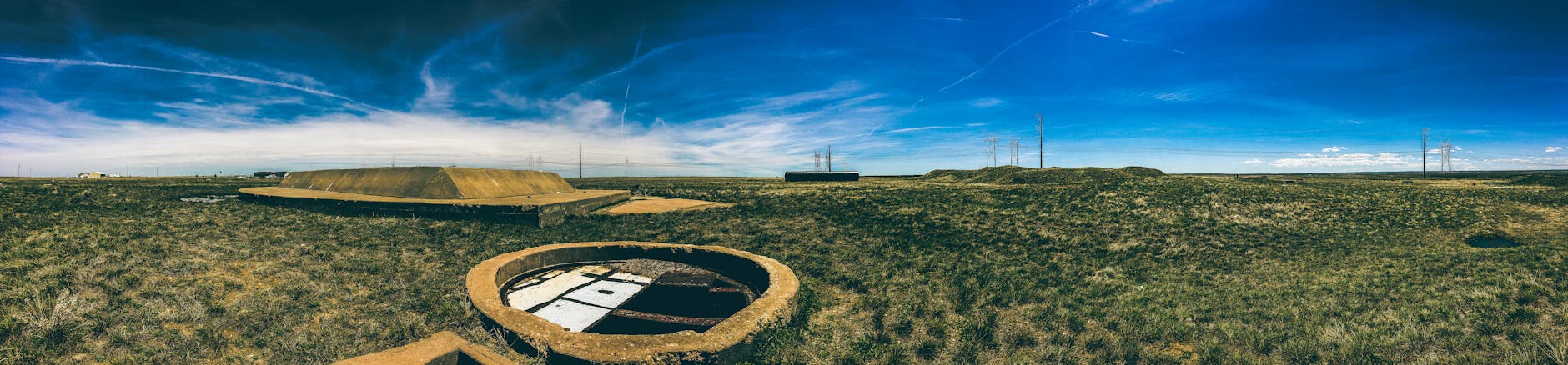
On Friday, President Trump posted on social media that the United States was considering "winding down our great Military efforts in the Middle East." Hours earlier, he told reporters on the White House lawn that he was not interested in a ceasefire because the US was "obliterating the other side."
On Saturday, the US and Israel struck Iran's Natanz uranium enrichment facility — again. Iran fired two intermediate-range ballistic missiles at Diego Garcia, a joint US-UK base in the Indian Ocean, roughly 4,000 kilometres from Tehran. Israel's army chief, General Eyal Zamir, told the press: "The war is not close to ending."
These three events happened within 24 hours. They tell completely different stories about the same conflict — and which one you believe depends largely on where you live and what you read.
The Natanz Strike
Natanz is Iran's primary uranium enrichment facility. It has been struck multiple times since the war began on February 28, with earlier attacks hitting entrance buildings and causing what the IAEA described as "localised contamination."
Saturday's strike was the most direct yet. Iran's Atomic Energy Organization confirmed the hit. Israel denied knowledge of the strike — a pattern that has repeated throughout the conflict: military action attributed to the US-Israeli coalition, with Israel officially distancing itself.
The IAEA confirmed damage to the site but said no radiation had leaked beyond the facility perimeter. The UN nuclear watchdog noted the bulk of Iran's estimated 440 kilograms of 60%-enriched uranium is not at Natanz — most is believed buried beneath rubble at the Isfahan facility, destroyed in earlier strikes.
The question of what the strikes on Natanz are meant to achieve depends on which capital you ask.
Washington frames the attacks as "denuclearisation" — destroying Iran's ability to enrich uranium. Tel Aviv frames them as existential security, eliminating a future nuclear threat. Arabic-language media — Al Jazeera, Asharq — frames them as illegal aggression against a sovereign state's civilian nuclear infrastructure. Chinese media focuses on the oil price implications, not the nuclear ones.
The perception gap here scores a 9 out of 10 on our tracking system. That means you could read five outlets from five regions about the same airstrike and come away with five different understandings of what happened and why.
Diego Garcia: A Capability Nobody Expected
Iran's strike on Diego Garcia — roughly 2,500 miles south of Iran in the Indian Ocean — was unsuccessful. One missile reportedly fell short; the other was intercepted by a US warship. But the strike itself sent a more powerful message than a direct hit might have.
Iran had previously maintained a self-imposed cap on its ballistic missile range at 2,000 kilometres. Diego Garcia is approximately 4,000 kilometres from Iranian territory. The gap suggests one of two things: Iran has long-range capabilities it never declared, or it repurposed its space launch vehicle — essentially an intercontinental ballistic missile by another name.
"If you've got a space program, you've got a ballistic missile program," said Steve Prest, a retired Royal Navy commodore, in comments to AP.
Israel's army chief went further, claiming Iran had fired "a two-stage intercontinental ballistic missile." If confirmed, that puts most of Western Europe within theoretical range of Iranian missiles — a development that rewrites the strategic calculus for NATO members who have so far stayed on the sidelines.
The UK government, which had already given the US permission to use Diego Garcia for "specific and limited defensive operations," condemned Iran's "reckless threats." Britain has not participated in offensive strikes on Iran but has been drawn steadily deeper into the conflict through base access and logistics support.
The Contradiction at the Centre
Here is the timeline that matters:
Thursday, March 20: Trump tells reporters the US is "not putting troops anywhere." The Pentagon simultaneously confirms 2,500 Marines are deploying to the Middle East. Friday, March 21: Trump posts on social media that the US is considering "winding down" the war. Hours earlier, he told reporters there would be no ceasefire because the US was "obliterating the other side." The Treasury Department issues a 30-day waiver lifting sanctions on Iranian oil stranded at sea. Saturday, March 22: Natanz is struck. Iran fires missiles at Diego Garcia. Israel's defence minister says strikes will "significantly increase" in intensity.Iran's own assessment, conveyed through an Iranian official to CNN: "Contrary to Trump's claims of a reduction in military activity, Iran has no such estimate and concludes that the enemy's military posture hasn't changed significantly."
This is the rhetoric-reality gap that has defined the war from its first week. The words say one thing. The actions say another. And both are true — which is precisely the problem.
Why the Contradiction Works
For Trump, the "winding down" message serves a domestic audience watching petrol prices climb and stock markets fall. The S&P 500 is down 5.4% since the war began. Brent crude is above $108 per barrel. Spain has launched a €5 billion emergency package. Australia is rationing fuel. The political pressure to show an end point is enormous.
For Israel, the war's goals have expanded, not contracted. Netanyahu's government has framed the conflict as a once-in-a-generation opportunity to eliminate Iran's nuclear program, degrade its missile capabilities, and destroy Hezbollah's arsenal in Lebanon — where the death toll has passed 1,000 with a million displaced.
For Iran, survival is the message. The Diego Garcia strike — failed as it was — demonstrated that Iran can project force far beyond its borders. The selective Hormuz blockade continues to function as Iran's most powerful weapon, disrupting global energy markets while rewarding neutral nations and punishing coalition members.
Three actors. Three audiences. Three definitions of what "the war" even is.
What to Watch
The April 19 deadline looms. That's when the US Treasury's 30-day waiver on Iranian oil sanctions expires. If the war is still running and Hormuz is still closed, the energy crisis intensifies sharply.
Iran's missile range revelation changes the calculation for European capitals. If Tehran can reach Diego Garcia, it can reach southern Europe. NATO's reluctance to engage may become harder to sustain — or easier to justify, depending on how the threat is framed.
And Trump's "winding down" rhetoric will either age into a genuine de-escalation signal — or join a growing list of wartime statements that bear no resemblance to what happened next.
On Day 22 of this war, the words and the weapons are moving in opposite directions. That's not a contradiction. That's the war working exactly as designed.
Sources & Verification
Based on 5 sources from 3 regions
- ReutersInternational
- AP NewsInternational
- Al JazeeraMiddle East
- BloombergInternational
- CNNNorth America
Keep Reading
Israel Strikes Iran's Nuclear Heart. This Isn't About Shipping Lanes Anymore.
The attack on Natanz crosses a threshold — from disrupting trade to attempting to eliminate Iran's strategic deterrent. The war just changed categories.
Every Oil Crisis Promises a Clean Energy Revolution. Here's Why This One Might Be Different — or Exactly the Same.
The Iran war oil shock is pushing governments toward renewables. It's also pushing them toward coal. China's renewable buffer is now a strategic weapon.
The US Hit Natanz. Iran Hit Dimona. Both Sides Called It Self-Defence.
US-Israel struck Iran's Natanz nuclear facility on March 21. Hours later, Iran hit Dimona — Israel's nuclear town. PGI 6.95: five regions, five incompatible stories about the same nuclear escalation.
Explore Perspectives
Get this delivered free every morning
The daily briefing with perspectives from 7 regions — straight to your inbox.