Trump Claims Iran Regime Change as Oil Hits $116
Trump says killing Iran's leaders equals regime change and a deal is 'close.' Iran's parliament promises fire. Oil hits $116. Five regions report five different wars — here's what each one sees.

Donald Trump told reporters on Air Force One that killing Iran's top leaders equals "regime change" and a deal could come "soon." On the same day, Iran's parliament speaker promised to "rain fire" on American ground troops. Oil closed at $116 a barrel — the biggest monthly spike in recorded history.
That is March 30 of the Iran war. One month in. And depending on which country's media you consume, you are watching either the final chapter of a decisive American victory or the opening act of a catastrophe.
The Victory That $116 Oil Can't Explain
"There's automatically a regime change," Trump told reporters on March 23, noting all previous leaders were dead and new ones were "very reasonable, very solid." By March 30, he repeated the claim while announcing Iran had agreed to let 20 more oil tankers through the Strait of Hormuz — framing the concession as "a sign of respect."
CNN's analysis of the same day described Trump as "building a misleading template for a total US victory, arguing that the killing of senior Iranian leaders including Ayatollah Ali Khamenei equalled 'regime change,' even if there'd been no letup of vicious repression." The Bulletin of the Atomic Scientists warned that "when it comes to forcibly changing the government of a foreign adversary, an initial victory can frequently be illusory."
Secretary of State Marco Rubio told European allies the war would end in two to four weeks. Secretary of Defence Pete Hegseth called bombs "our negotiating tools."
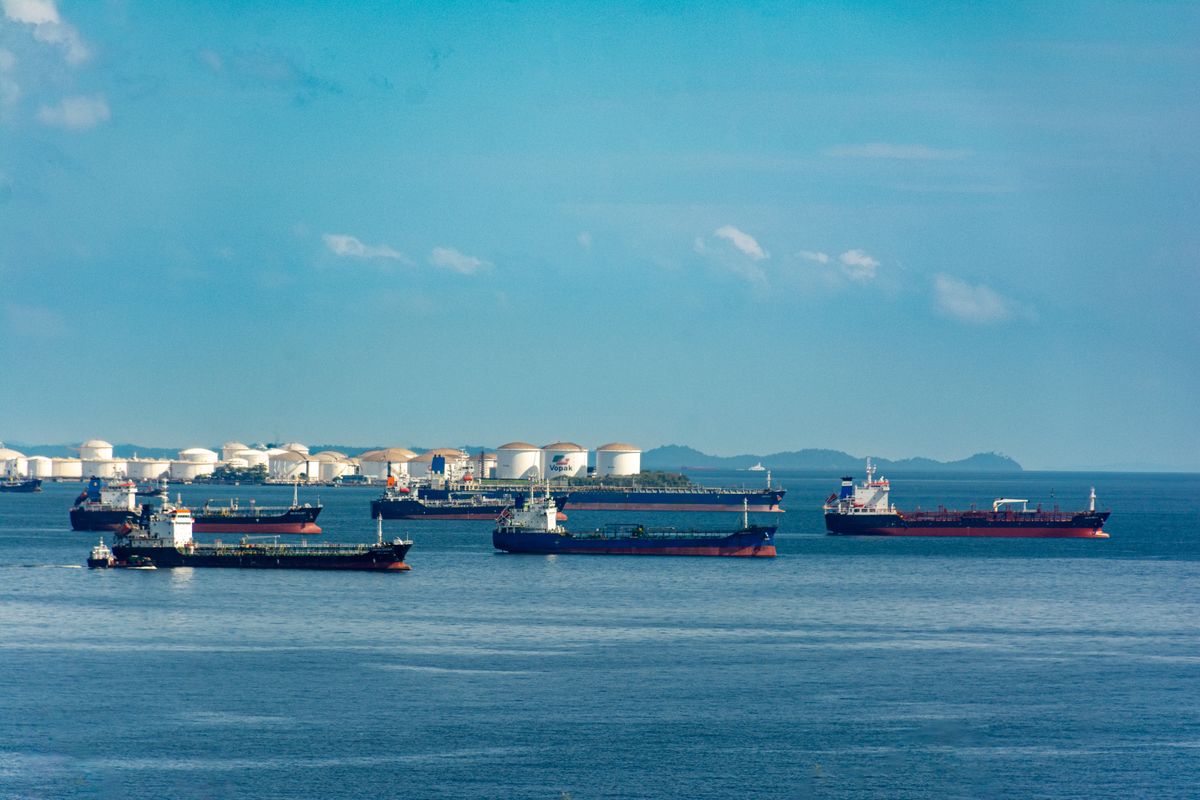
Meanwhile, Brent crude climbed to $116. Fifteen countries enacted emergency energy measures. The IEA declared this the worst energy disruption since record-keeping began — worse than 1973 and 1979 combined.
The gap between the victory narrative and the price at the pump has never been wider.
Five Regions, Five Wars
The Albis Perception Gap Index scored this story at 7.5 — Competing Realities tier. The divergence runs across every dimension: factual reporting, causal framing, emotional tone, who the heroes are, and who benefits from each version.
United States: Major outlets led with Trump's regime change claim and the prospect of negotiations. The framing centred on American military success — Iran's senior leadership eliminated, its navy and air force destroyed, new leaders open to talks. Oil prices appeared as a secondary concern, often accompanied by reassurances about American energy independence. Middle East (Arabic and Farsi): The same day looked completely different. Farsi media — including Tabnak and Tribune Zamaneh — reported that "this failure not only did not topple the Iranian regime but made it more resilient." BBC Arabic ran a piece headlined "7 mistakes Western experts make about Trump's Iran war." Cedar News posed the paradox: "If America kills an Iranian leader, critics say it strengthens the regime; if some survive, it proves American weakness — everything the US does is wrong."Iran's parliament speaker Qalibaf declared: "Our men are waiting for the ground arrival of American soldiers to set fire upon them and punish their regional partners forever." This quote ran as a headline across Arabic and Farsi outlets. In American media, it appeared — when it appeared at all — as a brief aside.
Europe: BBC and Guardian coverage treated Trump's victory claims with open scepticism. The framing was strategic failure: a war with shifting objectives, no exit strategy, and a spiralling energy crisis dragging the continent toward recession. Russian outlet Meduza reported: "The war is clearly not going according to US plans." South Asia: Hindi media barely mentioned regime change. The lead story was oil at $116 and what it means for 1.4 billion Indians cooking with LPG that they can no longer afford. AajTak and India Daily focused on a separate dimension entirely: Iran had offered safe passage through Hormuz to "friendly nations" — India, Russia, China, Pakistan, and Iraq. The victory-or-defeat debate was irrelevant. The question was survival. Asia-Pacific: Korean and Japanese outlets led with the IEA's emergency declaration and strategic reserve releases. South Korea was buying Russian naphtha for the first time since 2022. Japan had opened Hokkaido reserves. Australia had only 30 days of fuel left. The American president's claims about regime change did not appear in most coverage.The Perception Mechanics
The US-Middle East gap is the widest at 9.0 on the regional pair index. Consider what this means in practice:
An American reading the New York Times on March 30 learned that Trump claimed regime change and a deal was close. An Iranian reading Tabnak learned that the regime survived decapitation and was more resilient than before. An Indian reading AajTak learned that LPG prices were crushing restaurant chains across Delhi.
Same war. Same day. Three completely incompatible realities, each internally coherent and supported by real facts.
The cui bono dimension scores highest at 8.0. The American framing serves a domestic re-election narrative — the war is won, the president is strong, the deal is coming. The Iranian framing serves regime survival — resistance works, the enemy is failing. The South Asian framing serves a different agenda entirely — India as regional power stepping up while superpowers fight.
None of these are lies. All of them are selections. The question the Perception Gap Index measures is not who is lying but what is being left out.
What Gets Lost Between the Framings
Here is what no single regional media ecosystem reported in full on March 30:
Trump claimed victory. Iran's parliament promised fire. Oil hit $116. US Special Forces arrived in the Gulf without orders. Houthis threatened a second chokepoint. Israel expanded its occupation of Lebanon to 10% of Lebanese territory. An Iranian missile struck a US base in Saudi Arabia, injuring 10 Americans. The IEA called it the worst energy crisis in history. South Korea broke sanctions to buy Russian naphtha. Sri Lanka went to a four-day work week because India's emergency fuel shipment wasn't enough.
Each outlet selected three or four of these facts and built a coherent narrative around them. The complete picture — in which victory claims and $116 oil and ground troop deployments and civilian displacement all happen simultaneously — appeared nowhere.
That gap is the story.
The Pattern
This is the third time the PGI has scored a Trump victory claim above 7.0 during this war. Each time, the same pattern repeats: American media leads with the claim, Middle Eastern media leads with the contradiction, European media leads with scepticism, and Asian media leads with the cost.
What has changed since day 21 is scale. On March 21, oil was $94. The gap between the narrative and the price was visible. At $116, it is undeniable — except in the outlets that choose not to report the price alongside the claim.
The war is one month old. Whether it is nearly won or barely started depends on where you read the news.
This story was scored by the Albis Perception Gap Index — measuring how differently the world frames the same events. See today's most divided stories →
Add context
Know something useful about this story?
Albis is built for public understanding. If you have a source, lived experience, or a missing angle, you can add context for others.
Share context →Sources & Verification
Based on 5 sources from 2 regions
- Times of IsraelMiddle East
- CNN AnalysisNorth America
- NPRNorth America
- Al JazeeraMiddle East
- Bulletin of the Atomic ScientistsNorth America
Conversation
What are you seeing?
Add local context, a source, a question, or a perspective we may have missed. You can comment as a guest or create a free account.
Loading conversation…
Get the daily briefing free
News from 7 regions and 16 languages, delivered to your inbox every morning.
Free · Daily · Unsubscribe anytime
🔒 We never share your email