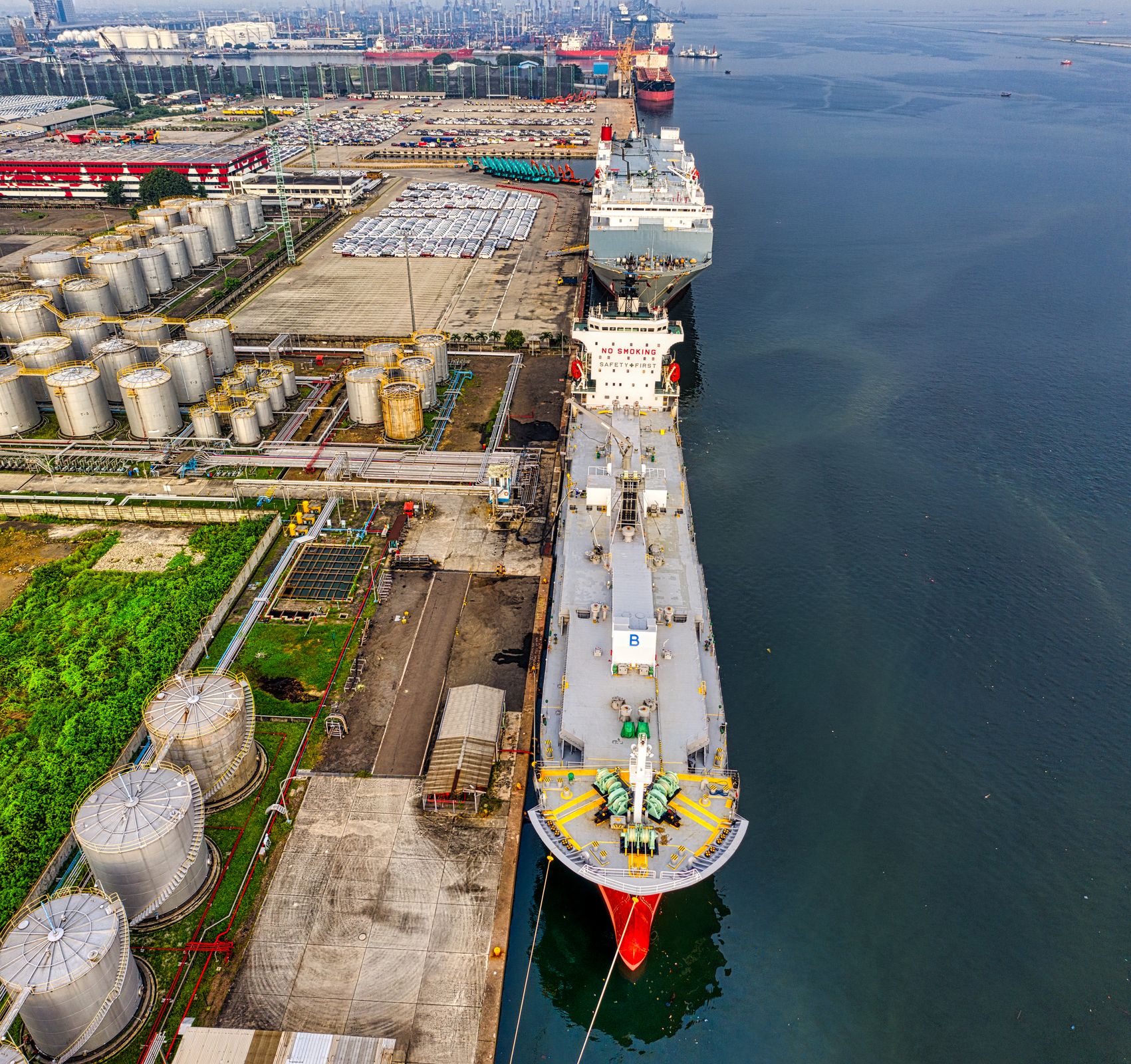
Argentina LPG Exports Double as 3 Billion Face Gas Crisis
While the Gulf war blocks 30% of the world's cooking gas, Argentina quietly doubled LPG shipments from Vaca Muerta. Twenty-six countries just met in Buenos Aires — and most of the world has no idea.

Three billion people on Earth cook with liquefied petroleum gas. Right now, roughly 30% of the world's LPG can't leave the Persian Gulf because of the Strait of Hormuz blockade. And last week, delegates from 26 countries gathered in Buenos Aires to discuss a solution that 5.1 billion people have never heard of.
Argentina is doubling its cooking gas exports — and almost nobody outside Latin America knows.
The Summit the World Missed
From March 24 to 26, the 39th Congress of the Ibero-American LPG Association (AIGLP) brought together representatives from 26 countries and 59 companies in Buenos Aires. The agenda was blunt: where does the world get cooking gas now that the Gulf is burning?
"Today everyone wants to know what's going to happen with Argentina, with Vaca Muerta," said Fabricio Duarte, executive director of the AIGLP. He pointed to India — where hundreds of millions face LPG shortages — as the clearest example of what happens when a nation depends on a single supply corridor.
The answer emerging from Buenos Aires: Patagonia's shale fields could become a pressure valve for the planet's cooking gas emergency.
From Shale Rock to Kitchen Stove
Vaca Muerta — literally "dead cow" — is one of the largest shale gas formations on Earth. In 2025, Argentina exported 1.6 million tonnes of LPG, more than double its own domestic consumption. Monthly production in January 2026 hit 259,000 tonnes, and the trend line is pointing up.
The numbers are already moving. In the first three months of 2026, Argentina shipped 50,000 tonnes of LPG to India — more than double the 22,000 tonnes it sent in all of 2025. An 11,000-tonne cargo left the port of Bahia Blanca on March 5, weeks after the Hormuz closure turned the Gulf into a shipping dead zone.
YPF, Argentina's state-run energy company, projects the country's total energy exports could hit $50 billion annually by 2031. LPG is a growing part of that bet.
Why This Matters for How People Eat
This isn't an abstract commodity story. LPG is what heats the pan in a kitchen in Mumbai, boils water in a home in Dhaka, and warms a house in rural Pakistan. When LPG runs short, families burn wood, charcoal, or cow dung instead — filling their kitchens with smoke that the WHO links to 3.2 million deaths per year.
The Gulf war's cascade into daily life has already forced India to ration commercial LPG, shut restaurants off gas, and push families back toward dirtier fuels. Sri Lanka is on a four-day work week. Bangladesh and the Maldives are asking India for help, and India barely has enough for itself.
Argentina's LPG can't replace the Gulf. The math doesn't work: Vaca Muerta's entire annual output is a fraction of what Qatar alone exports. And the shipping distance from Bahia Blanca to Mumbai is roughly three times the route from the Persian Gulf. Each tanker takes weeks longer.
But as a stopgap, it's real. And the 26 countries that showed up in Buenos Aires know it.
The Invisible Lifeline
Here's what makes this story invisible: it's only being covered in two regions. Latin American media frames it as a point of national pride — Argentina arriving on the world energy stage. European outlets mention it as a footnote in diversification coverage. Everyone else — the United States, the Middle East, South Asia, Asia-Pacific, Africa — has no reporting on this summit at all.
That's a GAI score of 6.27 out of 10. An "Information Shadow."
The irony is sharp. The people who most need to know about alternative LPG sources — the 3 billion who cook with gas, concentrated in South Asia, Southeast Asia, and Africa — are the ones least likely to see this story. India's own media covers the Argentina-India LPG trade, but the broader picture of a global summit in Buenos Aires with 26 nations doesn't appear in Hindi, Bengali, or Urdu coverage.
Pedro Cascales, president of Argentina's LPG industry chamber, told the Buenos Aires congress that "Argentina positions itself as a key destination for energy investment, especially from the development of Vaca Muerta, one of the world's leading shale gas and shale oil reserves."
What Happens Next
Argentina has leverage it didn't have a year ago. Oil at $116 a barrel, the Gulf in flames, and a shale formation that's still ramping up. The question is whether the infrastructure can keep pace: Bahia Blanca can only load so many tankers, and pipeline capacity from Patagonia to the coast is the real bottleneck.
In the background, there's a harder truth. Twenty million Argentines — 46% of the country's population — rely on LPG canisters themselves for cooking and heating. Exporting gas while your own people depend on it creates tension. Domestic LPG prices in Argentina have already risen 30-100% in line with global markets.
The world's cooking gas map is being redrawn. The 26 countries that flew to Buenos Aires can see it. The rest of the world is still watching the Strait of Hormuz and waiting for a solution that may never come from the Gulf.
This story was identified by the Albis Global Attention Index — measuring which stories the world isn't seeing. Explore today's blind spots →
Add context
Know something useful about this story?
Albis is built for public understanding. If you have a source, lived experience, or a missing angle, you can add context for others.
Share context →Sources & Verification
Based on 4 sources from 3 regions
- InfobaeLatin America
- Times of IndiaSouth Asia
- ReutersInternational
- Economic TimesSouth Asia
Conversation
What are you seeing?
Add local context, a source, a question, or a perspective we may have missed. You can comment as a guest or create a free account.
Loading conversation…
Get the daily briefing free
News from 7 regions and 16 languages, delivered to your inbox every morning.
Free · Daily · Unsubscribe anytime
🔒 We never share your email