Four Wars, One Crisis: How Iran, Lebanon, Pakistan and the Gulf Became a Single Conflict
Israel's ground troops entered Lebanon. Qatar shut down 20% of the world's LNG. Pakistan's stock market crashed. These aren't separate events — they're one interconnected crisis reshaping the global order in real time.

Five days ago, the United States and Israel began bombing Iran. Today, Israeli ground troops are in southern Lebanon, 20% of the world's liquefied natural gas is offline, and Pakistan's stock market just suffered its largest single-day crash in history. Four conflicts are now burning across the same arc of territory from Beirut to the Afghan border — and they're feeding each other.
The common thread isn't ideology or alliance. It's geography. Every one of these crises passes through a corridor stretching from the eastern Mediterranean to the Hindu Kush. And at the centre of that corridor sits a country buckling under the weight of all of them: Pakistan.
What happened today
Israel launched what it called a "broad wave of strikes" on Iranian infrastructure early Wednesday — launch sites, aerial defence systems, weapons storage, command centres. This marks a shift. Previous days targeted military and nuclear installations. Now it's broader.
At the same time, Israeli ground troops crossed into southern Lebanon for the first time since the November 2024 ceasefire collapsed. The IDF described it as "forward defence." The New York Times reported plans that include "the option of going deeper." Israel is now calling up tens of thousands of reservists to the Lebanese border.
Iran fired back. Its 16th wave of "Operation True Promise 4" launched missiles and drones at Israeli territory. A drone struck the US consulate in Dubai, starting a fire. Interception fragments hit the Burj Al Arab and Fairmont Palm hotels.
Meanwhile, in a war the world is barely watching, Pakistan continued airstrikes on Kabul, Kandahar and Paktika. The Taliban fired anti-aircraft guns at Pakistani jets over Kabul. UNAMA confirmed 42 Afghan civilians killed in cross-border clashes since February 26. Pakistan's government said there would be no talks, no dialogue, no negotiation.
The energy weapon that backfired
Iran's strategy was simple: hit the Gulf states to make the war too expensive for everyone. Close the Strait of Hormuz. Turn oil into leverage.
It worked — briefly. Brent crude hit $83.44 on Wednesday, up 15% since the strikes began. Maritime traffic through Hormuz dropped 80%. Four tankers were struck. Insurers pulled war risk coverage, making the strait functionally closed even without a formal blockade.
But then two things went wrong for Tehran.
First, Trump countered. He ordered the US Development Finance Corporation to provide political risk insurance to shipping lines and said the Navy would escort tankers through Hormuz "as soon as possible." The move was designed to decouple oil from war — to keep crude flowing while the bombs keep falling.
Second, Iran's own strikes destroyed its diplomatic lifelines. By hitting Saudi Arabia, the UAE, Kuwait, Qatar, Bahrain and Oman, Tehran wrecked the 2023 China-brokered detente that had taken years to build. Qatar — which received no warning before Iranian missiles targeted its airport — severed communications with Tehran and arrested 10 suspected Iranian sleeper cell operatives.
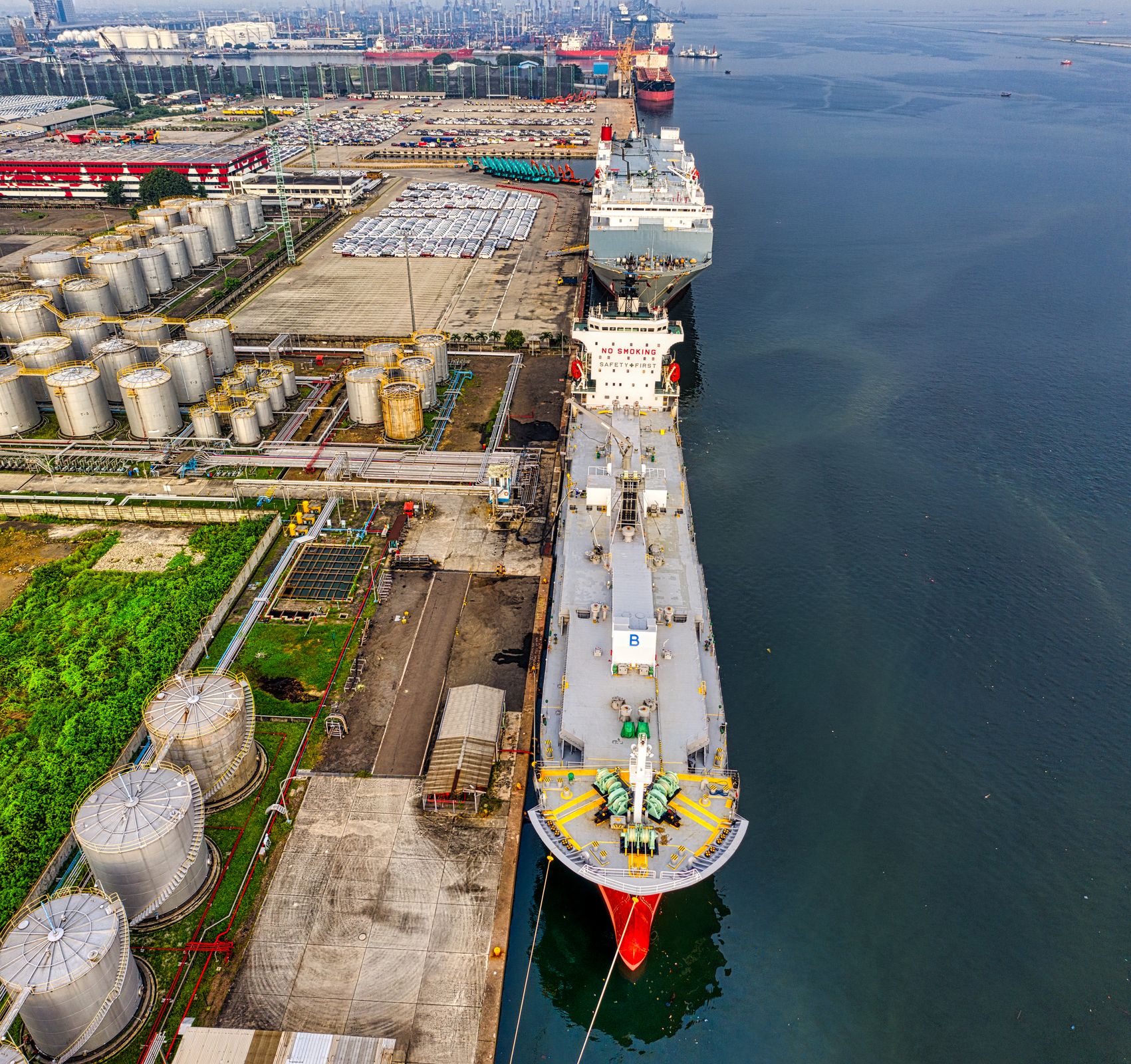
The QatarEnergy shutdown is the clearest example. Iranian drones hit Ras Laffan and Mesaieed, Qatar's two main LNG processing hubs. QatarEnergy halted all production — not just gas, but downstream operations including polymers, methanol and aluminium. European benchmark gas prices surged 48% intraday before settling 22% higher. Asian buyers scrambled.
Qatar supplies roughly a fifth of global LNG. Every day that production stays offline, the economic damage multiplies — and the pressure on Doha to join an anti-Iran coalition grows.
Pakistan: the hinge nobody's watching
The country most damaged by these overlapping crises isn't in the Middle East. It's Pakistan.
Start with the economy. Pakistan imports most of its oil and gas from the Gulf. Brent at $83 means fuel price hikes, an inflationary spiral, and deeper strain on an economy already reeling. The KSE-100 index crashed 16,089 points on Monday — its worst day ever. It clawed back 1.38% on Tuesday, but investor confidence is shattered.
Now add the war. Pakistan declared "open war" on Afghanistan on February 27 after Taliban border attacks. Its air force has struck 46 locations across Afghanistan, including Bagram. The Taliban is firing anti-aircraft weapons at Pakistani planes over its own capital. Afghan refugees in Pakistan face mass arrests, police raids and forced deportations. Hotels refuse Afghan passports.
The connection between these crises is direct. Iran had been mediating the Pakistan-Afghanistan dispute — Foreign Minister Araghchi was urging dialogue just days before the strikes began. That channel is dead. Tehran is now governed by an interim leadership council — President Pezeshkian, Chief Justice Mohseni-Eje'i, Guardian Council's Arafi and Parliament Speaker Ghalibaf — trying to manage a succession crisis under bombardment.
There's a refugee dimension too. Over 86,000 Afghans returned from Iran so far in 2026, pushed out by the war. They're heading to Afghanistan — a country now at war with Pakistan. Another 146,000 have returned from Pakistan. Double displacement, with nowhere safe on either end.
India is watching all of this with strategic interest. The Indian Air Force announced an exercise near the Pakistan border from March 5 to 12 — a timed signal. India Today's analysis suggests Pakistan deliberately escalated against Afghanistan before the Iran war to create a domestic crisis and avoid pressure to support the US anti-Iran coalition. True or not, the perception matters. Pakistan is being squeezed from every direction.
How different regions tell this story
The framing gaps are enormous.
American and British outlets describe an "infrastructure campaign" against Iran and a "forward defence" in Lebanon. Congressional authorization questions are emerging — the Boston Globe noted the war was launched "without formal declaration or address to the nation." The domestic debate is shifting from whether to strike to whether Trump has the legal authority.
Iranian media centres civilian casualties. The Red Crescent count stands at 787 dead. The human rights group Hengaw estimates 1,300 military killed separately. State broadcaster IRIB's headquarters were struck by Israeli missiles, interrupting transmissions — a fact that itself became the story.
Chinese state media frames the entire conflict as US aggression. The foreign ministry drew an explicit parallel between civilian targeting in Iran and Gaza. But Beijing won't act. Trade talks with Washington are looming. China condemned the killing of Khamenei as "unacceptable" while offering zero material support.
Gulf media is split between fury at Iran for striking them and unease about the wider war. Qatar's "no warning" revelation has shifted the regional narrative from "caught in the middle" toward "must act."
And Pakistan-Afghanistan? It's vanishing from global coverage. Foreign Policy ran a piece titled "Pakistan and Afghanistan Are Fighting, Too" — the headline itself a commentary on how overshadowed the conflict has become. Less attention means less pressure for restraint. Afghan civilian deaths are getting almost no international scrutiny.
What connects these wars
The temptation is to cover these as separate crises. Iran is about nuclear weapons and regional power. Lebanon is about Hezbollah. Pakistan-Afghanistan is about the TTP and border sovereignty. The Gulf is about oil.
But they share a single nervous system.
Iran's retaliation shut down Qatar's LNG and disrupted Hormuz, creating an energy shock that hits Pakistan hardest — a country already fighting its neighbour. Iran's chaos killed the diplomatic channel that could've brokered a Pak-Afghan ceasefire. Israel opening a ground front in Lebanon while bombing Iran stretches resources and attention in ways that benefit no one except the conflicts themselves.
Every escalation in one theatre makes de-escalation harder in the others. That's what makes this one crisis, not four.
What to watch tomorrow
The first US Navy tanker escort through Hormuz could be the next major flashpoint. If IRGC forces engage a US-escorted convoy, the war expands from air campaign to naval confrontation.
In Lebanon, the phrase "option of going deeper" from the NYT report hangs over everything. Tens of thousands of Israeli reservists deploying to the border suggests this isn't a limited incursion.
Brent crude approaching $85 would deepen Pakistan's economic crisis and increase European political pressure. Goldman's worst case remains $110 on prolonged Hormuz closure.
Iran's Assembly of Experts — the 88-member body that picks a new supreme leader — hasn't convened. An Israeli defence official said strikes targeted the building during a vote on Khamenei's successor. If the assembly can't meet under bombardment, the interim council becomes semi-permanent. Nobody knows what that means for who controls Iran's military.
And in the war no one is watching: Pakistan has closed the door on talks. Afghanistan has no mediator. 42 confirmed civilian dead and rising.
Four wars. One corridor. No off-ramp in sight.
Sources for this article are being documented. Albis is building transparent source tracking for every story.
Get the daily briefing free
News from 7 regions and 16 languages, delivered to your inbox every morning.
Free · Daily · Unsubscribe anytime
🔒 We never share your email