309,000 Tonnes Waiting in Haryana — The Wheat Story Missing From Most of the World
More than 309,000 tonnes of wheat were sitting unsold in Haryana mandis as rain, moisture rules and falling prices squeezed Indian farmers. Hindi farm coverage treated it as urgent. Most English audiences barely saw it.
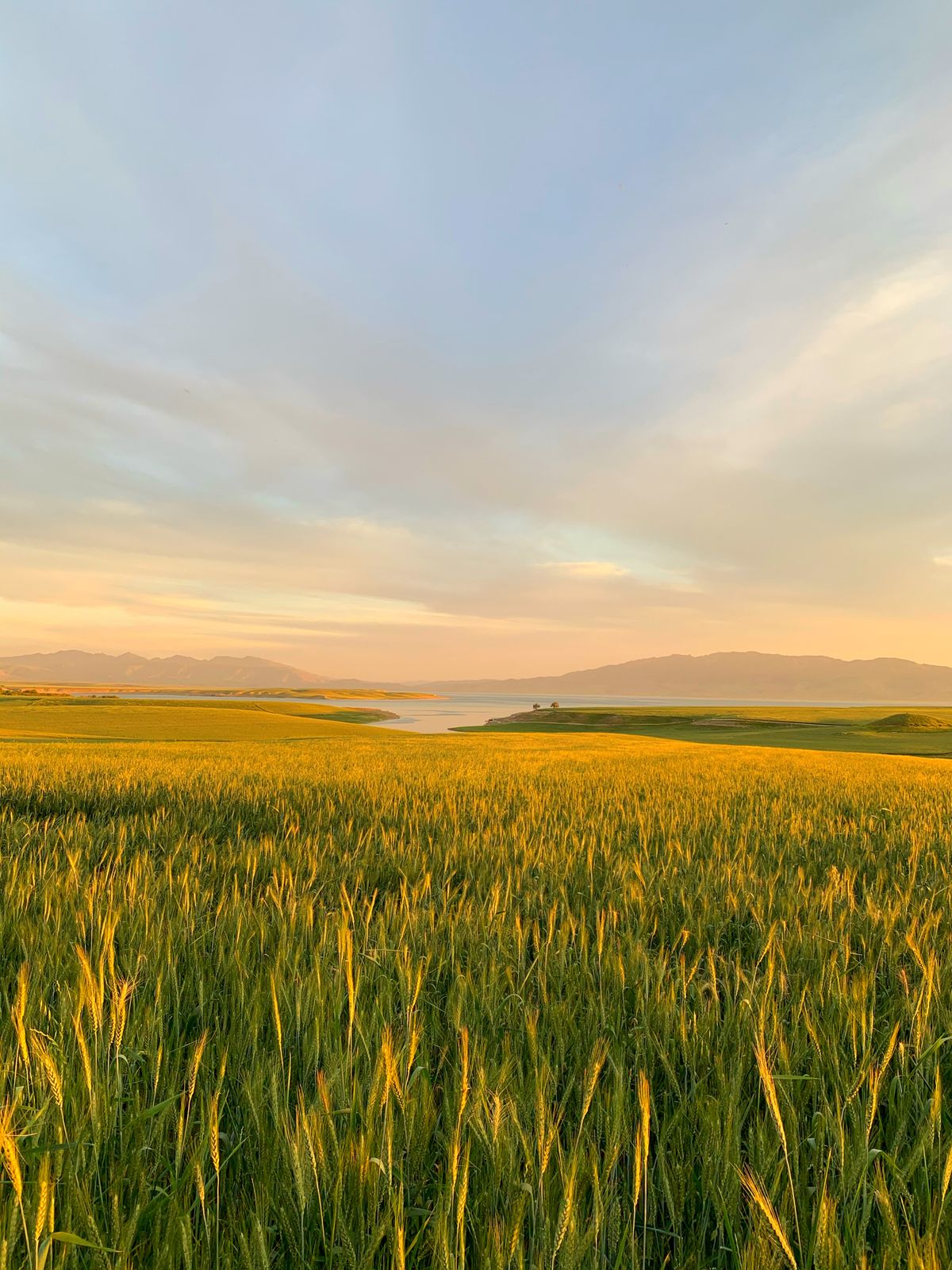
By Monday, 309,411.82 metric tonnes of wheat were still lying in Haryana’s mandis waiting to be bought, according to Hindi daily Amar Ujala — a figure large enough to fill thousands of trucks, and one that barely registered outside India’s regional-language news ecosystem.
That number sits inside one of the highest-GAI stories in Albis’s latest backing data: India’s wheat procurement season, covered intensely in Hindi and farm press, but with little meaningful attention in the wider English-language news flow. The global frame has stayed on war, oil and inflation. The local Indian frame has been more practical and more urgent: Is the grain too wet? Will the state buy it? How long can farmers wait in the market yard before quality slips and prices fall?
This week, Hindi coverage across Haryana, Uttar Pradesh and Madhya Pradesh read like a rolling operational bulletin. Local outlets tracked rain, hail, mandi arrivals, moisture tests, bag shortages, biometric bottlenecks and state-level procurement targets market by market. The story was not abstract food security. It was the mechanics of whether harvested wheat could actually move from farms into public stocks.
The bottleneck is not planting. It is purchase.
India’s central government has set a wheat procurement target of 30.336 million tonnes for the 2026-27 rabi marketing season, according to The Hindu and BusinessLine. On paper, that looks stable. In practice, the early days of the season have been ragged.
Hindi farm outlet Kisan India reported that only 17,883 tonnes had reached government stocks in the initial phase, even after some states were allowed to begin early procurement. It also noted that mandi prices in several places were running below the minimum support price of 2,585 rupees per quintal, putting farmers under pressure to sell quickly.
That is where local Hindi reporting became more revealing than the thin English summary coverage. In Haryana, Amar Ujala reported that wheat arrivals had already reached 645,971.77 metric tonnes by Monday, but agencies had purchased only 116,137.78 metric tonnes — about 18 percent. Officials were asking New Delhi and the Food Corporation of India for relaxation in rules on moisture and “luster loss,” because rain had dulled the grain and pushed quality outside procurement norms.
In other words: the wheat existed, but the system was struggling to absorb it.
Weather turned a procurement issue into a livelihood issue
The trigger was not one dramatic disaster. It was a sequence of ordinary agricultural vulnerabilities arriving at once.
Indian English outlets did note the weather risk. BusinessLine said weather and market prices would be the two decisive variables for whether procurement targets could be met. The Times of India, citing an advisory from the International Rice Research Institute South Asia Regional Centre, warned that grain moisture above 14 percent can lead to reduced procurement rates or outright rejection.
Hindi and local outlets stayed closer to the farm gate. They described wet grain in open mandis, delayed lifting, farmers protesting purchase rules, and crop arrivals bunching up while agencies waited for moisture readings to fall. That distinction matters. English-language commodity coverage often asks whether India will meet a procurement target. Regional-language coverage asks what happens to a farmer when the answer is no, or not yet.
Why this story stayed mostly inside India
There was some English coverage, but it was narrow. National and business publications covered the target, the broad weather outlook and the official numbers. What did not travel was the density of the local reporting — the sense that this was a distributed food-system stress story unfolding across dozens of markets at once.
That is likely why the story scored so high on Albis’s Global Attention Index. In the latest available data, it appeared primarily in South Asian coverage, with the US, Europe, Middle East, Asia-Pacific, Latin America and Africa largely absent. For audiences outside India, wheat becomes visible only when it moves a global price chart. For Hindi audiences, it becomes visible when procurement stalls, sacks run short, rains hit during harvest, and grain starts losing value in the open.
The consequence is a blind spot. A country of 1.4 billion people is trying to move one of the world’s biggest wheat harvests into state storage under volatile weather conditions, and most international readers are not really seeing the operational strain.
The bigger food-security signal
This matters beyond India because procurement is not just a domestic accounting exercise. Government buying determines buffer stocks, stabilises farm incomes, and shapes how much grain can be released later into the public distribution system. When procurement slows, the effect is not limited to one mandi gate. It ripples outward through storage, prices, farmer liquidity and future planting confidence.
India has already spent years managing heat waves, erratic rainfall and export restrictions in wheat. This week’s reporting suggests another layer of fragility: even when the harvest is there, getting it into the system is increasingly a climate-and-logistics race.
That is the part most of the world missed. Not a crop failure headline. Not a trade ban. Just a quieter warning from Hindi newspapers and farm sites: the resilience of a food system is being tested in procurement yards, under tarpaulins, one moisture reading at a time.
For readers wanting the broader attention-gap context, Albis tracks these blind spots through the Global Attention Index and maps how regional coverage diverges from what shows up in mainstream feeds. India’s wheat bottleneck also fits a larger pattern in our perspectives coverage: stories closest to households and farm incomes often remain invisible until they harden into a global crisis.
Add context
Know something useful about this story?
Albis is built for public understanding. If you have a source, lived experience, or a missing angle, you can add context for others.
Share context →Sources & Verification
Based on 5 sources from 2 regions
- Amar UjalaIndia / Hindi
- Kisan IndiaIndia / Hindi
- The Hindu BusinessLineIndia / English
- The HinduIndia / English
- Times of IndiaIndia / English
Conversation
What are you seeing?
Add local context, a source, a question, or a perspective we may have missed. You can comment as a guest or create a free account.
Loading conversation…
Get the daily briefing free
News from 7 regions and 16 languages, delivered to your inbox every morning.
Free · Daily · Unsubscribe anytime
🔒 We never share your email


