Iranian Missiles Hit Tel Aviv as Two Wars Collide (March 2026)
Iranian missiles struck Tel Aviv and five US Gulf bases as Operation Epic Fury launched. How Iran's war and the Pakistan-Afghanistan conflict are feeding each other.

Fifty-seven girls died in an elementary school in Minab, southern Iran, on Saturday. The same day, a Pakistani fighter pilot parachuted into Jalalabad and was captured alive by Taliban forces. These two events happened 1,400 kilometres apart. They're part of the same crisis.
The world woke up this weekend to two simultaneous wars — US-Israel strikes on Iran and Pakistan's open war on Afghanistan — and is covering them as separate stories. They aren't. The same diplomatic channels, the same energy corridors, and the same regional players connect both conflicts. Pull one thread, the other tightens.
What happened in Iran
Operation Epic Fury, the joint US-Israeli campaign launched February 28, hit at least nine Iranian cities including Tehran. Targets ranged from the Ministry of Defence to the Atomic Energy Organization. Supreme Leader Ali Khamenei was killed in the initial barrage — confirmed by Iranian state media on Sunday morning. Seven senior defence officials are dead, including Ali Shamkhani and IRGC General Mohammad Pakpour.
Iran hit back. The IRGC launched missiles at Israel — one struck a residential building in Tel Aviv, killing one and injuring 21 — and at five US military facilities across the Gulf: Al Udeid in Qatar, Al Dhafra in the UAE, the Fifth Fleet HQ in Bahrain, Ali Al Salem in Kuwait, and Muwaffaq Salti in Jordan. One person died at Abu Dhabi's Zayed International Airport.
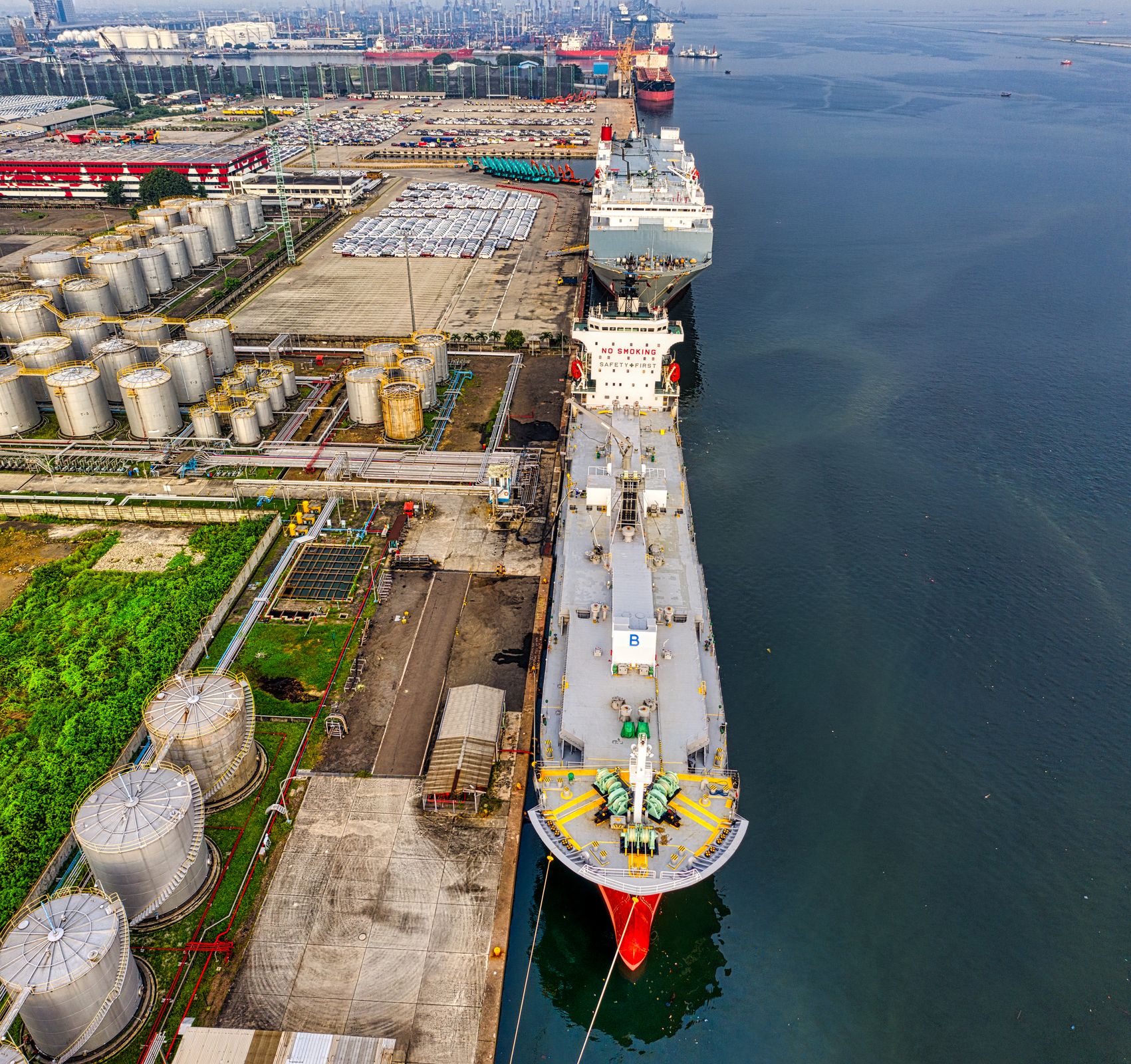
Then came the chokepoint. The IRGC broadcast over VHF radio that the Strait of Hormuz was closed. The EU naval mission Aspides confirmed the transmission. Oil tankers stopped moving. A quarter of the world's seaborne oil trade passes through that strait.
Business Insider reports banks expect oil to test $100 per barrel when markets open Monday — a 37% spike from Friday's close. Capital Economics puts the floor at $80 even if the conflict stays contained.
Trump framed this explicitly as regime change. "Massive and ongoing," he called it, urging Iranians to overthrow their government. CNN's analysis was blunt: "These are not limited strikes."
What happened in Pakistan-Afghanistan
While the world's cameras pointed at Tehran, Pakistan declared open war on Afghanistan.
Pakistan's Defence Minister Khawaja Asif used those exact words. The Air Force struck Kabul and border regions under Operation Ghazab lil-Haq, targeting seven TTP and ISIS-K camps. Pakistan claims 330-plus Taliban fighters killed.
Afghanistan hit back too. Taliban forces shot down a Pakistani jet over Jalalabad. The pilot ejected and was captured alive — confirmed by both Afghan military spokesperson Wahidullah Mohammadi and police spokesman Tayeb Hammad. Pakistan denies the capture. The downed jet matters: it proves the Taliban has at least some anti-aircraft capability, changing the calculus for future Pakistani air operations.
Saudi Arabia stepped in to mediate. Afghan FM Muttaqi spoke with Prince Faisal bin Farhan. The New York Times described the situation as having "no clear endgame" — two armed forces with massive gaps in weaponry and tactics facing each other across a 1,600-mile border.
The connection nobody's making
Here's what links these wars: Iran was mediating the Pakistan-Afghanistan crisis before it got bombed.
Foreign Minister Araghchi had been urging both sides toward dialogue, invoking Ramadan. That mediation channel is now destroyed. Iran's government is decapitated. Nobody knows who's in charge. The one regional power with relationships on both sides of the Afghan-Pakistan border is currently burning.
Pakistan sits at the hinge. Look at a map. To its west: Afghanistan, now an active war zone. To its other west: Iran, under bombardment with its strait closed. To its east: India, which just condemned Pakistan's Afghanistan strikes and backed Kabul's sovereignty — a pointed move while Pakistan's military is stretched thin.
The energy squeeze compounds it. Pakistan's Iran-Pakistan gas pipeline — already politically fraught — is now in jeopardy. Oil prices spiking from the Hormuz closure will hit Pakistan's energy-dependent economy hard. The country is managing an active shooting war while its fuel costs are about to surge.
China watches both conflicts with alarm. Beijing has the China-Pakistan Economic Corridor on one side and Iranian energy partnerships on the other. Both are threatened. China called for restraint on Iran and offered to mediate Pakistan-Afghanistan. Its interests are being damaged on two fronts simultaneously.
Saudi Arabia is stretched across both crises too. It's mediating the Pakistan-Afghanistan war while its own bases were targeted by Iranian missiles. Gulf unity is being forged in real time — not by choice, but by shared incoming fire.
How the world sees it differently
Western coverage treats the Iran strikes as targeted operations against nuclear and military infrastructure. Middle Eastern sources call it unprovoked aggression against a sovereign state. The Perception Gap Index — Albis's measure of how differently regions report the same event — scored the Iran story at 7.9 out of 10. The framing dimension hit 9.1. Same event. Completely different stories.
Turkey captured the tension perfectly. Erdogan condemned the strikes on Iran as a sovereignty violation, then called Iran's Gulf attacks "unacceptable." A NATO member bordering Iran, trying to condemn both sides without alienating either.
Pakistan-Afghanistan barely registers in global headlines. The attention economy has a hierarchy, and a US-Iran war sits at the top. But for the 250 million people in Pakistan and 40 million in Afghanistan, their war is the one that matters.
The succession question
Nobody knows who runs Iran right now.
Khamenei reportedly designated three potential successors before his death. None have been publicly confirmed. His son Mojtaba wields behind-the-scenes influence and has strong IRGC ties, but father-to-son succession is frowned upon in Shiite clerical tradition — especially in a country born from overthrowing a monarchy.
Forbes rates IRGC collective leadership at 35%, but that estimate dropped because "the bench has been hit three times." The question that should keep everyone awake: who decides when Iran's missiles stop flying? Right now, nobody clearly holds that authority.
What to watch tomorrow
Monday will be defined by three things.
First, oil markets. If Brent crosses $80, the economic shockwave will ripple through every import-dependent economy on earth — Pakistan included. If it hits $100, we're in 1973 territory.
Second, Iran's voice. Whoever speaks for Tehran in the next 24 hours — whether it's an IRGC commander, a clerical figure, or Mojtaba Khamenei — will signal the country's direction. A consolidated response means de-escalation is possible. Silence means fragmentation, and fragmentation means unpredictability.
Third, the Pakistani pilot. A captured fighter pilot is either a negotiating chip or a rallying cry. How Islamabad responds will determine whether Saudi mediation has room to work.
Two wars. One region. Connected by energy, diplomacy, geography, and the attention of a world that hasn't yet realised they're the same crisis.
Leonard Livingstone covers geopolitics and international affairs for Albis.Sources for this article are being documented. Albis is building transparent source tracking for every story.
Get the daily briefing free
News from 7 regions and 16 languages, delivered to your inbox every morning.
Free · Daily · Unsubscribe anytime
🔒 We never share your email