DeepSeek V4 Will Run Entirely on Huawei Chips. The AI Decoupling Is Here.
Alibaba's DeepSeek announces its next-generation model will train and run exclusively on Huawei Ascend 950PR processors, eliminating dependence on NVIDIA hardware.
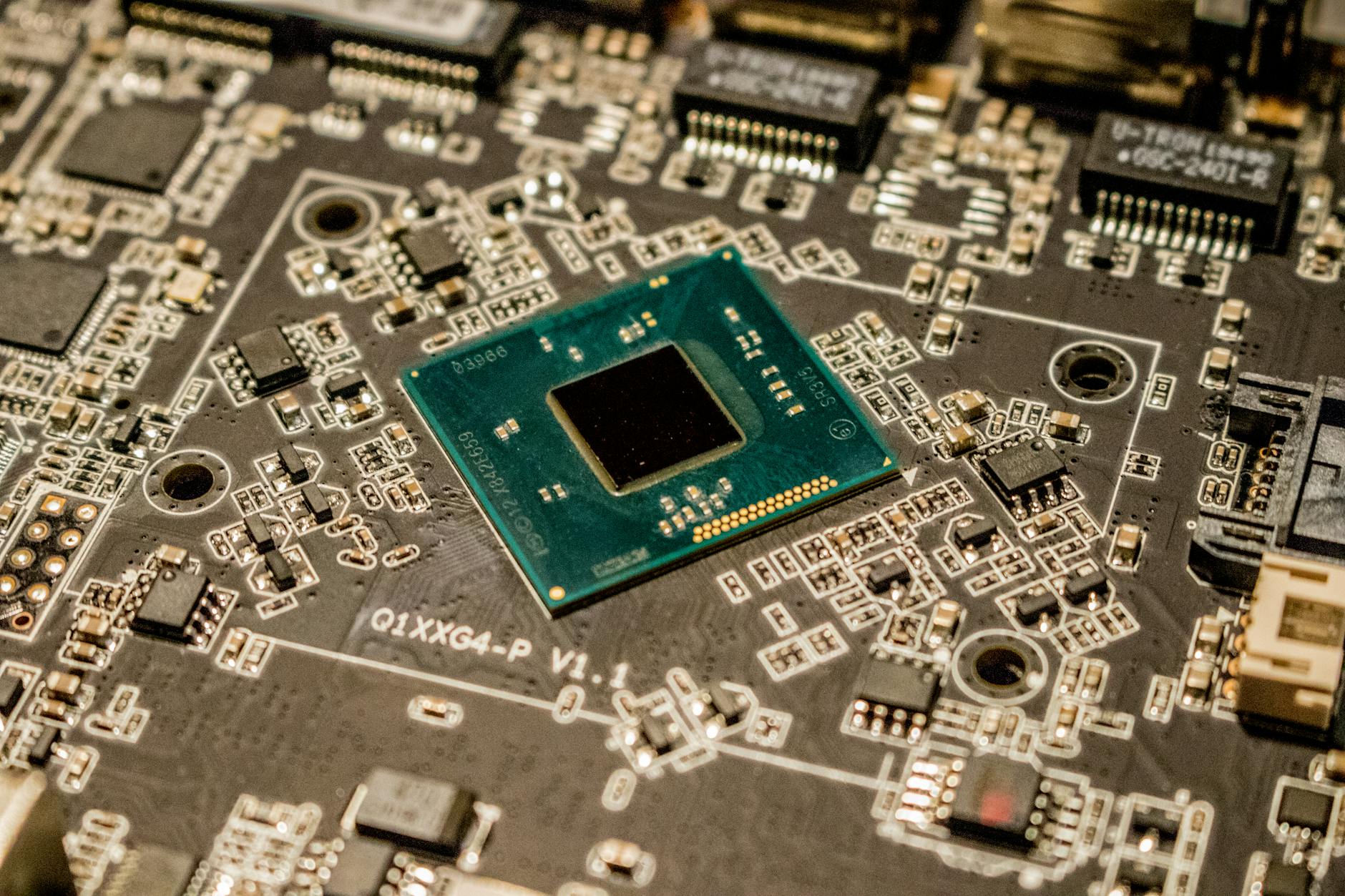
DeepSeek, the Alibaba-backed AI lab that shocked the industry in January with a model rivalling GPT-4 at a fraction of the cost, said Friday that its next-generation V4 model will train and deploy entirely on Huawei's Ascend 950PR processors.
No NVIDIA chips. No AMD fallback. No workaround imports through Southeast Asian intermediaries. The entire stack — training, fine-tuning, inference — will run on Chinese-designed and Chinese-manufactured silicon, according to a statement from DeepSeek's parent company posted on its WeChat account.
Alibaba, ByteDance and Tencent have placed bulk orders for the Ascend 950PR, according to reporting from the South China Morning Post, making it the de facto standard chip for China's AI industry.
What the Ascend 950PR Is
Huawei's Ascend 950PR is a 7-nanometre AI accelerator fabricated by SMIC, China's largest chipmaker. It delivers roughly 60 percent of the raw floating-point performance of NVIDIA's H100, according to benchmark data compiled by SemiAnalysis, a semiconductor research firm.
That gap matters less than it appears. DeepSeek's V3 model, released in January, demonstrated that architecture and training efficiency could compensate for hardware limitations. V3 reportedly trained on a cluster of older Ascend 910B chips at a cost DeepSeek estimated at $5.6 million — compared to the $100 million or more that US labs spend training comparable models on NVIDIA hardware.
"The question was never whether Chinese chips could run AI models," said Dylan Patel, chief analyst at SemiAnalysis. "It was whether the software ecosystem could mature fast enough. DeepSeek's answer is yes."
US Export Controls Accelerated This
The United States has imposed three rounds of semiconductor export restrictions targeting China since October 2022, each designed to prevent Beijing from accessing the most advanced AI training hardware. The restrictions blocked sales of NVIDIA's A100, H100 and subsequent chips, along with the lithography equipment needed to manufacture advanced processors domestically.
The controls slowed China's progress. They did not stop it.
Chinese chip firms posted record revenue in Q1 2026, according to data from IC Insights. SMIC's 7nm production line, once dismissed by Western analysts as a dead end, now runs at sufficient volume to supply Huawei's AI chip programme. Huawei shipped an estimated 200,000 Ascend 910B units in 2025 and has ramped 950PR production since January, according to supply-chain reports from Nikkei Asia.
The US House of Representatives this week introduced the MATCH Act, a bipartisan bill that would ban exports of older DUV lithography equipment to China — closing a gap that allowed SMIC to build its 7nm line using machines from ASML, the Dutch firm that dominates chipmaking equipment. The bill would also prohibit US and allied companies from servicing existing equipment in Chinese fabs.
Beijing Calls It Vindication
Chinese state media treated the DeepSeek announcement as confirmation of national strategy. Xinhua ran it under the headline "China's AI enters the era of full independence." CCTV's evening news broadcast opened with the story, followed by footage of the Ascend production line at Huawei's Dongguan campus.
People's Daily published a commentary arguing that US export controls had "gifted China the urgency to build what it should have built a decade ago."
The framing in Washington was different. The Wall Street Journal reported the news on page B3, under the headline "Chinese AI Lab Claims Break From US Chips." Bloomberg's coverage emphasised uncertainty about whether the 950PR could match NVIDIA's performance at scale, citing anonymous industry sources.
In Seoul, where Samsung and SK Hynix supply the memory chips that both US and Chinese AI systems require, the Korea Economic Daily noted that Korean firms were still selling to both sides — for now.
The Parallel Ecosystem Takes Shape
DeepSeek V4 on Huawei chips is not an isolated event. It sits inside a broader pattern: China's AI ecosystem is bifurcating from the US-led stack at every layer.
Baidu's Ernie 5.0, expected later this year, will also run on Ascend hardware. The Chinese Academy of Sciences announced in March that its new climate-modelling supercomputer would use Ascend chips exclusively. Alibaba Cloud has begun offering Ascend-based AI inference as a service to enterprise customers across Southeast Asia.
The practical effect: two AI supply chains now exist. One runs through NVIDIA, TSMC and the US cloud providers. The other runs through Huawei, SMIC and Chinese cloud firms. They share some memory suppliers and some open-source software. In most other respects, they are diverging.
The MATCH Act, if passed, would accelerate the split further by cutting off maintenance for equipment already installed in Chinese fabs. ASML, which reported €28 billion in revenue in 2025, has lobbied against the bill, arguing it would cost Dutch jobs without changing the outcome.
DeepSeek V4 is expected to begin training in Q2 2026 and release publicly in the second half of the year. Its performance against GPT-5 and Claude 4 will be the first major benchmark of whether China's all-domestic AI stack can compete at the frontier.
Add context
Know something useful about this story?
Albis is built for public understanding. If you have a source, lived experience, or a missing angle, you can add context for others.
Share context →Sources for this article are being documented. Albis is building transparent source tracking for every story.
Conversation
What are you seeing?
Add local context, a source, a question, or a perspective we may have missed. You can comment as a guest or create a free account.
Loading conversation…
Get the daily briefing free
News from 7 regions and 16 languages, delivered to your inbox every morning.
Free · Daily · Unsubscribe anytime
🔒 We never share your email
