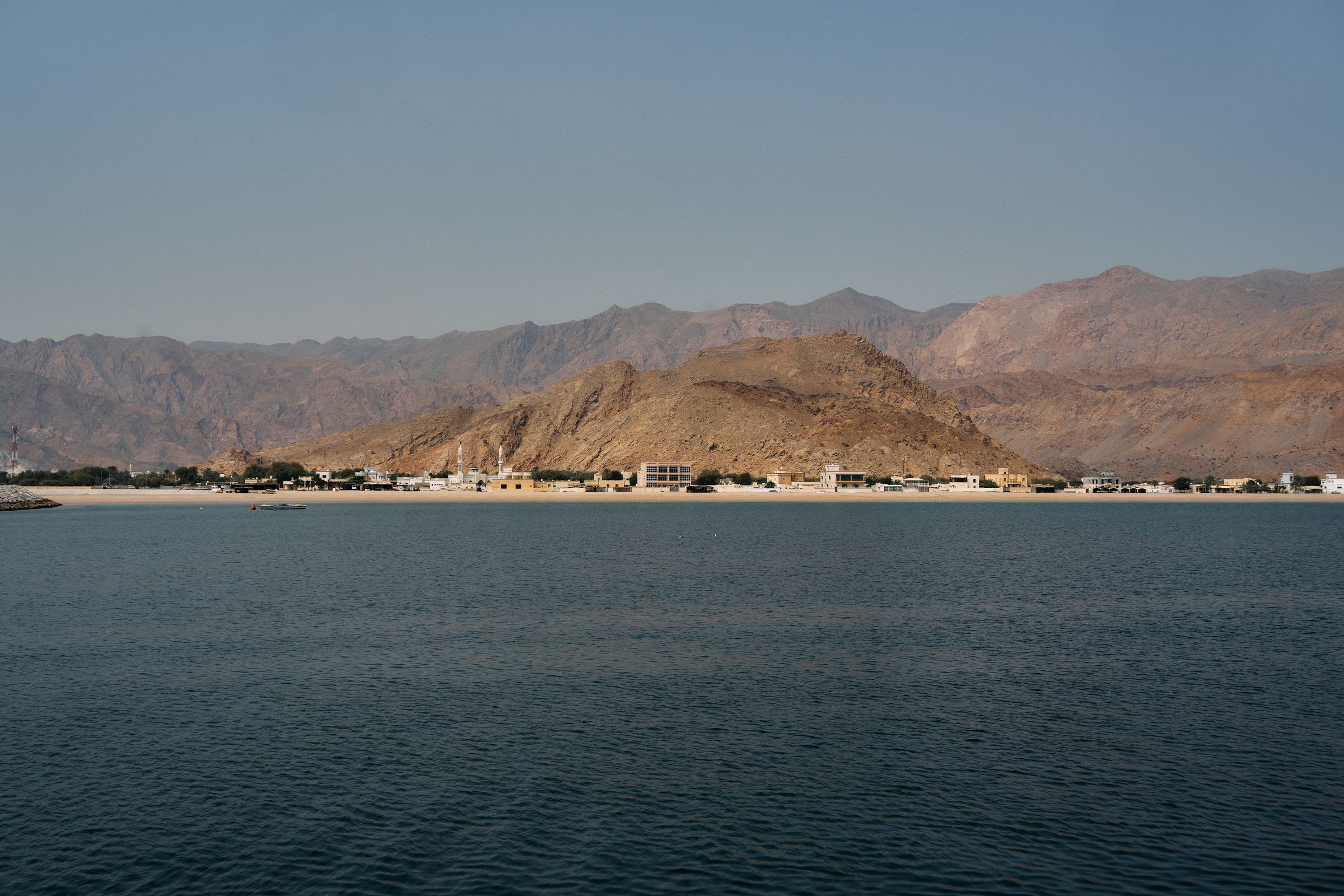
Iran Splits Hormuz Coalition With Japan Deal and Gulf Water Threats in 2026
Iran offered Japan safe passage through Hormuz while threatening to destroy Gulf desalination plants serving 100 million people. The 22-nation coalition condemning Tehran is already fracturing — here's how the selective blockade works.

Iran's foreign minister told Japanese media this weekend that Tehran would let Japanese-flagged ships pass through the Strait of Hormuz. Hours later, Iran's parliament speaker warned that Gulf desalination plants — the sole source of drinking water for over 100 million people — would be "irreversibly destroyed" if the US strikes Iranian power infrastructure. These aren't contradictory statements. They're two halves of the same strategy.
The 22-nation coalition that condemned Iran's Hormuz blockade on Saturday included the UAE, Bahrain, Japan, Australia, and New Zealand — the broadest diplomatic front against Tehran since the war began on March 1. Within 24 hours of that statement, Iran began picking the coalition apart.
The Selective Blockade
Iran doesn't need to close Hormuz to everyone. It only needs to close it selectively.
Since March 5, the IRGC has maintained that the strait is shut only to ships from the US, Israel, and their "Western allies." Turkish cargo has continued to transit. Indian and Chinese tankers have passed through with varying degrees of friction. Now Japan — a US treaty ally that signed the 22-nation condemnation — has been offered a private exit door.
The logic is straightforward. Japan imports 93% of its crude through Hormuz. That dependency gives Tehran extraordinary leverage. Iranian FM Abbas Araghchi's offer puts Tokyo in an impossible position: accept the deal and undermine the coalition it just joined, or reject it and watch its energy supply crater.
Japan's foreign minister Toshimitsu Motegi publicly denied Tokyo was pursuing unilateral talks with Iran. But Bloomberg reported the denial came only after the offer was already on the table — and Japanese media treated the prospect with visible seriousness, not dismissal.
Water as a Weapon
While offering Japan a lifeline, Iran simultaneously tightened the vice on Gulf states.
Mohammad Bagher Ghalibaf, speaker of Iran's parliament, responded to Trump's 48-hour power plant ultimatum on X with a direct threat: if Iranian electrical infrastructure is struck, "vital infrastructure across the region — including energy and desalination facilities" would be considered legitimate targets and "irreversibly destroyed."
This isn't a vague warning. It's a calculated threat against a precise vulnerability.
Kuwait gets 90% of its freshwater from desalination. Qatar depends on desalination for 99% of drinking water. The UAE operates 56 desalination plants that serve the majority of its population. Saudi Arabia's eastern seaboard — home to millions — runs on desalinated water from facilities clustered along the Persian Gulf coast.
A 2008 US diplomatic cable, leaked by WikiLeaks, warned that if Saudi Arabia's Jubail desalination complex were destroyed, the country would need to begin evacuating within a week. Nothing has changed since then except the population has grown.
Gulf media treats this as the story of the day. Al Jazeera Arabic and Gulf outlets frame the desalination threat as an existential water crisis. Western outlets bury it under oil price coverage, leading with Brent crude's climb to $114 a barrel. The same threat reads as survival in Abu Dhabi and as a commodity footnote in New York.
The Pipeline That Waited 45 Years
Saudi Arabia's response reveals how long this scenario has been planned for.
Within hours of the Hormuz closure in early March, Riyadh activated the East-West pipeline — a 1,200-kilometer line built during the Iran-Iraq War in the 1980s, running from the eastern oil fields to the Red Sea port of Yanbu. Bloomberg ship-tracking data shows crude exports from Yanbu have surged to 3.66 million barrels per day, sometimes exceeding 4 million.
"The entire global economy is better off with the line in operation," said Jim Krane, an energy fellow at Rice University. "Were it not for this seamless Hormuz bypass, there'd be even more desperation in Trump's calls for allied help."
But the pipeline handles Saudi crude only. It can move roughly 5 million barrels per day at capacity. Hormuz normally carries 20 million. Kuwait, Iraq, Qatar, and the UAE have no equivalent bypass. Their exports remain trapped.
This is the fracture Iran is exploiting. Saudi Arabia can partially work around the blockade. Its Gulf neighbours can't. The coalition's unity depends on shared suffering — and that suffering isn't shared equally.
Six Clocks, One Chokepoint
Count the deadlines converging on Hormuz this week.
Trump's 48-hour ultimatum — posted on Truth Social at 23:44 GMT Saturday — expires Monday evening. The IRGC's counter-statement promised the strait would remain "completely closed until our damaged power plants are restored," which sets up an indefinite closure if strikes land. The CNBC CFO Council survey found US corporate leaders give the crisis two weeks before they begin planning for permanent disruption. Barclays projects that sustained oil above $100 will shave 0.2% from global growth and add 0.7% to inflation for every $10 per barrel.
Meanwhile, Brent hit $114 on Sunday's open. Physical cargo prices — what actual buyers pay for actual barrels — are running even higher, diverging from the paper benchmark. Korean refiners warn of naphtha shortages and draw explicit parallels to the 1973 oil shock. India's Modi called an emergency energy review after commercial LPG prices jumped 20%.
None of these clocks are synchronised. Trump's deadline is hours away. The corporate planning horizon is days. The macroeconomic damage accrues over weeks. The water crisis, if desalination plants are struck, would unfold in a matter of days.
What Different Regions See
The framing gap on this story runs deep.
Al Jazeera Arabic and Gulf outlets lead with water. The desalination threat dominates coverage because it's the immediate survival question for their audience. Iranian media — Fararu, Tabnak — frames the same threat as defensive deterrence, telling Gulf states that siding with America puts their water supply at risk. It's strategic messaging designed to fracture the coalition from within.
CNN, CNBC, and Reuters lead with oil. The desalination angle appears, but below the fold. For Western audiences, Hormuz is an energy story that affects pump prices and portfolio values.
Japanese media wrestles with the bilateral dilemma. NHK and the Japan Times report the safe-passage offer with the seriousness it deserves — this isn't a sideshow for a country where 93% of crude flows through a single chokepoint. Tokyo's denial was measured. It didn't slam the door.
Chinese media, particularly Sina Finance, maps the supply chain cascades in detail — 10 distinct chains radiating from Hormuz closure, including fertiliser (33% of global seaborne trade), petrochemicals, and food-grade packaging. This analytical depth is largely absent from English-language coverage.
What to Watch Tomorrow
Trump's deadline expires Monday evening GMT. Tehran has shown no sign of compliance. The IRGC's counter-threat suggests Iran is prepared to absorb power plant strikes and escalate in response — turning a maritime blockade into an infrastructure war across the entire Gulf.
Watch Japan. If Tokyo quietly reopens any channel with Tehran — even through intermediaries — it signals the 22-nation coalition is already hollow. Watch physical oil cargo premiums, not just Brent futures. The spread between paper and physical prices tells you how scared actual buyers are. Watch desalination plant security measures in the UAE and Saudi Arabia. If Gulf states begin dispersing water reserves or activating emergency desalination, they're taking Iran's threat at face value.
The Hormuz crisis stopped being about oil weeks ago. It's now about who controls the world's most concentrated point of failure — and who gets to decide which nations drink.
Company Daily Scan
Track stories like this for your company.
Albis can turn the same global scan into a private daily briefing for your sector, regions, risks, and watchlist.
See how the company scan works →Sources & Verification
Based on 4 sources from 0 regions
Conversation
What are you seeing?
Add local context, a source, a question, or a perspective we may have missed. You can comment as a guest or create a free account.
Loading conversation…
Get the daily briefing free
News from 7 regions and 16 languages, delivered to your inbox every morning.
Free · Daily · Unsubscribe anytime
🔒 We never share your email