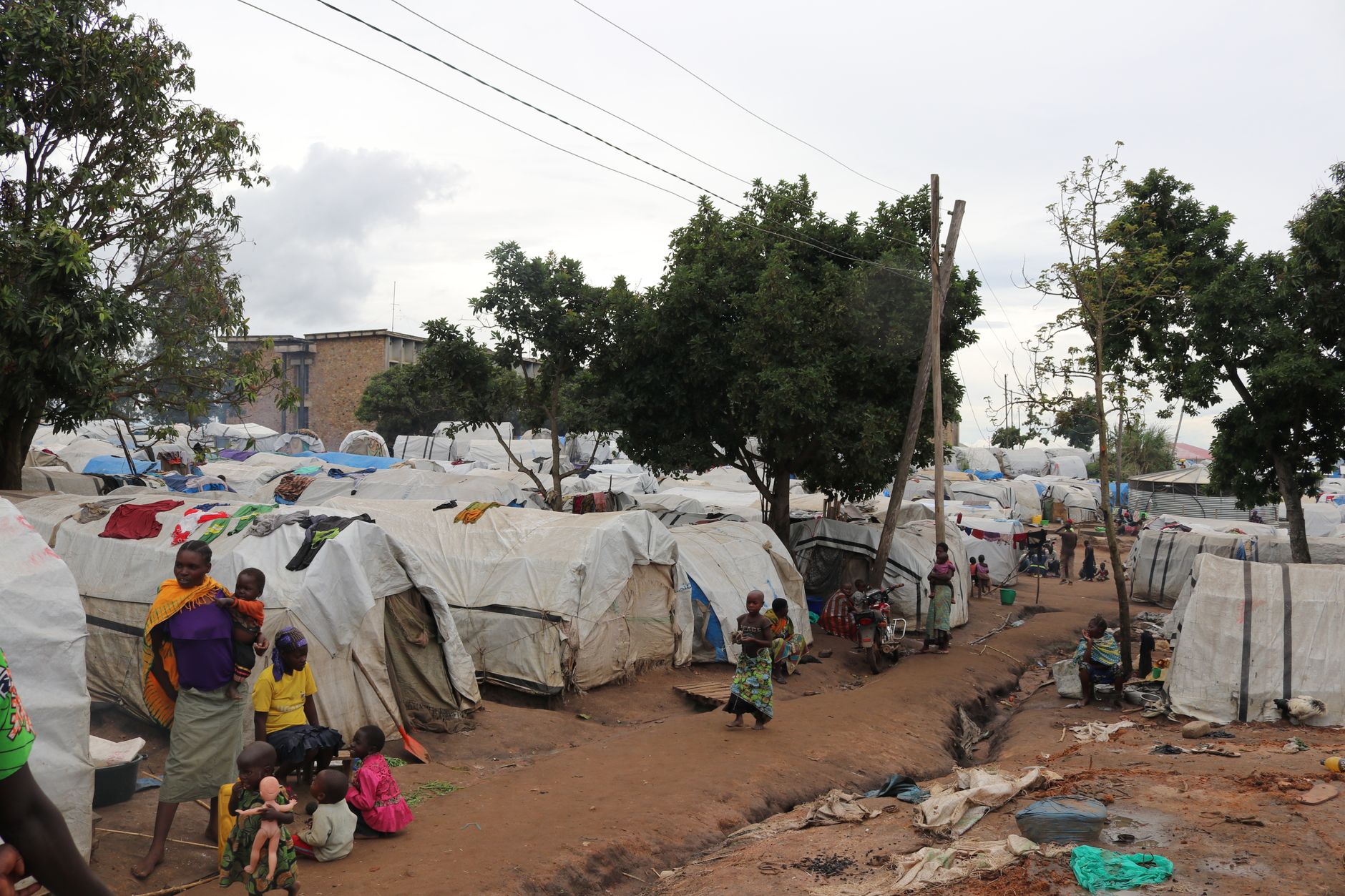
Sudan enters another war year with 14 million displaced and health services under sustained attack
Sudan remains one of the largest under-covered global crises, with major spillovers for migration, health, and regional stability.
Middle East is forcing a fresh read of the situation. 14 million is the operative number because it shows where the pressure is becoming measurable. Turns a raw number into a trackable shift.
14 million is the hinge in this story because it tells readers where the pressure stops sounding ambient and starts becoming measurable. This piece should explain why 14 million is the metric that changes the story. Turns a raw number into a trackable shift.
14 million matters only if it redraws what other actors now have to plan around. Sudan remains one of the largest under-covered global crises, with major spillovers for migration, health, and regional stability. 14 million matters only if it redraws the situation on the ground: a higher floor for costs, a lower margin for safety, a faster rate of spread, a deeper funding hole, or a new baseline that other actors now have to plan around. In health stories, the real test is whether a controllable signal is turning into avoidable overload for clinics, schools, and families.
Sudan remains one of the largest under-covered global crises, with major spillovers for migration, health, and regional stability. The next test is whether that shift stays contained or starts changing choices around 14 million in Africa and Global—from ministries and ports to clinics, courtrooms, warehouses, classrooms, and family budgets.
Public-health transmission chain is what turns this from a single update into a moving story. Sudan remains one of the largest under-covered global crises, with major spillovers for migration, health, and regional stability. The chain is usually painfully concrete: missed prevention becomes more cases, more cases strain clinics and staffing, and that strain spills into schools, transport, and family risk. Geopolitical theatre in the lead, bottlenecks and second-order strain underneath.
Coverage is clustering in Africa, Global, Middle East. Across that spread, coverage keeps pulling toward escalation, omission, so readers are not just seeing different tone; they are often being handed a different main plot. The perception gap is wide enough that two audiences could walk away thinking the story is about different problems.
The useful test now is whether 14 million keeps moving in the same direction or forces officials, operators, or households to accept a different baseline. Sudan remains one of the largest under-covered global crises, with major spillovers for migration, health, and regional stability. 14 million resets the baseline for how this story should be read.
From here, the follow-through matters more than the quote. Watch whether 14 million actually changes on the ground, whether neighbouring actors copy or resist the move, and whether the story starts showing up in places that were initially quiet. That is usually the moment when a local-seeming development reveals itself as a wider systems signal.
By the end, the shape of the story should feel clearer: a real shift, a traceable consequence chain, or a human or systems angle that disappears if you stay with the broad headline alone. Not every item needs to sound monumental. It does need to leave the reader with something concrete to watch tomorrow.
Sources for this article are being documented. Albis is building transparent source tracking for every story.
Get the daily briefing free
News from 7 regions and 16 languages, delivered to your inbox every morning.
Free · Daily · Unsubscribe anytime
🔒 We never share your email