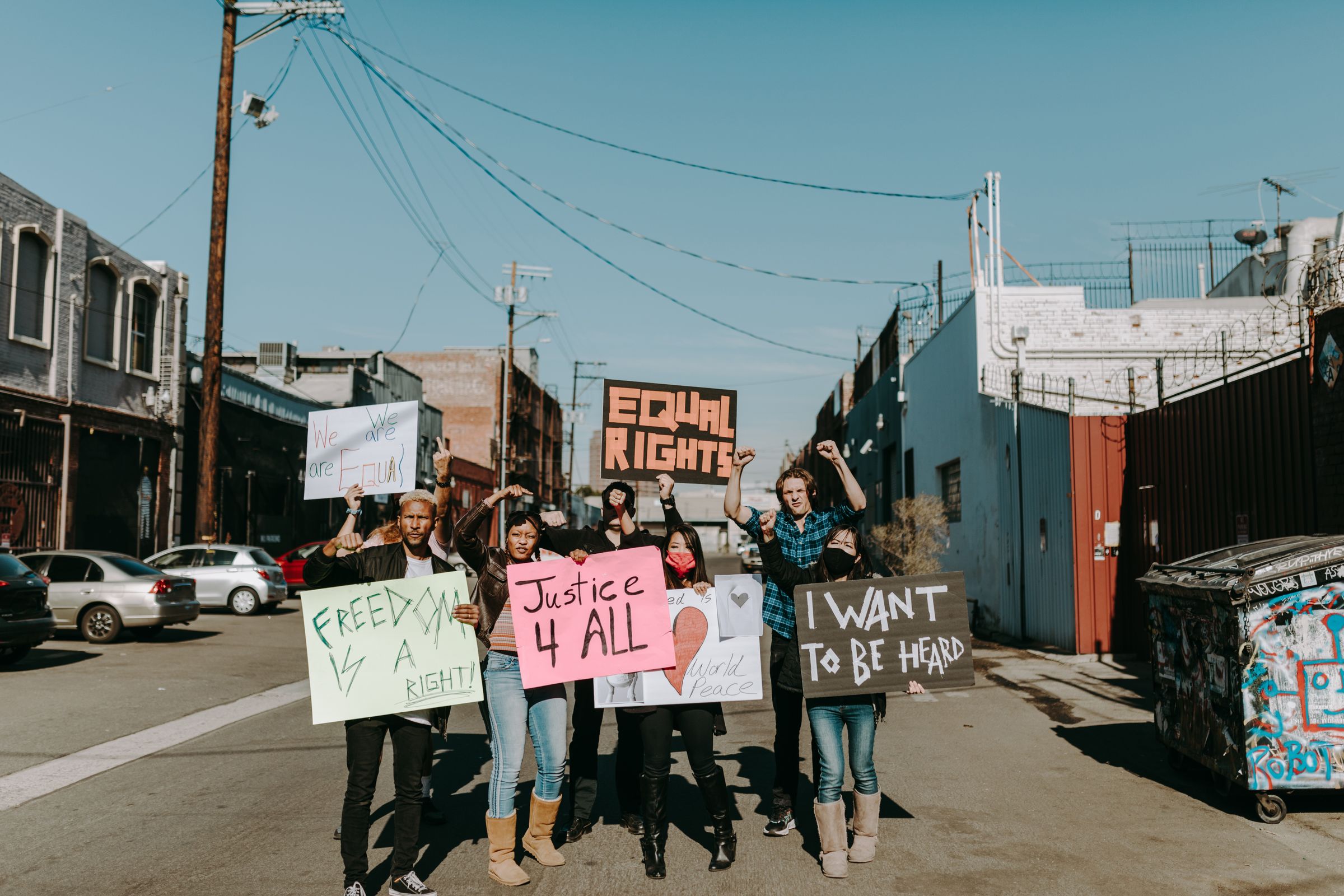
US Casts Sole Vote Against UN Women's Rights at CSW70
CSW70 sees first-ever vote as US opposes women's rights conclusions, gender pay gap widens for second year, and Mexico and Romania pass landmark femicide laws in March 2026.

The US cast the sole vote against the UN Commission on the Status of Women's agreed conclusions at CSW70, losing 37-1 in the commission's first contested vote in eight decades. The March 19 vote capped two weeks of US attempts to defer, amend, and block the document — which calls on governments to repeal discriminatory laws, prosecute gender-based violence, and close the gender digital divide. Days later, Equal Pay Day revealed the US gender wage gap widened for a second straight year. Women working full-time now earn 81 cents for every dollar men make.
Historic Standoff at CSW70
CSW70, held March 9-19 at UN headquarters, focused on access to justice for women and girls. The secretary-general's report found no country has achieved full legal equality between women and men.
The US pushed to redefine "gender" in strictly binary terms. Member states voted to halt that proposal. The Trump administration also withdrew from UN Women, cut $60 billion in foreign aid, and helped set in motion a merger of UN Women with the UN Population Fund.
The agreed conclusions passed 37-0-6. They urge governments to ratify the Convention on the Elimination of Violence Against Women, prosecute all forms of gender-based violence, and address online threats including nonconsensual deepfakes.
The Council on Foreign Relations noted the conclusions call for repeal of laws discriminating against women — covering family relations, property rights, financial credit, child marriage, and female genital mutilation.
US Gender Pay Gap Reverses Decades of Progress
Equal Pay Day marks how far into the new year women must work to match what men earned the previous year. In 2026, it fell on March 26 — a day later than 2025.
The consecutive widening's the first since the 1960s, per Deborah Vagins of Equal Pay Today. Census data: men's median income grew 3.7% between 2023 and 2024. Women's stayed flat.
An AP-NORC poll found sharp disagreement. Six in ten employed women said men have more opportunities to earn competitive wages. One-third of men agreed.
The data predates this administration — it reflects 2024 earnings under Biden. Biden supported equal pay but failed to secure federal pay transparency legislation. The Trump administration has since eliminated the EEOC data collection tools that tracked pay disparities by sex, ethnicity, and race.
Mexico Passes Sweeping Femicide Law
Mexico enacted a national femicide law in late March: up to 70 years in prison. The reform amends Article 73 of the Constitution, giving Congress power to create a unified legal framework across federal, state, and municipal levels.
The law classifies femicide as a grave human rights violation. Every violent death of a woman must be investigated as potential femicide from the outset. It eliminates statutes of limitations, strips perpetrators of inheritance rights and parental authority, and outlines nine gender-based criteria including sexual violence and power dynamics.
Attorney General Ernestina Godoy Ramos said the constitutional amendment enables coordinated action across all government levels. Mexico recorded 797 femicides in 2024 — part of a broader Latin American crisis where Brazil, Honduras, Guatemala, and the Dominican Republic report even higher rates.
The law also mandates support for children orphaned by femicide, requires platforms to prevent circulation of sensationalistic victim images, and establishes a national registry of orphaned minors.
Romania Adopts First Femicide Definition
Romania's Chamber of Deputies passed its first legal definition of femicide on March 25. The vote: 284-1, with two abstentions. More than 270 parliamentarians from all parties signed on.
The bill defines femicide as "the intentional killing of a woman, as well as the death of a woman resulting from blows or injuries causing death." Sentences: 15 to 25 years, or life. Criminal proceedings for gender-based violence can now start ex officio — no prior complaint needed.
Romania recorded 59 femicide cases in 2025. Three women or girls killed per month by a family member in the first eight months. The far-right Alliance for the Union of Romanians called it overregulation.
EU Launches Five-Year Gender Equality Strategy
The European Commission presented its Gender Equality Strategy 2026-2030 ahead of International Women's Day. It builds on existing rules on violence against women, pay transparency, and corporate board gender balance.
At the current pace, the EU would take 50 years to reach full gender equality, per the European Institute for Gender Equality. The new strategy turns the 2025 Roadmap for Women's Rights into concrete actions: women's economic empowerment, male engagement, and opposition to rights rollbacks.
Member states met March 25 to discuss gender dimensions of job quality as early implementation.
US States Face Federal Pressure on Reproductive Rights
HHS launched investigations into 13 states — California, Colorado, Delaware, Illinois, Maine, Maryland, Massachusetts, Minnesota, New Jersey, New York, Oregon, Vermont, and Washington — claiming they violate the Weldon Amendment by requiring insurers to cover abortion care. Twenty days to respond or face federal funding cuts.
All 13 voted for Kamala Harris in 2024. Missouri, Nevada, and Virginia voters face abortion-related ballot measures in November 2026. In Arizona, Republican lawmakers push to enshrine fetal personhood despite the state constitution currently protecting abortion as a fundamental right.
Add context
Know something useful about this story?
Albis is built for public understanding. If you have a source, lived experience, or a missing angle, you can add context for others.
Share context →Sources & Verification
Based on 5 sources from 4 regions
- CIVICUS LensInternational
- NPRNorth America
- La Voce di New YorkLatin America
- Romania InsiderEurope
- Council on Foreign RelationsInternational
Conversation
What are you seeing?
Add local context, a source, a question, or a perspective we may have missed. You can comment as a guest or create a free account.
Loading conversation…
Get the daily briefing free
News from 7 regions and 16 languages, delivered to your inbox every morning.
Free · Daily · Unsubscribe anytime
🔒 We never share your email