India and South Korea Are Building a Supply-Chain Pact Bigger Than a Trade Target
Narendra Modi’s government and South Korea agreed to push bilateral trade toward $50 billion by 2030, tying the target to semiconductors, shipbuilding, energy, critical minerals and AI.
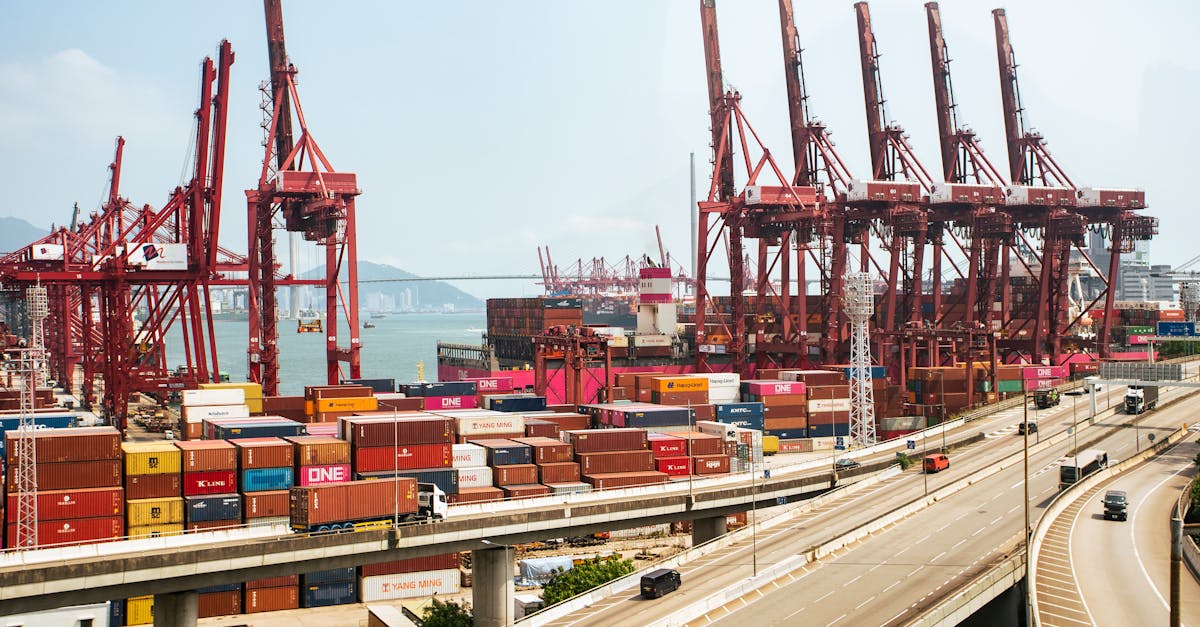
India and South Korea have set a $50 billion trade target for 2030, but the more important move is where they want that growth to come from: semiconductors, shipbuilding, critical minerals, energy, steel, defense, and AI.
That list tells you this is not a routine export-promotion story. Governments can announce trade goals for almost any political occasion. What separates serious industrial alignment from ceremonial diplomacy is sector choice. New Delhi and Seoul are placing their bet on the industries countries scramble to secure when the global system looks less stable, not more. Chips matter when technology rivalry hardens. Shipbuilding matters when sea routes are contested. Critical minerals matter when clean energy and defense manufacturing compete for the same inputs. AI matters because no government now wants to sit outside the next layer of industrial power.
In that sense, the headline number is almost secondary. Fifty billion dollars by 2030 is useful as a benchmark, but the structure underneath it is the story. India wants to deepen its manufacturing base and become indispensable to more supply chains that are currently concentrated elsewhere. South Korea wants reliable partners with scale, market size, engineering capacity, and political reason to diversify. Each side brings something the other lacks. India offers demand, labor depth, and an industrial runway. South Korea offers capital, advanced manufacturing experience, and sectoral expertise in the very industries now being recast as strategic assets.
The timing matters too. The global economy is no longer organizing itself around cheapest possible production and frictionless movement. It is reorganizing around resilience, redundancy, and political trust. That does not mean globalization has ended. It means governments increasingly want their most sensitive supply chains routed through countries they believe will still be standing with them in a crisis. India-South Korea cooperation belongs inside that larger turn.
That is why this belongs in Money rather than World. The consequences will be geopolitical, but the mechanism is economic architecture. Trade flows shape who builds, who supplies, who finances, and who absorbs shocks when a chokepoint closes or a sanctions regime expands. In a period when the Strait of Hormuz, the Black Sea, and major tariff systems are all injecting uncertainty into commerce, agreements that rewire industrial relationships deserve more attention than the latest day-to-day market move.
There is also a quiet maritime logic here. If the world is entering a decade in which shipping security cannot be taken for granted, shipbuilding ceases to be an old heavy-industry topic and returns as a strategic capability. South Korea is already one of the world’s leading shipbuilders. India wants more of that ecosystem, not just for prestige but because logistics resilience increasingly depends on industrial capacity at home or among partners.
Semiconductors tell a similar story. No country can simply declare a chip ecosystem into existence, but alliances form around specific layers of the stack: assembly, packaging, design, specialty materials, machinery, energy supply, talent, and market demand. If India and South Korea can deepen collaboration across even some of those layers, they add another route through an increasingly fragmented tech economy.
None of this guarantees success. Trade targets are easy to sign and hard to reach. Regulatory delays, investment friction, local political priorities, and global downturns can all flatten ambitious plans. India has announced manufacturing hopes before and struggled to turn them into seamless execution. South Korean companies will still ask hard questions about costs, infrastructure, and policy consistency.
But serious economic shifts usually begin as frameworks before they become factories. The value of this agreement is that it identifies a direction of travel with unusual clarity. Two Indo-Pacific economies are not merely promising to buy and sell more to each other. They are trying to lock themselves into the industries that will decide who has leverage in the 2030s.
If that effort works even partially, the payoff will not just be a bigger trade number on a government slide. It will be a thicker web of industrial ties linking one of Asia’s biggest markets to one of its most sophisticated manufacturing powers, at exactly the moment the world is learning that efficient supply chains and secure supply chains are no longer the same thing.
Add context
Know something useful about this story?
Albis is built for public understanding. If you have a source, lived experience, or a missing angle, you can add context for others.
Share context →Sources & Verification
Based on 3 sources from 2 regions
- ReutersGlobal
- Associated PressGlobal
- Global ScanInternal
Conversation
What are you seeing?
Add local context, a source, a question, or a perspective we may have missed. You can comment as a guest or create a free account.
Loading conversation…
Get the daily briefing free
News from 7 regions and 16 languages, delivered to your inbox every morning.
Free · Daily · Unsubscribe anytime
🔒 We never share your email