DeepSeek Trained on Banned Nvidia Chips. Washington Calls It a Crime. Beijing Calls It a Trap.
US says DeepSeek used smuggled Nvidia Blackwell chips in Inner Mongolia. China says the export controls are illegitimate. PGI 6.55 — the same chips, two incompatible stories.
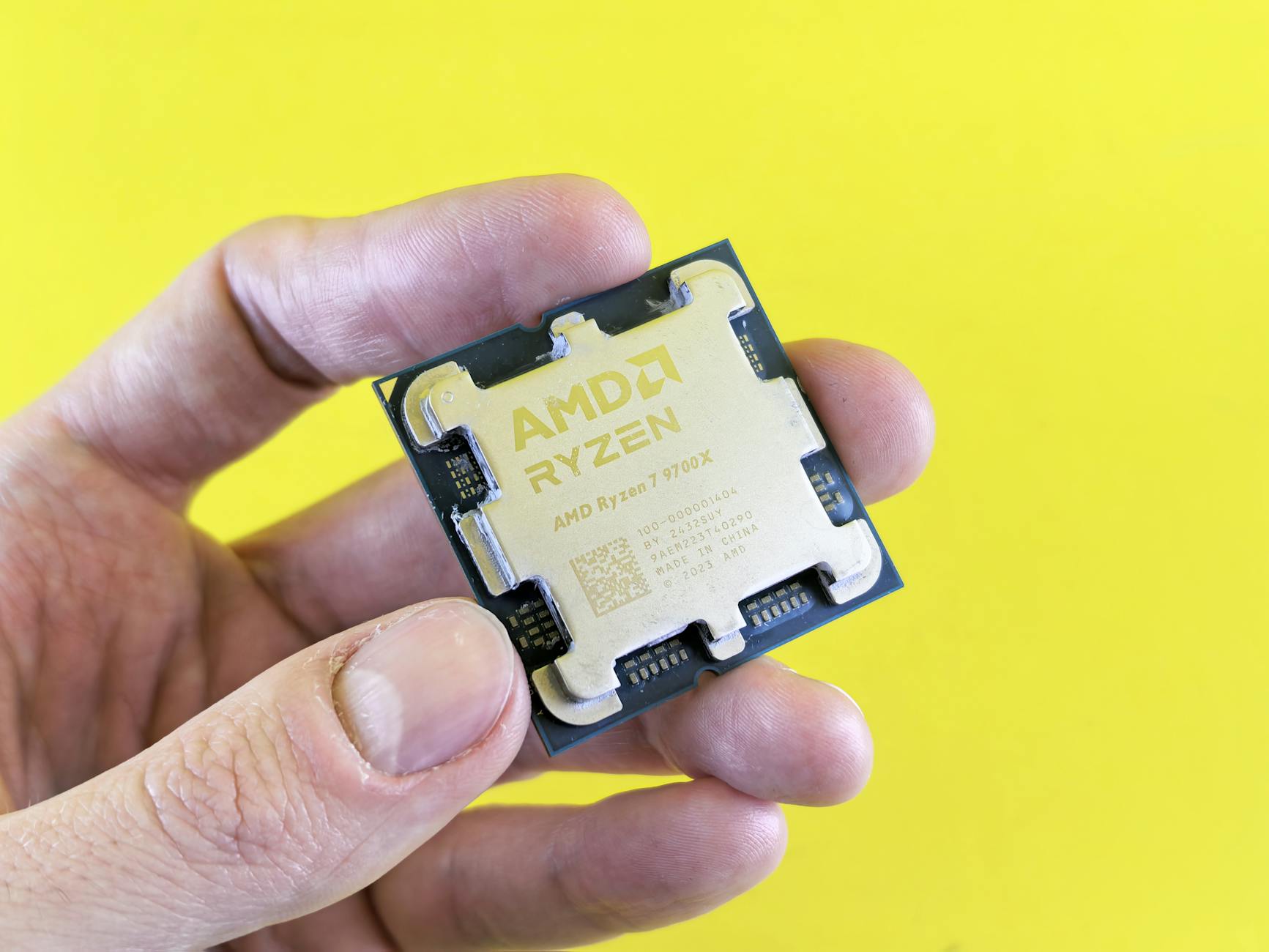
The US government says DeepSeek trained its latest AI model on Nvidia's most advanced chip — one that's banned from entering China. Beijing says the ban itself is the problem. The same Blackwell processors sit at the center of a story that reads as criminal smuggling in Washington and as tech containment in Beijing.
Two Versions of the Same Chip
A senior Trump administration official told Reuters in February 2026 that DeepSeek was using Nvidia Blackwell chips at a data center in Inner Mongolia. The Commerce Department's export controls prohibit Blackwell shipments to China. The official said DeepSeek had likely stripped technical identifiers from the chips to hide their origin.
In American coverage, the framing was immediate: violation. The Information reported the chips "were smuggled." Tom's Hardware cited unnamed sources claiming DeepSeek was "involved in a high-complexity smuggling ring focused on getting Blackwell chips into China illegally through the use of fake data centers." US prosecutors had already charged two Chinese nationals and two Americans in November 2025 for shipping chips to China through Malaysia using a fake real estate business.
China's response was categorical rejection — not of the facts, but of the framework. The Chinese embassy in Washington said Beijing opposes "drawing ideological lines, overstretching the concept of national security, expansive use of export controls and politicizing economic, trade, and technological issues." Chinese foreign ministry spokesperson Mao Ning said authorities were unaware of the specific circumstances.
DeepSeek itself said nothing.
The Framing Gap
Read the story from Washington, and you see a sanctions evader caught red-handed. A Chinese company broke American law, obtained restricted technology through criminal networks, and used it to build AI that could threaten US dominance.
Read it from Beijing, and the export controls themselves are the aggression. The rules are designed to strangle Chinese technology development. Any company resourceful enough to build competitive AI despite those restrictions isn't a criminal — it's proof the controls are both unjust and failing.
The Albis Perception Gap Index scored this story at 6.55 — driven by sharp divergence on causal attribution (7.0), actor portrayal (7.0), and cui bono (8.0). The US-Asia Pacific regional pair hit 7.0. Whether a violation even occurred is fundamentally contested. One side says rules were broken. The other says the rules shouldn't exist.
The Smuggling Network Nobody Can Map
US investigators are probing how the chips reached Inner Mongolia. Singapore, Malaysia, and the UAE have all faced scrutiny as potential transit points. A separate investigation by CNBC found Singapore-based firm Megaspeed under probe for allegedly diverting Nvidia chips declared bound for Malaysia.
The pattern isn't new. In late 2025, US authorities prosecuted a ring that smuggled 400 Nvidia A100 GPUs from Alabama through Malaysia and Thailand into China between October 2024 and January 2025. Workers at a facility systematically opened shipments and relabelled chips with fake company names, according to Department of Justice filings reported by The Wire China.
Nvidia called reports of its involvement in smuggling "far-fetched." The company's CEO Jensen Huang has argued that shipping advanced chips to China could discourage Chinese firms from investing in domestic development — a position that conveniently aligns with Nvidia's interest in eventually reopening the Chinese market.
The Deeper Question
Here's what neither framing acknowledges. The export controls are producing exactly the paradox they were designed to prevent.
The Diplomat noted that without export controls, Chinese companies "might have just followed their US counterparts' path of massive capital investment." Instead, companies like DeepSeek have been "forced to maximize the potential of less advanced hardware." DeepSeek's earlier model, built on restricted but not banned chips, shocked the AI industry by matching Western competitors at a fraction of the cost.
The controls pushed China toward efficiency. The smuggling pushed it toward Blackwell anyway. And now US officials are drafting even broader rules — worldwide licensing requirements that would give Washington authority over AI chip sales to any country.
Anthropic CEO Dario Amodei described DeepSeek's chip access bluntly: "A substantial fraction of DeepSeek's AI chip fleet consists of chips that haven't been banned (but should be), chips that were shipped before they were banned; and some that seem very likely to have been smuggled."
That's three categories in one sentence. Legal, grandfathered, and criminal. The perception gap sits in how you weight them.
What Each Side Doesn't Want You to See
American coverage doesn't dwell on why the controls aren't working. Three years of increasingly strict export rules, and China's most prominent AI company still got the best chips. The enforcement gap is the story Washington prefers to skip.
Chinese coverage doesn't reckon with the smuggling networks. If the controls are illegitimate, the proper response is diplomatic challenge or domestic development — not shell companies routing chips through Southeast Asian warehouses.
Both framings serve their audiences. The American version justifies tighter restrictions and bigger budgets. The Chinese version validates the drive toward semiconductor self-sufficiency and portrays every new control as proof of Western hostility.
The chips in Inner Mongolia don't care about framing. They process data the same way in every language.
This story was scored by the Albis Perception Gap Index — measuring how differently the world frames the same events. See today's most divided stories →
Sources & Verification
Based on 4 sources from 4 regions
- ReutersInternational
- The InformationNorth America
- The Straits TimesAsia-Pacific
- Modern DiplomacyEurope
Keep Reading
DeepSeek Trained on Nvidia's Best Chips. Now Nvidia Can't Use the Result.
Export controls created a world where the customer gets the product and the supplier doesn't. How America's chip restrictions just inverted tech dominance.
America Wants to Control Every AI Chip on Earth. The Rest of the World Heard Something Else.
The US is drafting rules to approve or deny every major AI chip shipment worldwide. Washington calls it national security. Beijing calls it economic coercion. Both are reading the same policy document.
America Wants to Approve Every AI Chip Sold on Earth — Its Allies Aren't Happy
US draft rules would require government permits for all AI chip exports worldwide, even to allies like the UK and Japan. Here's how the world sees it differently.
Explore Perspectives
Get this delivered free every morning
The daily briefing with perspectives from 7 regions — straight to your inbox.