Trump Threatened to Destroy the Gas Field He's Protecting. Markets Didn't Buy It.
Trump vowed to 'massively blow up' South Pars if Iran struck Qatar again — but the gas field he'd destroy is the same one powering Qatar's LNG exports. Oil hit $114. Gas prices jumped 23%.
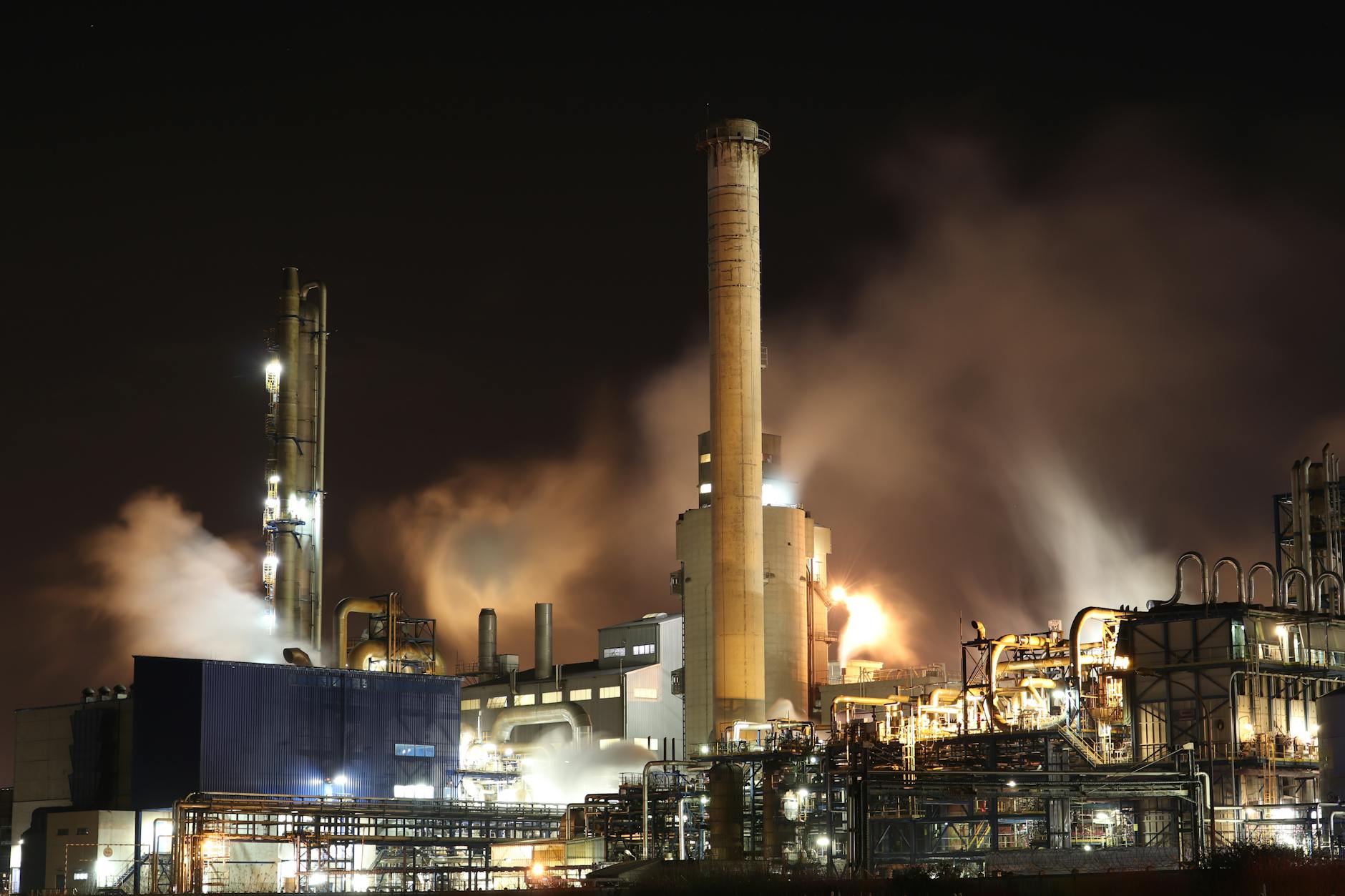
Trump's threat to protect Qatar from Iran was to destroy the same gas reservoir that Qatar depends on. Markets noticed.
On Wednesday, Israeli jets struck facilities inside South Pars — the world's largest natural gas field, sitting under the Persian Gulf on the Iran-Qatar maritime border. Iran retaliated within hours. By Thursday morning, drones had hit refineries in Kuwait, UAE, and Saudi Arabia. Qatar's Ras Laffan industrial complex — the source of roughly 20% of global LNG supply — was on fire again.
Trump posted his response: if Iran struck Qatar's energy infrastructure once more, "the United States of America, with or without the help or consent of Israel, will massively blow up the entirety of the South Pars Gas Field."
The same field Qatar shares. The same field powering the LNG exports Trump said he was defending.
The problem with the threat
South Pars and Qatar's North Dome are the same geological formation. The border runs through it. Destroying the Iranian portion doesn't leave Qatar's portion intact — it destabilizes the entire reservoir. Energy analysts and geologists have been explaining this for decades. Iran and Qatar have jointly managed extraction rates precisely to prevent reservoir damage.
When Trump threatened to blow up South Pars to protect Qatar, he was threatening to blow up the foundation of Qatar's own energy economy. Brent crude hit $114 a barrel, up 6%. European natural gas prices jumped 23%. The Nikkei fell 3.4%. Markets read the threat not as deterrence but as escalation risk.
The Wall Street Journal, citing unnamed US officials, reported that Trump had approved the Israeli strike on South Pars in the first place — as leverage to pressure Iran into reopening Hormuz. Within six hours of that strike, Iran had attacked refineries in four countries.
What got hit on Thursday
The scope of Iran's retaliation moved beyond the Qatar-Iran exchange that started this round. Kuwait's Mina al-Ahmadi refinery — one of the largest in the Middle East, with production capacity of 730,000 barrels per day — was struck by drones and caught fire. The adjacent Mina Abdullah refinery was hit separately. Both fires were later controlled; no casualties were reported.
In Abu Dhabi, authorities shut down operations at the Habshan gas facility and Bab oilfield after Iranian overnight attacks described as a "dangerous escalation." Qatar's interior ministry confirmed fires at Ras Laffan were eventually contained, but QatarEnergy had already reported "extensive damage" and "sizeable fires" at multiple LNG facilities.
Saudi Arabia was also struck by ballistic missiles. Riyadh's foreign ministry said all trust with Tehran was shattered.
The $200 billion bill
While the energy strikes were developing, a separate number surfaced: the Pentagon has asked the White House to approve a supplemental funding request to Congress of more than $200 billion to fund the Iran war. The existing 2026 US defense budget already stands at $838.5 billion. The Iran request would add roughly 24% on top.
For context: the entire Iraq War cost roughly $2 trillion over 20 years. The Pentagon is asking for a quarter of that — in one supplemental — on day 19 of an Iran conflict. The request still needs White House approval before going to Congress, where it "is almost certain to run into resistance," according to the Washington Post.
The energy calculation that doesn't work
Israel struck South Pars to squeeze Iran into reopening Hormuz. The logic: hurt their gas revenues, force them back to the table.
What happened instead: Iran attacked the Gulf energy infrastructure of the countries that need Hormuz open most. Saudi Arabia. Qatar. Kuwait. UAE. The same states that account for the oil and gas flows that, if restored, would bring prices down.
The war that started as a Hormuz closure is now a Persian Gulf energy demolition campaign on both sides of the confrontation. Iran is striking the production assets. Israel struck the reserve assets. The US is threatening to destroy what's left.
Brent crude opened Thursday at $108. The South Pars strike, the regional retaliation, and Trump's post pushed it to $114 before settling around $111. When the threat designed to calm markets instead sent them higher, the limits of deterrence-by-post became visible.
South Pars holds an estimated 1,800 trillion cubic feet of natural gas. Qatar's side of it supplies 20% of the LNG that Europe, Japan, South Korea and China depend on. It took three weeks of the Iran war for the conflict to reach the world's single largest energy reserve. It may take considerably less time to find out what happens next.
The Albis Perception Gap Index scored Iran-Gulf energy strikes at 8.5 in the March 19 scan, with Middle Eastern and Asian outlets diverging most sharply from Western coverage — Middle East frames this as existential economic destruction; Western outlets frame it as Iranian aggression against energy markets.
Sources & Verification
Based on 5 sources from 3 regions
- The GuardianInternational
- ReutersInternational
- CNBCNorth America
- The Washington PostNorth America
- Indian ExpressSouth Asia
Keep Reading
Trump Just Lifted Sanctions on Russia to Fix the Oil Crisis. Russia Caused the Oil Crisis.
The US eased sanctions on Russian oil to calm markets after the Iran war sent prices to $119. But Russia's the one profiting from the chaos—€6 billion in two weeks. Europe calls it self-defeating. The unintended winner is never who you'd expect.
Iran Hit the World's Biggest LNG Plant. Here's How Four Regions Reported It Differently.
Iran struck Qatar's Ras Laffan gas hub on March 18. Energy crisis framing vs sovereignty attack vs justified retaliation — the same event, four completely different stories.
Trump's Iran War Just Gave Putin a Lifeline
A 30-day sanctions waiver on Russian oil reveals the geopolitical chaos created when America's war collides with global energy markets.
Explore Perspectives
Get this delivered free every morning
The daily briefing with perspectives from 7 regions — straight to your inbox.