Fertilizer Shock Spreads Beyond Hormuz
A month of disruption in the Strait of Hormuz is tightening fertilizer supply just as planting windows open across Asia, Africa and Europe.
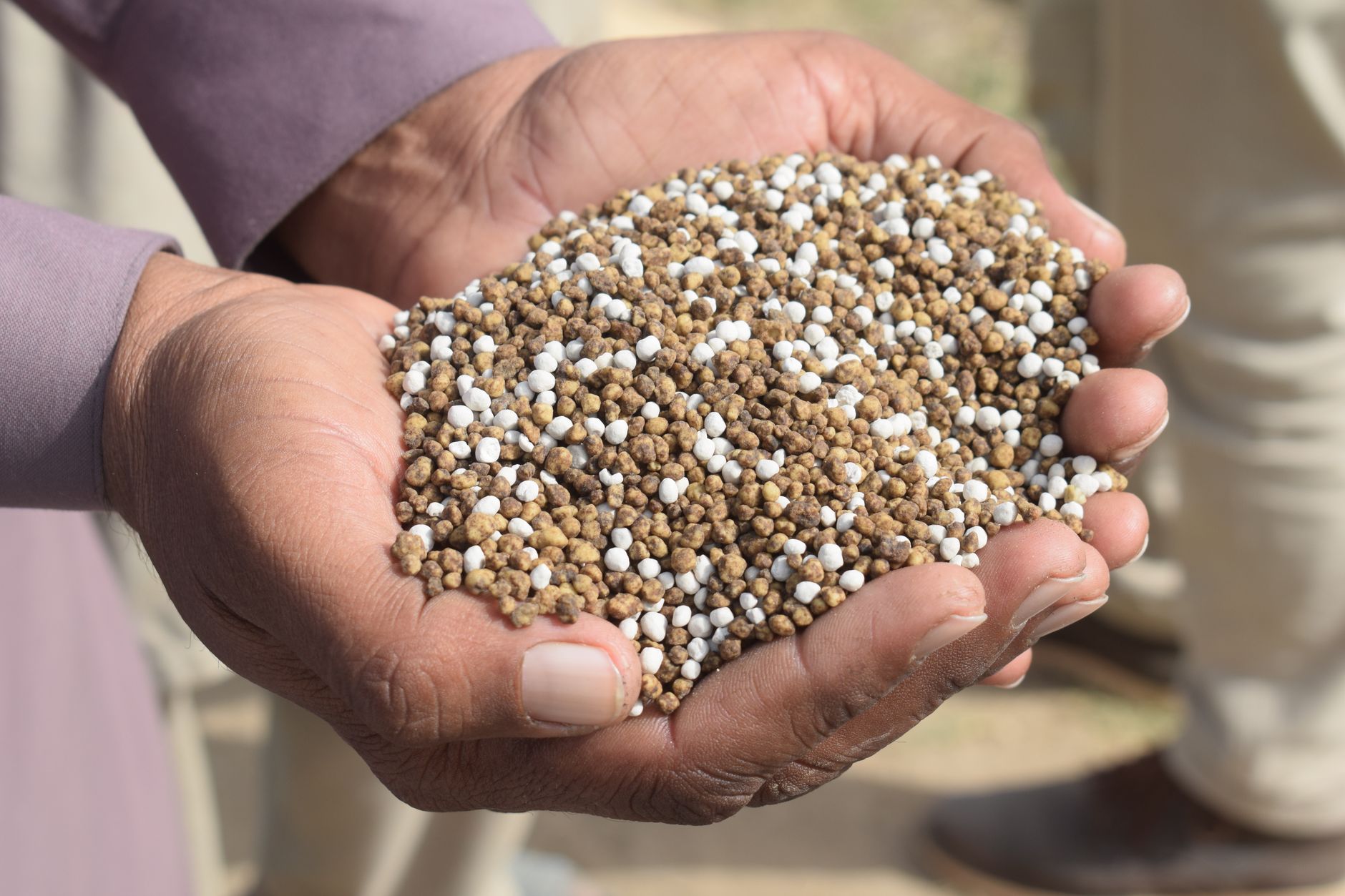
About 30% of global urea trade is restricted by the Iran war and the disruption around the Strait of Hormuz, according to Chris Lawson of commodities consultancy CRU Group, leaving farmers to chase fertilizer as spring planting advances.
The shortage is moving faster than the consumer-price data. Associated Press reported that nitrogen and phosphate shipments from the Gulf have been squeezed by shipping delays, higher liquefied natural gas costs and uncertainty over whether vessels can move safely through the strait. The U.S. Energy Information Administration said oil flows through Hormuz remain limited and estimated that Gulf producers shut in 7.5 million barrels a day in March, rising to 9.1 million in April.
Energy traders and diplomats have treated Hormuz mainly as an oil story. In farm belts from Punjab to East Africa, it is already a fertilizer story.
AP reported that Baldev Singh, a 55-year-old rice farmer in India’s Punjab state, said smallholders may not survive if the government cannot subsidize fertilizer when demand peaks in June. India has budgeted $12.7 billion this year for urea subsidies alone, according to the Institute for Energy Economics and Financial Analysis, as cited by AP.
In Kenya, Stephen Muchiri of the Eastern African Farmers Federation told AP that many farmers had only about a week of dry weather to prepare fields and apply fertilizer after heavy rains. Raj Patel, a food-systems economist at the University of Texas, told AP that even short delays can cut maize yields by about 4% in a season, citing research from Zambia.
The World Food Programme said the shock is already spreading beyond the Gulf. WFP said as many as 45 million more people could be pushed into acute hunger this year if the conflict continues and oil stays above $100 a barrel. Its analysis pointed to the steepest increases in import-reliant parts of Africa and Asia, with food insecurity projected to rise 21% in West and Central Africa, 17.7% in East and Southern Africa and 24% in the Asian countries it analysed.
The sequence is straightforward. Natural gas prices rise, urea prices follow, shipping and insurance costs stay high, and fertilizer reaches farms late or not at all. Grain prices are not giving farmers the cushion they had after Russia’s 2022 invasion of Ukraine. Joseph Glauber of the International Food Policy Research Institute told AP that grain prices are lower now, leaving growers with tighter margins and fewer ways to absorb higher input costs.
Japan is watching the same corridor through a different lens. The EIA said the spread between Brent and West Texas Intermediate widened because Middle East disruption raised shipping costs to Asian markets. Japanese business coverage has concentrated on petrochemical feedstocks and packaging risk. In India’s Hindi-language press, according to the scan set, the emphasis has been on mandi prices, fertilizer bills and school-budget arithmetic inside households. Arabic coverage, the same scan set said, has framed the squeeze as an immediate affordability story.
That divergence matters less for markets than for timing. Wealthier importers can buy time with reserves, subsidies or credit. Poorer governments often cannot. AP reported that Ethiopia gets more than 90% of its nitrogen fertilizer from the Gulf through Djibouti, a route already under strain before the war began in February.
Even a ceasefire would not solve the next harvest. Owen Gooch of Argus Consulting Services told AP that Gulf producers would still need security guarantees before fully resuming shipments and that insurance costs would almost certainly remain higher.
The EIA said it assumes the conflict does not persist past April and that traffic through Hormuz gradually resumes, with shut-ins falling to 6.7 million barrels a day in May. Farmers do not work on that timetable. Fertilizer is generally applied just before or at planting, AP reported, and crops that miss early growth stages do not recover simply because cargoes arrive later.
The next test will come as governments decide whether to release more subsidies, reroute supply or restrict exports. In much of Asia and Africa, the planting calendar will not wait for maritime diplomacy.
Company Daily Scan
Track stories like this for your company.
Albis can turn the same global scan into a private daily briefing for your sector, regions, risks, and watchlist.
See how the company scan works →Sources for this article are being documented. Albis is building transparent source tracking for every story.
Get the daily briefing free
News from 7 regions and 16 languages, delivered to your inbox every morning.
Free · Daily · Unsubscribe anytime
🔒 We never share your email