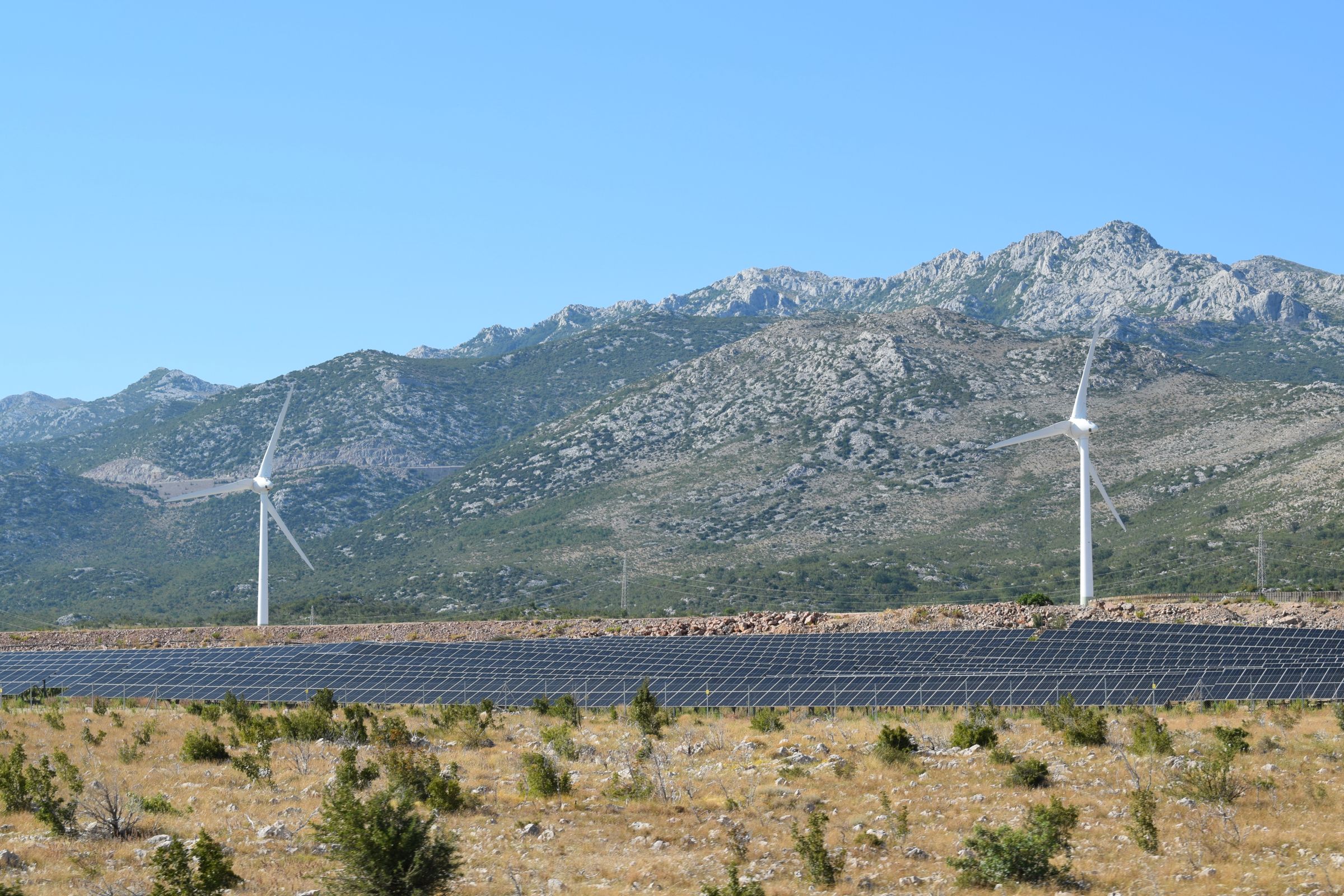
Ghana’s floating solar push shows how energy resilience is built in practical increments
Ghana is expanding solar investment as it tries to raise renewables from about 5% of the national energy mix toward 7% by 2027, with floating solar, financing and waste management all shaping the transition.
Ghana’s floating solar push shows how energy resilience is built in practical increments
Last updated May 29, 2026
- This is the kind of practical generation project that can improve resilience in power systems facing fuel and climate pressure.
- Price and financing pressure.
- Ghana’s renewable energy capacity stands at around 280 megawatts, about 5% of the national energy mix, according to AllAfrica’s report from Radio France Internationale.
Still unclear: What local readers are seeing from the ground
Ghana’s renewable energy capacity stands at around 280 megawatts, about 5% of the national energy mix, according to AllAfrica’s report from Radio France Internationale. The government wants that share to reach 7% by 2027. That target is modest in percentage terms, but it requires a mix of legislation, public investment and private capital to move actual generation onto the grid.
The supplied headline refers to Ghana expanding floating solar on the Black Volta from 5 MW toward 65 MW. The evidence packet does not directly verify the Black Volta, 5 MW or 65 MW figures in the fetched excerpts. What it does support is that Ghana is expanding solar investment, that the Bui Power Authority is the most active public developer in the country’s solar expansion, and that floating solar is part of the grid-shaping project set.
The practical reason is cost and resilience. Energy and Green Transition Minister John Abdulai Jinapor has argued that solar offers Ghana a cleaner and cheaper long-term alternative to expensive thermal generation, according to AllAfrica. In a power system exposed to fuel costs and climate pressure, local renewable generation can reduce dependence on imported or price-volatile fuels, though the supplied evidence does not quantify the savings.
Ghana’s legal foundation is the Renewable Energy Act, 2011, known as Act 832, administered by the Energy Commission. AllAfrica reports that it governs the development and management of renewable energy and supports instruments such as net metering, mini-grids and off-grid solar systems. Those details matter because energy transitions do not happen only through panels; they require rules that let projects connect, finance and operate.
Floating solar is an unusual but practical part of that wider shift. The supplied evidence does not provide technical details of the Black Volta project, but floating solar generally sits at the intersection of land, water and power planning. In Ghana’s case, the confirmed broader story is that public developers and policy tools are being mobilized to increase renewable capacity, with floating solar presented as one of the projects reshaping the grid.
The financing and industrial question is still open. Benjamin Boakye, executive director of the Africa Centre for Energy Policy, supports the direction of travel but wants Ghana to be more ambitious in how it pursues renewables. He argues the country should prioritize local innovation, skills development, research and domestic manufacturing capacity rather than depending heavily on imported technologies, according to AllAfrica.
That warning points to a common bottleneck in renewable transitions. A country can install solar capacity while still importing most of the equipment, expertise and value chain. That may reduce fuel exposure but leave financing, maintenance and replacement dependent on external suppliers. The difference between installing panels and building a durable energy sector is whether local capacity grows alongside generation.
The Business & Financial Times adds another constraint: solar waste. Bernice Wilmot Oppong writes that Ghana’s renewable transition is gaining momentum, with solar installations expanding across households, public institutions and off-grid communities. But she warns that solar panels and batteries have finite lifespans, with panels typically lasting 25 to 30 years and batteries often needing replacement within 10 to 15 years, depending on use and technology.
Ghana already has a framework for hazardous and electronic waste. The Business & Financial Times notes that the Hazardous and Electronic Waste Control and Management Act, 2016, or Act 917, administered by the Environmental Protection Authority, provides rules for safe disposal, recycling and extended producer responsibility. But the article warns that the framework was developed largely with conventional e-waste in mind, raising questions about whether solar end-of-life management is ready for rapid deployment.
The source framing is practical rather than spectacular. AllAfrica emphasizes renewable targets, public investment, private capital, the Energy Commission’s legal framework and the Bui Power Authority’s role. The Business & Financial Times focuses on the lifecycle problem: if Ghana scales solar quickly without planning for waste, it can solve one energy problem while creating a future environmental-management burden.
What remains uncertain is the specific status of the Black Volta floating-solar expansion from 5 MW toward 65 MW. The supplied evidence does not include the exact project figures, construction timeline, financing terms, grid connection details or expected output. A careful reading should therefore treat the Black Volta numbers as not verified by the provided excerpts, while recognizing that Ghana’s wider solar expansion is well supported by the packet.
The clearest lesson is that energy resilience is built through a chain of practical decisions: generation, grid integration, financing, local skills, legal frameworks and end-of-life management. Ghana’s solar push matters not because one project can solve the power system, but because small and medium projects can accumulate into a more resilient electricity mix if the institutions around them are built carefully.
Add context
Know something useful about this story?
Albis is built for public understanding. If you have a source, lived experience, or a missing angle, you can add context for others.
Share context →Sources for this article are being documented. Albis is building transparent source tracking for every story.
Conversation
What are you seeing?
Add local context, a source, a question, or a perspective we may have missed. You can comment as a guest or create a free account.
Loading conversation…
Get the daily briefing free
News from 7 regions and 16 languages, delivered to your inbox every morning.
Free · Daily · Unsubscribe anytime
🔒 We never share your email