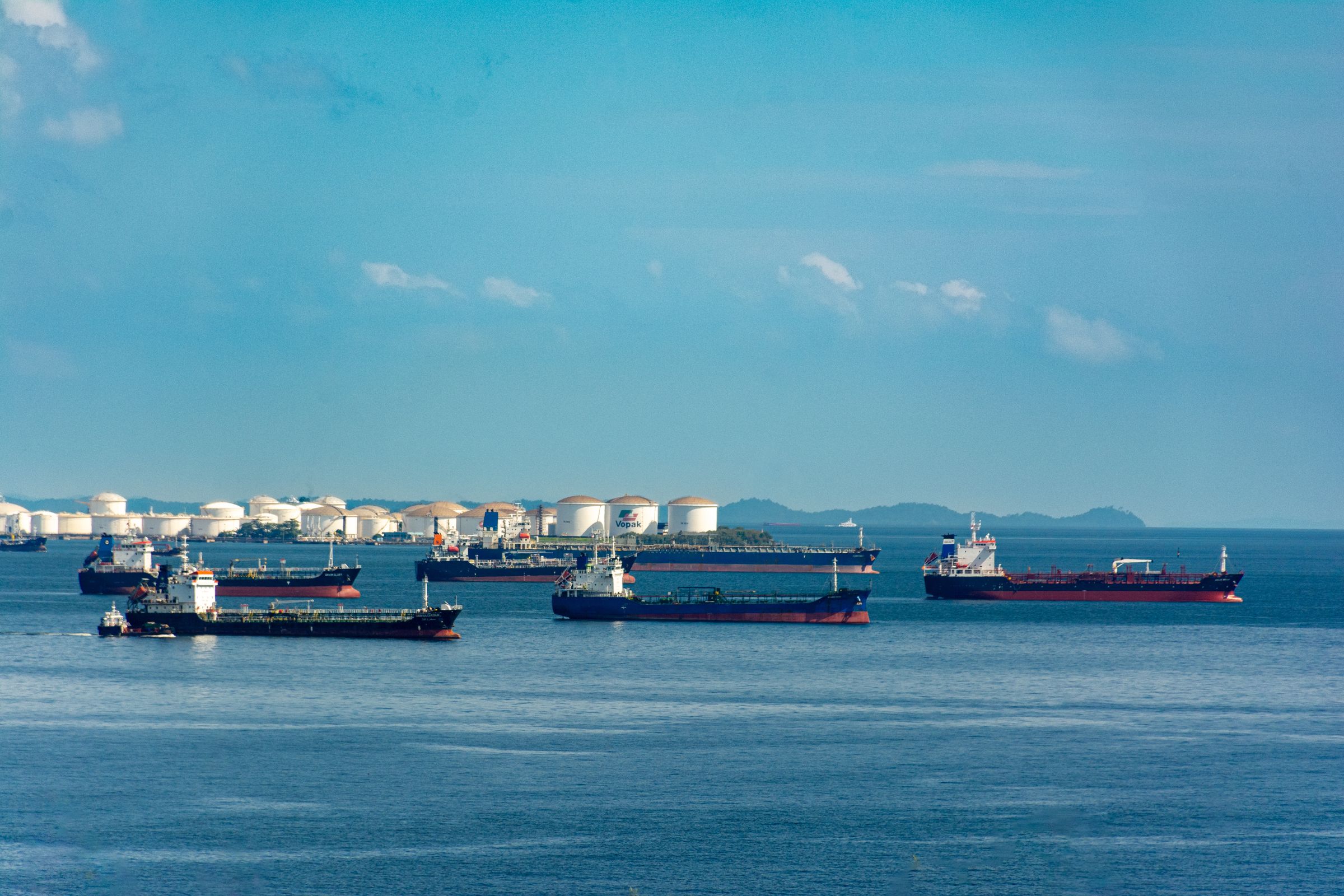
Hormuz Reopened on Paper. 230 Oil Ships Are Still Waiting.
A U.S.-Iran ceasefire has not restored normal tanker traffic through Hormuz, leaving exporters, importers and freight markets to price risk rather than peace.

Only 12 ships had passed through the Strait of Hormuz since the ceasefire, while about 230 oil-laden vessels were still waiting to transit, according to AP, citing Kpler data and UAE energy chief Sultan al-Jaber.
That gap is the real test of the U.S.-Iran truce announced this week. The White House said on April 10 that Iran had agreed to a ceasefire and to reopen the strait as negotiations begin. But tanker traffic and freight pricing show that shippers are still treating the corridor as politically controlled and operationally dangerous.
The White House release cast the ceasefire as a military success. It said U.S. forces struck 13,000 targets, destroyed 150 warships and wiped out 85% of Iran’s defense industrial base. The release did not publish an independent damage assessment or a text of the ceasefire itself.
AP reported that President Donald Trump later complained Iran was doing a "very poor job" of allowing oil through the strait. AP also reported that a Botswana-flagged liquefied natural gas tanker turned around after attempting to leave the Gulf by a route ordered by Iran’s Revolutionary Guard, according to ship-tracking data.
In Washington, the argument is that pressure created leverage. In Gulf energy circles, the metric is simpler: how many ships move, under what conditions, and at what insurance price. Drewry said its World Container Index rose 1% to $2,309 per 40-foot container this week and that carriers were proceeding cautiously because vessels still needed to coordinate transit with Iranian authorities and because no clear guidelines were available.
Drewry said the immediate focus was clearing ships already stuck in the Persian Gulf rather than sending new ones in. It said disruptions to oil flows, which account for nearly 20% of global supply through the strait, may take months to fully normalize and were squeezing bunker fuel availability.
Oil prices reflected that uncertainty. The deep-investigation brief for April 11, drawing on TradingEconomics data, said Brent crude traded at $96.66 a barrel on April 10 after a week that still showed a decline of more than 10% following the ceasefire announcement. The same brief said WTI was around $95, with weekly swings above 10% tied more to ceasefire headlines than restored flows.
That split runs across regions. U.S. coverage has emphasized the ceasefire as proof that military pressure can force talks. AP’s reporting from Dubai centered instead on the remaining chokehold on Hormuz, the ship backlog and the question of what Iran will do with its uranium stockpile and proxy network. In Asian energy-importing capitals, the issue is less triumph than exposure. Japan and India are watching whether tanker volume, not diplomatic language, lowers their import risk.
The backlog matters far beyond crude markets. AP said the de facto closure of the strait had driven up the cost of gasoline, food and other basics. Drewry said carriers were also seeking emergency bunker surcharges because of elevated and volatile fuel costs linked to Middle East tensions.
The same deep-investigation brief said rice prices were up more than 11% over four weeks and urea fertilizer had risen nearly 15% over the past month. Container rates were only modestly higher, which suggests the shock remains concentrated in energy and insurance for now. If tanker traffic stays conditional, that pressure can move outward into fertilizer, food imports and consumer fuel bills over the next quarter.
Lebanon remains one of the main sources of doubt. AP reported that Israeli Prime Minister Benjamin Netanyahu authorized direct talks with Lebanon but said there was no ceasefire with Hezbollah and that Israel would keep striking until security was restored. Iranian officials have said continued attacks in Lebanon violate the ceasefire understanding. That dispute matters because a corridor can be declared open while the military logic around it remains unresolved.
The next signal is practical, not rhetorical. Markets will be watching whether more tankers clear Hormuz over the weekend, whether transit rules are published, and whether U.S.-Iran talks in Pakistan produce a written framework on shipping, sanctions and the scope of the truce.
Add context
Know something useful about this story?
Albis is built for public understanding. If you have a source, lived experience, or a missing angle, you can add context for others.
Share context →Sources for this article are being documented. Albis is building transparent source tracking for every story.
Conversation
What are you seeing?
Add local context, a source, a question, or a perspective we may have missed. You can comment as a guest or create a free account.
Loading conversation…
Get the daily briefing free
News from 7 regions and 16 languages, delivered to your inbox every morning.
Free · Daily · Unsubscribe anytime
🔒 We never share your email