Chinese Chip Makers Post Record Revenue as US Export Controls Backfire
Domestic Chinese chip companies captured 41% of the AI server market as the US House introduced legislation to ban chipmaking equipment sales entirely.
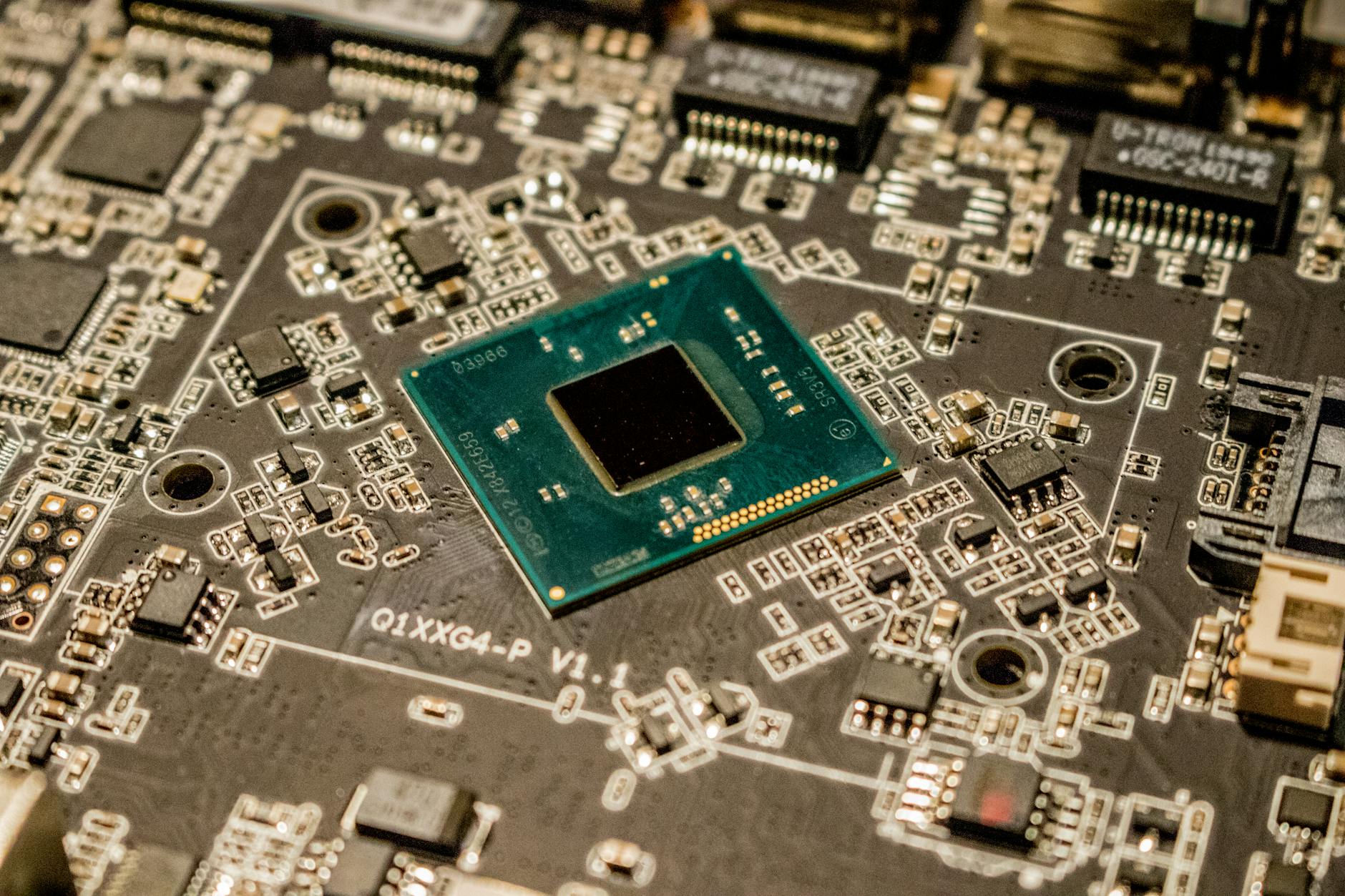
Chinese domestic semiconductor companies captured 41% of the AI server market in the first quarter of 2026 and posted record quarterly revenues, according to industry data released this week. The gains came as the U.S. House of Representatives introduced the MATCH Act, bipartisan legislation that would ban exports of AI chipmaking equipment to China entirely.
The two developments illustrate a feedback loop that neither Washington nor Beijing appears able to break. U.S. export restrictions, first imposed in October 2022 and tightened repeatedly since, were designed to deny China access to advanced AI chips and the tools to make them. Instead, the restrictions accelerated domestic Chinese investment in semiconductor self-sufficiency.
Samsung Electronics, which manufactures chips for both American and Chinese customers, expects record first-quarter operating profit of approximately 50 trillion won — roughly $37 billion — driven almost entirely by demand for AI memory chips. The boom is agnostic to geopolitics; both sides of the chip divide are buying.
The MATCH Act, introduced with bipartisan sponsorship, targets a remaining gap in the export control regime: the lithography, etching, and deposition equipment manufactured primarily by ASML in the Netherlands, Applied Materials and Lam Research in the United States, and Tokyo Electron in Japan. Current restrictions limit the most advanced machines. The new bill would extend the ban to older equipment models that Chinese firms have used to produce chips at slightly lower performance tiers.
Industry analysts warned that broader equipment bans could reduce revenue for American and allied toolmakers without significantly slowing Chinese progress. Chinese firms have already demonstrated the ability to produce competitive AI inference chips — the processors that run trained AI models — using domestic equipment and older lithography nodes.
China's regulatory response has moved in parallel. Draft rules released this week would regulate "digital humans" — AI-generated characters used in commerce and entertainment — and ban addictive AI services targeting children under 18. The regulations would require clear labelling of AI-generated content and prohibit virtual intimate relationships with minors. Approximately 300 million Chinese children would fall under the new protections.
South Korea launched an Agentic AI Alliance with direct government backing, aimed at deploying AI systems in manufacturing and industrial applications. Microsoft committed $10 billion to AI data center construction in Japan through 2029, partnering with SoftBank and Sakura Internet — part of a broader push by Asian governments to ensure AI infrastructure runs on domestic soil.
In Washington, the MATCH Act debate centres on whether tighter restrictions can still achieve their objective or whether the window for effective technology denial has passed. Proponents argue that cutting off equipment supply will eventually constrain Chinese manufacturing capacity. Critics point to the 41% market share figure as evidence that the strategy has already failed by its own metrics.
Two parallel semiconductor ecosystems are solidifying. One is centred on TSMC in Taiwan and allied supply chains spanning the U.S., Netherlands, Japan, and South Korea. The other is centred on SMIC and a growing network of Chinese domestic suppliers. Each ecosystem is becoming more self-contained and less dependent on the other.
The chip bifurcation carries implications beyond semiconductors. AI development speed, military technology, telecommunications infrastructure, and electric vehicle manufacturing all depend on access to advanced processors. The question of who builds the chips increasingly determines who builds everything else.
India launched Semiconductor Mission 2.0 this quarter, though a planned auction of 11 critical mineral blocks drew poor investor response — a sign that the uncertainty generated by simultaneous tech decoupling and a Middle East war is freezing capital in the countries that can least afford it.
Add context
Know something useful about this story?
Albis is built for public understanding. If you have a source, lived experience, or a missing angle, you can add context for others.
Share context →Sources for this article are being documented. Albis is building transparent source tracking for every story.
Conversation
What are you seeing?
Add local context, a source, a question, or a perspective we may have missed. You can comment as a guest or create a free account.
Loading conversation…
Get the daily briefing free
News from 7 regions and 16 languages, delivered to your inbox every morning.
Free · Daily · Unsubscribe anytime
🔒 We never share your email
