The Chip War Escalated Twice This Week. Both Sides Think They're Winning.
A new US bill would ban all AI chipmaking equipment exports to China. Meanwhile, Chinese domestic chip makers captured 41% of the AI server market — and Samsung posted record profits from AI memory demand.
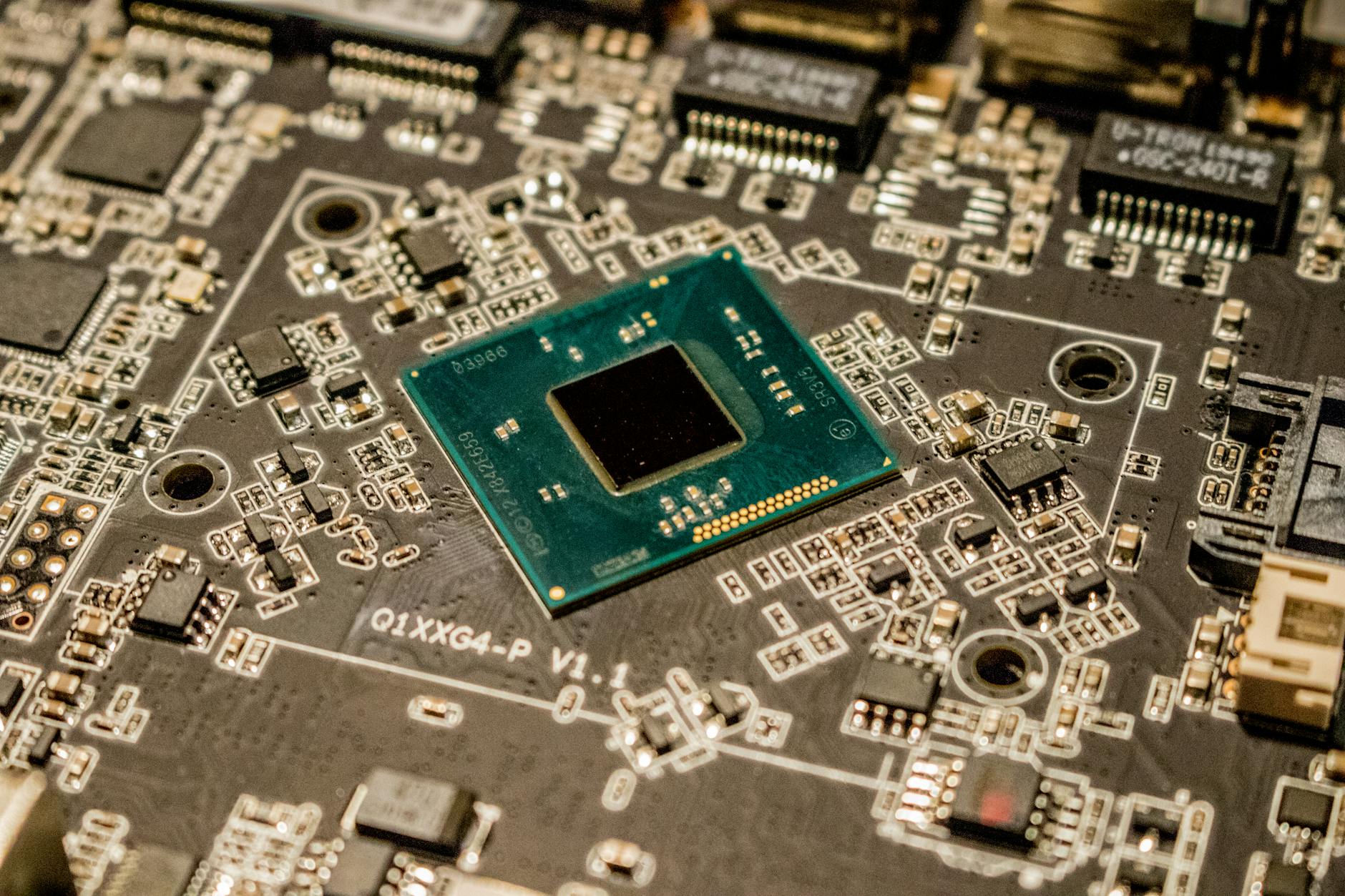
A bipartisan group of US lawmakers introduced the MATCH Act on April 2, a bill that would ban all exports of AI chipmaking equipment to China, closing loopholes in existing export controls that have allowed billions of dollars in lithography and etching tools to reach Chinese fabs through third countries. The same week, data from TrendForce showed Chinese domestic chip makers had captured 41% of China's AI server market — up from 9% two years ago.
The two developments tell opposite stories about the same conflict. Washington sees an adversary that must be cut off. Beijing sees sanctions that backfired.
The MATCH Act — Maintaining American Technological Competitiveness and Hardening Security — was introduced by Rep. John Moolenaar, chair of the House Select Committee on China, and Rep. Raja Krishnamoorthi, the committee's ranking Democrat. The bill would prohibit US companies from selling semiconductor manufacturing equipment to any entity in China, regardless of the equipment's specifications or intended use.
Current restrictions, tightened twice since 2022, target only advanced chipmaking tools. Companies like Applied Materials, Lam Research, and KLA Corporation have continued selling older-generation equipment to Chinese customers under existing rules. Those three companies derived between 25% and 30% of their 2025 revenue from China, according to their annual filings.
Their stocks fell between 4% and 7% on the bill's introduction.
"Every tool we sell to China today becomes the foundation for the weapons and surveillance systems they build tomorrow," Moolenaar said at a press conference. Krishnamoorthi called the bill "a necessary update to a policy that events have overtaken."
Chinese industry data suggests the policy may already be overtaken. Huawei's Ascend 910C AI accelerator, manufactured on SMIC's 7-nanometer process without access to ASML's extreme ultraviolet lithography machines, now powers a significant portion of China's domestic AI infrastructure. TrendForce's Q1 2026 data shows Chinese-made chips in 41% of AI servers sold domestically, a market share that was negligible three years ago.
Samsung, meanwhile, reported preliminary Q1 2026 operating profit of approximately 50 trillion won ($36.2 billion), a six-fold increase year over year. The surge came almost entirely from AI memory chips — high-bandwidth memory modules used in data center GPUs. Samsung's HBM3E chips are sold to Nvidia, AMD, and an expanding list of Chinese AI companies through channels not covered by current export controls.
The result is a semiconductor market that is simultaneously booming and fracturing. Samsung and SK Hynix, both South Korean, dominate the memory chip layer that AI cannot function without. Nvidia dominates the logic chip layer. Chinese firms are building a parallel stack that is less advanced but increasingly functional.
In Seoul, the Samsung earnings were front-page news, framed as validation of South Korea's bet on AI infrastructure. Korean media made little mention of the MATCH Act.
In Beijing, state media ran the TrendForce data as proof of self-reliance. People's Daily published a commentary titled "Sanctions Built What Sanctions Aimed to Prevent," arguing that US export controls had "gifted China's semiconductor industry the urgency it needed."
In Washington, the framing was threat-centric. The Wall Street Journal editorial board wrote that the 41% figure "should alarm anyone who believed export controls were containing China's AI ambitions."
The MATCH Act faces an uncertain path. The semiconductor equipment industry has lobbied aggressively against broader restrictions, arguing that lost Chinese revenue would reduce the R&D spending needed to maintain America's technological lead. Applied Materials spent $4.2 million on lobbying in 2025, according to OpenSecrets data.
The bill's sponsors acknowledged the cost. "There will be short-term pain for some American companies," Krishnamoorthi said. "The alternative is long-term strategic disadvantage."
ASML, the Dutch company that makes the world's most advanced lithography machines, was not directly addressed in the bill but would be affected through its US-origin components. The Netherlands has already restricted sales of its most advanced systems to China under a 2023 agreement with Washington.
China's Ministry of Commerce said it would "take all necessary measures to protect the legitimate rights of Chinese enterprises" if the bill passes. It did not specify what those measures would be.
The House Select Committee on China has scheduled a hearing on the bill for April 15.
Add context
Know something useful about this story?
Albis is built for public understanding. If you have a source, lived experience, or a missing angle, you can add context for others.
Share context →Sources for this article are being documented. Albis is building transparent source tracking for every story.
Conversation
What are you seeing?
Add local context, a source, a question, or a perspective we may have missed. You can comment as a guest or create a free account.
Loading conversation…
Get the daily briefing free
News from 7 regions and 16 languages, delivered to your inbox every morning.
Free · Daily · Unsubscribe anytime
🔒 We never share your email
