Helium Shortage Threatens Global Chip Production as Iran War Hits Supply
An Iranian drone strike knocked Qatar's helium facility offline, putting TSMC, Samsung, and SK Hynix chip fabrication at risk.
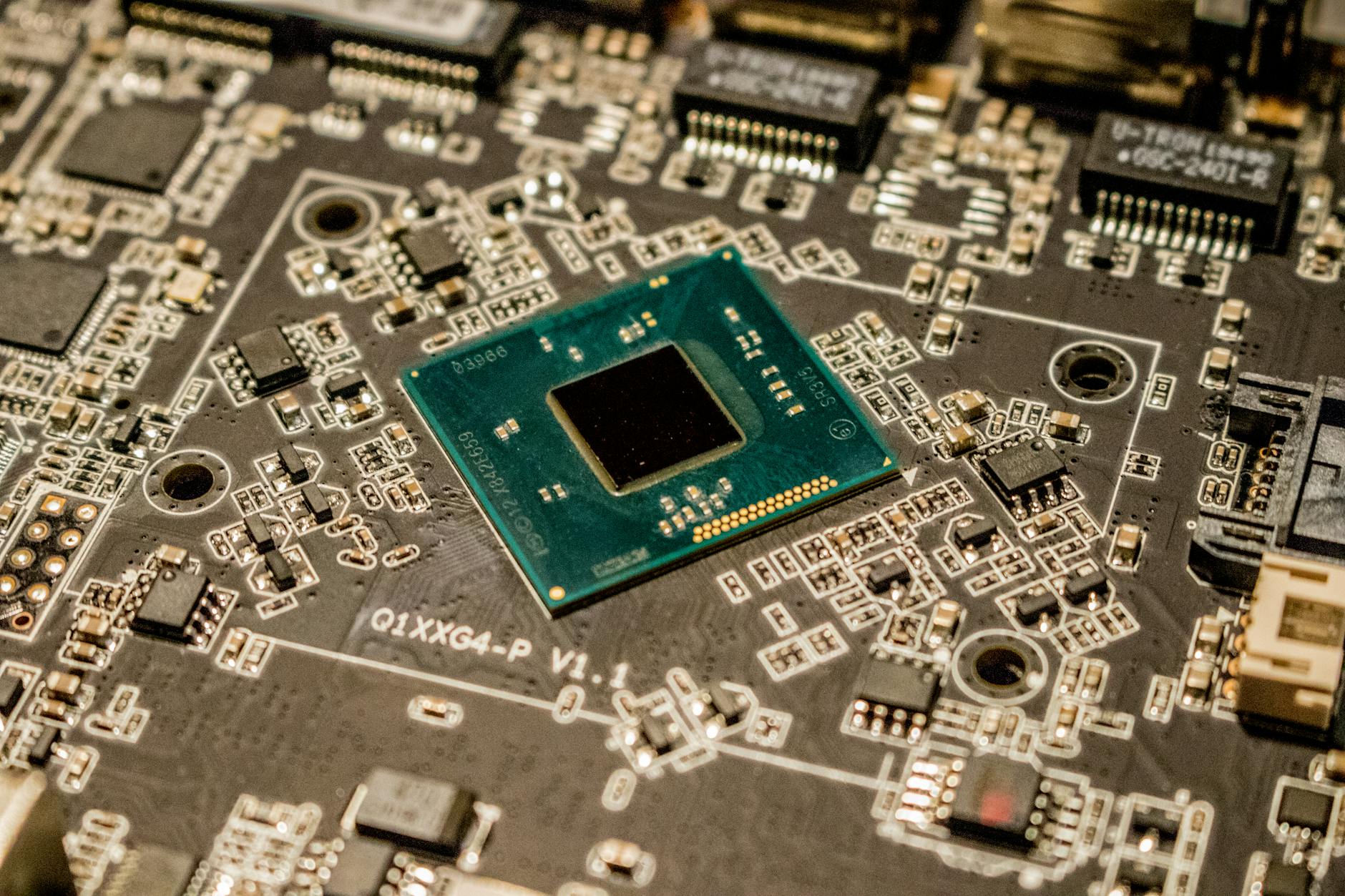
Qatar's Ras Laffan helium purification facility, the world's largest, went offline last week after an Iranian drone struck adjacent LNG infrastructure, cutting roughly 25% of global helium supply and threatening semiconductor fabrication worldwide.
Helium is used in chip manufacturing to cool silicon wafers during lithography, test circuit integrity, and prevent oxidation in clean rooms. There is no substitute. Every advanced processor in every phone, laptop, server, and medical device requires helium at some stage of production.
TSMC, the Taiwanese company that fabricates chips for Apple, Nvidia, and AMD, confirmed Wednesday that it had activated "supply contingency protocols" but declined to comment on production timelines. Samsung Electronics said it was "assessing the situation." SK Hynix, the world's second-largest memory chip maker, said it had secured 60 days of helium inventory.
A Supply Chain Nobody Noticed
Global helium production comes from a handful of sources: Qatar, the United States, Algeria, Russia, and Australia. Qatar alone accounted for 25% of world supply before the Ras Laffan shutdown, according to the US Geological Survey.
The US Federal Helium Reserve in Amarillo, Texas — once the world's strategic backstop — was privatised and largely sold off between 2013 and 2022 under the Helium Stewardship Act. Remaining US production from natural gas fields in Kansas, Wyoming, and Texas covers domestic needs but has limited export capacity.
"The helium market was already tight before this," said Phil Kornbluth, president of Kornbluth Helium Consulting. "Ras Laffan going offline takes us from tight to crisis within four to six weeks."
Naphtha Compounds the Problem
South Korea faces a parallel shortage of naphtha, a petroleum-derived feedstock used to produce the ultra-pure chemicals required for chip fabrication. Korean refiners typically source naphtha from Middle Eastern producers through the Strait of Hormuz.
With Hormuz flows disrupted, South Korea's Ministry of Trade, Industry and Energy confirmed that Korean petrochemical companies have begun importing naphtha from Russian Pacific ports — a move that tests international sanctions frameworks.
"Fourteen semiconductor supply chain items are now classified as severely at risk," said Lee Chang-woo, an analyst at the Korea Institute for Industrial Economics and Trade. "Korea is doing what it must to keep the fabs running."
The Korean government did not comment on whether the Russian imports had been cleared with US sanctions enforcement. A State Department spokesperson said Washington was "aware of reports" and was "in discussions with Seoul."
Downstream Effects
If chip fabrication slows, the effects will compound across industries. Advanced chips have lead times of three to six months. A disruption now would hit consumer electronics, automotive production, medical imaging equipment, and AI data centre expansion in the third and fourth quarters of 2026.
"The AI buildout that every hyperscaler has announced depends on a continuous supply of advanced GPUs," said Stacy Rasgon, a semiconductor analyst at Bernstein. "Those GPUs need helium to manufacture. Full stop."
Medical imaging is also at risk. MRI machines require liquid helium to cool their superconducting magnets. Hospitals in Europe and Asia have already been rationing MRI scans due to helium cost increases, according to the European Society of Radiology.
Two Supply Chains, One War
The simultaneous disruption of helium and naphtha illustrates how the Iran conflict is fracturing supply chains that were assumed to be unrelated. Energy analysts had focused on oil and gas. The semiconductor industry assumed its inputs were insulated from Middle Eastern conflict.
"Nobody war-gamed the scenario where a drone strike on a Qatari gas facility shuts down chip production in Taiwan," said Chris Miller, author of "Chip War" and a professor at Tufts University. "The interdependencies were invisible until they broke."
TSMC is scheduled to report first-quarter earnings on April 17. Analysts expect the company to address helium supply in its guidance. SK Hynix reports April 24.
The US Commerce Department said Wednesday it was convening a semiconductor supply chain working group to assess the helium and naphtha disruptions. No timeline for action was given.
Add context
Know something useful about this story?
Albis is built for public understanding. If you have a source, lived experience, or a missing angle, you can add context for others.
Share context →Sources for this article are being documented. Albis is building transparent source tracking for every story.
Conversation
What are you seeing?
Add local context, a source, a question, or a perspective we may have missed. You can comment as a guest or create a free account.
Loading conversation…
Get the daily briefing free
News from 7 regions and 16 languages, delivered to your inbox every morning.
Free · Daily · Unsubscribe anytime
🔒 We never share your email

