Iran Fires Largest Missile Barrage at Israel, Cluster Warheads Hit Suburbs
Iran's biggest salvo in three weeks of war struck Rosh HaAyin and Petah Tikva with cluster warheads, marking a significant escalation days before Passover.

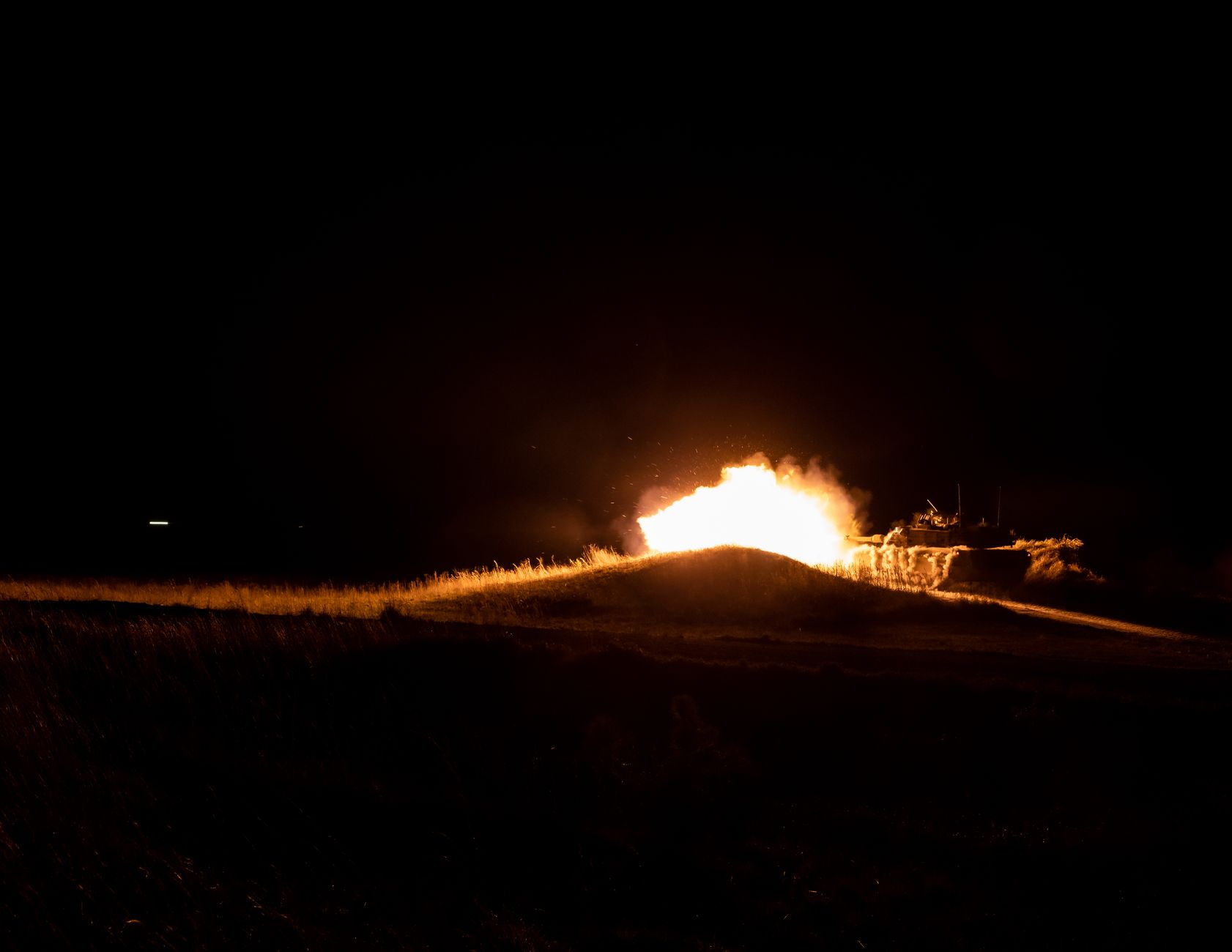
Iran launched its largest missile barrage of the three-week war on Tuesday, firing an estimated 90 ballistic and cruise missiles at central Israel over a four-hour window beginning at 2:14 a.m. local time, according to the Israel Defense Forces.
Cluster warheads struck residential areas in Rosh HaAyin and Petah Tikva, two cities in the Tel Aviv metropolitan area. The IDF confirmed 14 civilian deaths and 87 injuries, with search-and-rescue teams still operating in three apartment buildings as of 6 p.m. local time.
It was the first confirmed use of cluster munitions against Israeli population centres in the conflict.
Scale of the Attack
Israel's Iron Dome and Arrow-3 systems intercepted 61 of the 90 missiles, a 68% success rate, according to IDF spokesperson Rear Admiral Daniel Hagari. That figure is lower than the 74% interception rate the IDF reported during Iran's first direct strike on Israel in April 2024.
"The volume overwhelmed forward batteries in some sectors," a senior Israeli military official told the Times of Israel on condition of anonymity. "This was designed to saturate, and in some corridors it worked."
Iran's Islamic Revolutionary Guard Corps claimed in a statement carried by state news agency IRNA that it had launched "over 120 precision missiles" at "military targets in occupied Palestine." The IRGC did not mention cluster warheads.
Cluster Munitions Mark Escalation
Cluster munitions scatter smaller bomblets over a wide area. Neither Iran nor Israel has signed the Convention on Cluster Munitions, which 112 countries have joined.
The International Committee of the Red Cross issued a statement within hours calling the use of cluster warheads in populated areas "incompatible with the principles of distinction and proportionality under international humanitarian law."
Unexploded bomblets remained scattered across streets and parks in Rosh HaAyin on Tuesday afternoon, according to Israeli police, who cordoned off a 1.2-square-kilometre area. The municipality ordered schools closed through Thursday.
Footage verified by the BBC's visual investigations team showed at least three impact sites where submunition patterns were consistent with Iranian-manufactured M-class cluster warheads, a type Iran first displayed at a military parade in 2023.
Israeli Response
Israeli Prime Minister Benjamin Netanyahu convened an emergency security cabinet meeting at the Kirya military complex in Tel Aviv at 5 a.m. He emerged at 7:30 a.m. and told reporters that Israel's response would be "decisive and without limits."
Defence Minister Yoav Gallant confirmed that Israeli Air Force jets had already struck "launch infrastructure" in western Iran within hours of the barrage. He did not specify targets.
The United States did not participate in the retaliatory strikes, according to Pentagon spokesperson Sabrina Singh, though US THAAD batteries stationed in Israel contributed to missile defence.
Timing and Passover
The attack came four days before Passover, which begins at sundown on April 6. Israeli emergency services issued guidance urging families to hold seders in rooms with reinforced ceilings or within 15 seconds of a shelter.
The Home Front Command extended its restrictions on gatherings of more than 100 people through April 9, effectively cancelling large community seders across the centre of the country.
"We will celebrate Passover. We will not celebrate it as normal," said Yaron Blum, head of Israel's National Emergency Management Authority, at a press conference.
Regional Fallout
Jordan closed its airspace for two hours during the barrage. Commercial flights into Ben Gurion Airport were diverted to Ovda military airfield in the Negev for the third time this month, according to Israel's Civil Aviation Authority.
Lebanon's Beirut–Rafic Hariri International Airport, already operating at reduced capacity, suspended all flights Tuesday morning after debris from an intercepted missile fell within 800 metres of the runway, airport officials said.
Iran's ambassador to the UN, Amir Saeid Iravani, said the strikes were "a legitimate act of self-defence" in response to "the American-Israeli aggression that has killed over 4,000 Iranian civilians."
The IDF said it expects further launches in the coming days. Hagari told reporters that Iran's missile inventory "remains substantial" and that the military was repositioning interception batteries to cover gaps exposed by Tuesday's barrage.
Add context
Know something useful about this story?
Albis is built for public understanding. If you have a source, lived experience, or a missing angle, you can add context for others.
Share context →Sources for this article are being documented. Albis is building transparent source tracking for every story.
Conversation
What are you seeing?
Add local context, a source, a question, or a perspective we may have missed. You can comment as a guest or create a free account.
Loading conversation…
Get the daily briefing free
News from 7 regions and 16 languages, delivered to your inbox every morning.
Free · Daily · Unsubscribe anytime
🔒 We never share your email