Black Rain Is Falling on 10 Million People in Tehran. Five Billion Have No Idea.
Toxic black rain from bombed oil depots is contaminating Tehran's air, water and soil. The WHO warned of acid rain burning skin and lungs. 5.01 billion people in four regions haven't seen this story.
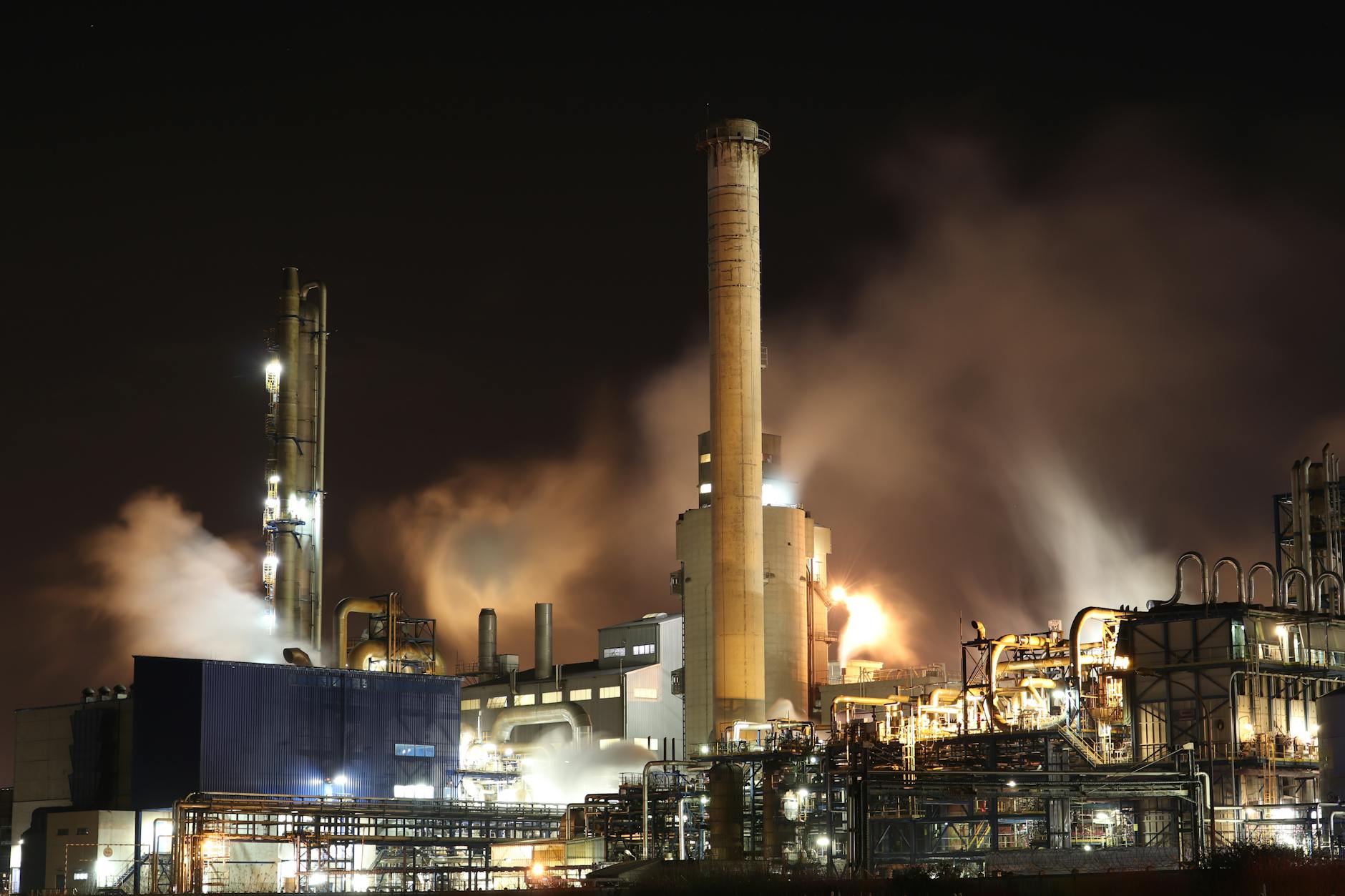
Ten million people in Tehran woke up to black rain on March 8. Oily, acidic water fell from skies choked with smoke after US-Israeli airstrikes hit five fuel depots around the capital. The World Health Organization warned that the rainfall could burn skin and damage lungs.
That was ten days ago. The fires are still burning.
GAI Score: 6.11 — Information Shadow. This story reached three regions: the US, Europe, and the Middle East. Asia-Pacific, South Asia, Africa and Latin America — home to 5.01 billion people — have seen almost nothing about it.What's in the Rain
When oil burns, it doesn't just produce smoke. It releases a chemical cocktail: polycyclic aromatic hydrocarbons (PAHs), sulfur dioxide, nitrogen oxides, heavy metals like nickel and vanadium, and microscopic soot particles 40 times smaller than a human hair.
Those particles lodge deep in the lungs and enter the bloodstream. PAHs increase cancer risk. Sulfur dioxide dissolves in rainwater to form sulfuric acid — the "acid rain" that Iranian authorities warned could damage skin, eyes and respiratory systems.
"We can definitely expect acute health effects from an event like this," said V. Faye McNeill, a chemical engineering professor at Columbia University who specializes in atmospheric chemistry. "This is a higher level, so there likely are health problems going on right now because of it."
Iranians reported burning eyes, sore throats and difficulty breathing. Streets, cars, plants and pets were coated in black residue.
Tehran's Geography Makes It Worse
Tehran sits in a semi-enclosed basin at the foot of the Alborz Mountains. Peaks rise 2-4 km around the city, trapping air like a bowl. In winter and early spring, temperature inversions cap the boundary layer at 1-1.5 km, concentrating pollutants near ground level.
After sunset, that layer collapses to a few hundred meters. The worst exposure happens overnight and early morning — exactly when most people are home with windows closed, but still breathing contaminated air that seeps through buildings.
The city's dense urban canyons, lined with mid- and high-rise buildings, create concentration hotspots where toxic particles pool.
Tehran already had some of the world's worst air quality before the war. Now it's breathing the smoke of its own burning fuel supply.
The Water Problem
Iran's deputy health minister, Ali Jafarian, told Al Jazeera that soil and water supplies around Tehran are already being contaminated. This is the fear that keeps environmental scientists up at night.
When containment from tanks and pipes is destroyed, crude oil and its chemical byproducts flow across the ground, permeate soil and coat everything they touch. "There is the potential for contamination of drinking water supplies," warned Prof Andrea Sella of University College London.
The risk extends beyond Iran. Al-Monitor reported that damage to desalination plants in the Gulf could release sodium hypochlorite, ferric chloride and sulfuric acid into regional waters. The Conflict and Environment Observatory (CEOBS) warned that damaged missile facilities may have released liquid rocket propellants — highly toxic compounds that have posed disposal challenges in other conflicts.
The Kuwait Precedent
This isn't hypothetical. We've seen what happens when oil infrastructure burns in wartime.
In 1991, retreating Iraqi forces set fire to more than 600 oil wells in Kuwait. Those fires burned for months. Decades later, the US Department of Veterans Affairs acknowledged that exposure to combustion products during the Gulf War could be associated with lung cancer in veterans.
Iran's fires involve fuel depots rather than oil wells. Experts say the same carcinogenic compounds are present. But unlike Kuwait in 1991, Tehran is a city of 10 million people directly under the smoke.
Who Isn't Seeing This
The ecological catastrophe is covered in Western and Middle Eastern outlets — the Guardian, AP, LA Times, BBC, Al Jazeera, Nature, and the WHO have all issued warnings. But the story has a steep coverage cliff.
In Asia-Pacific, South Asia, Africa and Latin America, the Iran war dominates headlines as a geopolitical and oil price story. The environmental disaster — the thing that will still be harming people years after any ceasefire — barely registers.
The framing gap is stark. In Farsi-language media, this is an "environmental crime" and potential genocide. Iranian officials use the word "ترور" — terror — to describe the strikes. In English-language outlets, the black rain is a sidebar to the military campaign. In most of the world, it's invisible.
Today's earlier Unseen report covered Iran's internet blackout — 90 million people offline for 18 days. The blackout means Iranians themselves can barely document what's happening to their own air, water and soil. The environmental crisis is invisible to the outside world. The information blackout makes it invisible to Iranians documenting it for the record.
What Comes Next
The acute health effects — burning eyes, sore throats, breathing difficulty — are the beginning. Long-term exposure to PAHs and heavy metals raises cancer risk. Soil contamination can persist for decades. Water supply contamination could affect millions beyond Tehran.
Carnegie Mellon's Peter Adams put it plainly: "If we don't create more problems, at least what's in the atmosphere is going to go away. But we don't know what's going to happen with future strikes."
More strikes have happened since he said that. More fuel depots have burned. The Shahran depot north-east of Tehran and the Shahr-e depot to its south were still burning two days after they were hit.
The environment, as Iran's Department of Environment stated, remains the silent victim of this war. Five billion people haven't heard it make a sound.
This story was identified by the Albis Global Attention Index — measuring which stories the world isn't seeing. Explore today's blind spots →
Sources & Verification
Based on 5 sources from 4 regions
- AP NewsNorth America
- The GuardianEurope
- CEOBSInternational
- Al JazeeraMiddle East
- Los Angeles TimesNorth America
Keep Reading
Iran's 90 Million People Have Been Offline for 18 Days. Most of the World Doesn't Know.
Iran's internet blackout has cut 90 million people off for 18 days. Hospitals can't coordinate, families can't connect, and 5.5 billion people have no idea.
Russia's Spring Offensive Just Failed in Ukraine. 6.9 Billion People Aren't Watching
Zelensky says Russia's planned spring offensive has 'drowned.' Ukraine retook 430 sq km in the south. But 87% of the world's population saw none of it.
The US Has 1,362 Measles Cases in 2026. Most of the World Has No Idea.
The US measles outbreak hit 1,362 cases across 31 states by March 12, 2026 — and 5.87 billion people have never heard about it.
Explore Perspectives
Get this delivered free every morning
The daily briefing with perspectives from 7 regions — straight to your inbox.