Indonesian students protest fuel prices, spending priorities and military presence in civilian life
Student rallies in Jakarta have tied fuel and food costs to a wider argument over President Prabowo Subianto’s spending choices and the role of security forces in public life.
Indonesian students protest fuel prices, spending priorities and military presence in civilian life
Last updated June 14, 2026
- The protests mix economic pain with civil-military concerns, making them a broader legitimacy test than a single-issue rally.
- Price and financing pressure.
- SaedNews, citing Al Jazeera, reported that about 1,500 students joined the demonstration on Friday, while Worthy News described thousands of students rallying in the capital.
Still unclear: What local readers are seeing from the ground
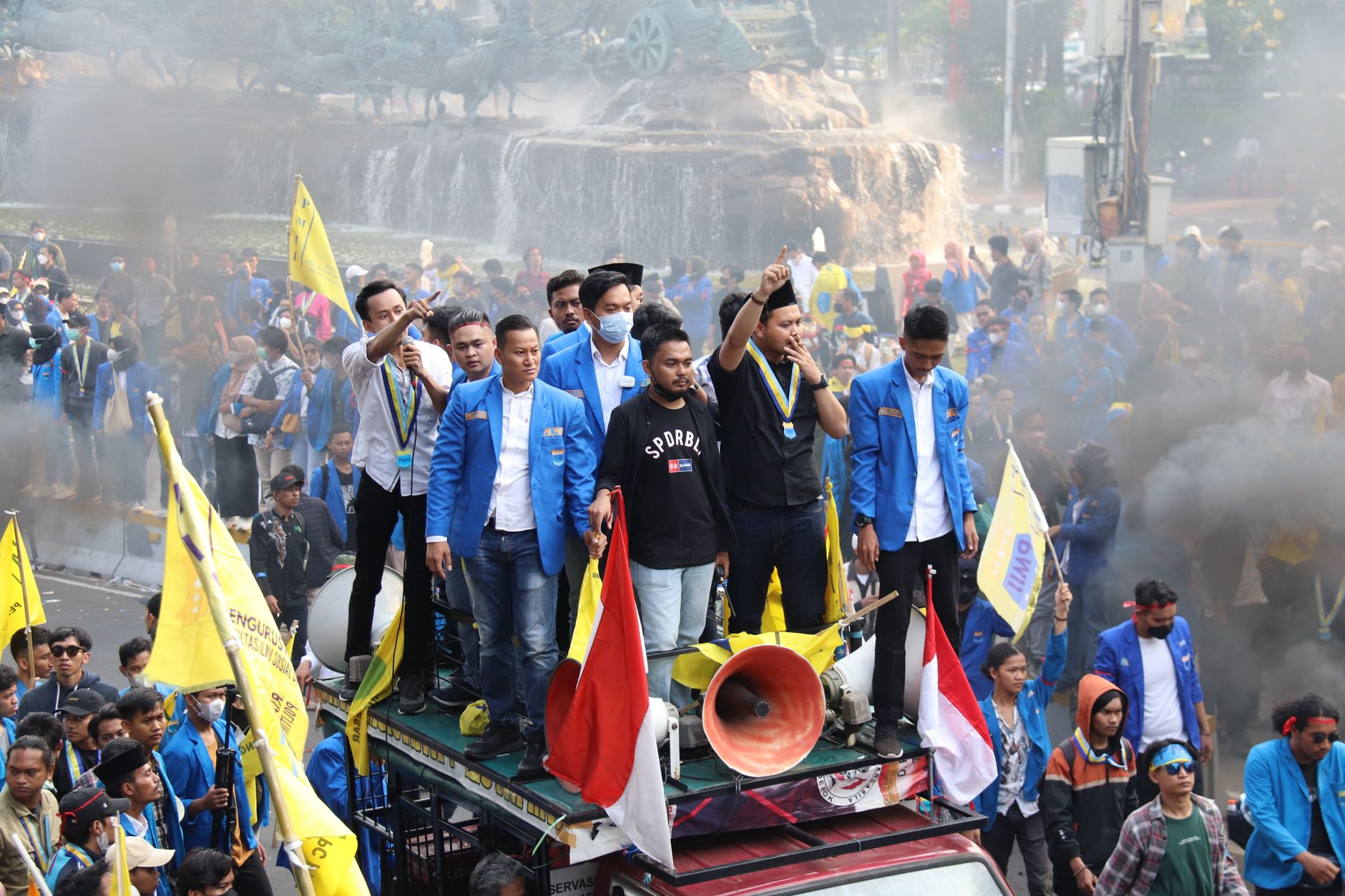
Students in yellow university jackets marched in Jakarta after Friday prayers, heading toward the Hotel Indonesia traffic circle with demands that began at the pump and widened into a critique of President Prabowo Subianto’s government.
SaedNews, citing Al Jazeera, reported that about 1,500 students joined the demonstration on Friday, while Worthy News described thousands of students rallying in the capital. Both accounts say protesters focused on rising costs, fuel policy and state spending priorities. Prism News described the march as branded “Heading to Bankrupt Indonesia.”
The immediate grievance was a rise in gasoline prices, especially non-subsidized fuel, which protesters said would add pressure to families already dealing with higher living costs. Prism News described the chain clearly: higher gasoline prices feed into transport costs, food bills and household budgets. SaedNews reported that demonstrators called for lower fuel and food prices.
The demands did not stop at fuel. SaedNews said protesters called for the rollback of welfare programs they considered costly and wasteful, including Prabowo’s flagship free meals initiative and village cooperative projects. Prism News also reported calls to cancel the free meals and village cooperatives programs, framing the protest as a dispute over whether public money is being directed toward everyday needs or politically costly projects.
Security forces treated the rally as more than a routine student protest. SaedNews reported that around 6,000 police officers and soldiers were deployed, while Worthy News reported more than 4,000 security personnel, including about 500 members of the Indonesian military. Both accounts say some protesters were stopped from reaching protest areas, and clashes or scuffles broke out when demonstrators tried to push through police lines and metal barricades.
Worthy News reported that students were also protesting what critics described as the growing militarization of civilian life. That concern sits alongside the economic demands: a rally about fuel prices became a test of how the government manages public dissent, civilian institutions and the visible role of military personnel in domestic political space.
The sources differ in scale and emphasis. SaedNews gives the clearest number for the crowd, about 1,500, and stresses the five demands and fiscal pressure. Worthy News emphasizes witness accounts, military deployment, scuffles and militarization concerns. Prism News focuses on the household-cost chain from gasoline to transport and food, and on the protest as an early legitimacy test for Prabowo.
Some claims remain only partly supported in the supplied packet. The Wikipedia excerpt establishes a broader pattern of Indonesian anti-government protests beginning in February 2025 and continuing, but it flags the page as needing updates and revisions. The AP News excerpt supplied here does not verify the Jakarta protest. The strongest usable evidence comes from SaedNews, Worthy News and Prism News.
What is verified is a protest mix that is broader than a single fuel-price complaint. Students linked the cost of gasoline and staple foods to state spending choices, subsidy fears, police and military barriers, and concerns about military presence in civilian life. In Jakarta, economic pressure and institutional trust are now moving through the same street demonstration.
Add context
Know something useful about this story?
Albis is built for public understanding. If you have a source, lived experience, or a missing angle, you can add context for others.
Share context →Sources for this article are being documented. Albis is building transparent source tracking for every story.
Conversation
What are you seeing?
Add local context, a source, a question, or a perspective we may have missed. You can comment as a guest or create a free account.
Loading conversation…
Get the daily briefing free
News from 7 regions and 16 languages, delivered to your inbox every morning.
Free · Daily · Unsubscribe anytime
🔒 We never share your email
